
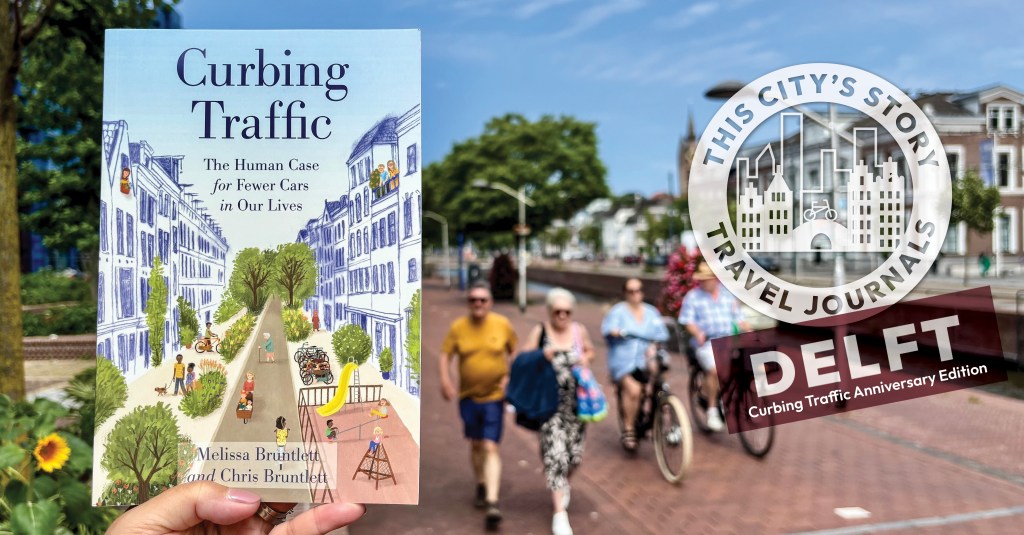
June 28th, 2026 marks the fifth anniversary of the release of our second book, Curbing Traffic: The Human Case for Fewer Cars in Our Lives. The book chronicles our first year living in the Netherlands, having found ourselves living in what turned out to be a city with a rich history as home to Willem van Oranje I, the first Dutch king, and the infamous Delfts Blauw pottery. For urbanists like us, however, it was the city’s story of transformation that had us falling in love and settling here.
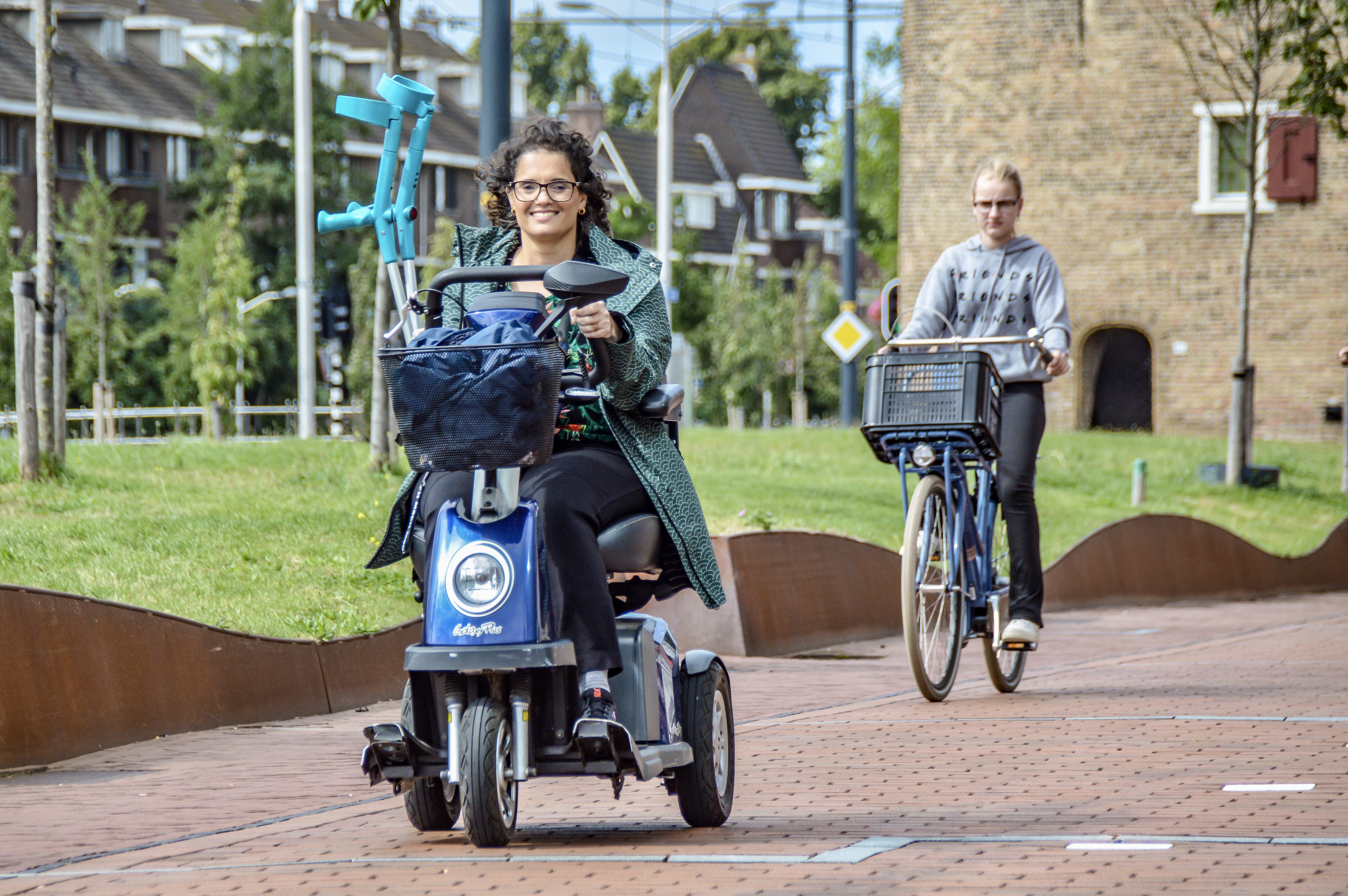
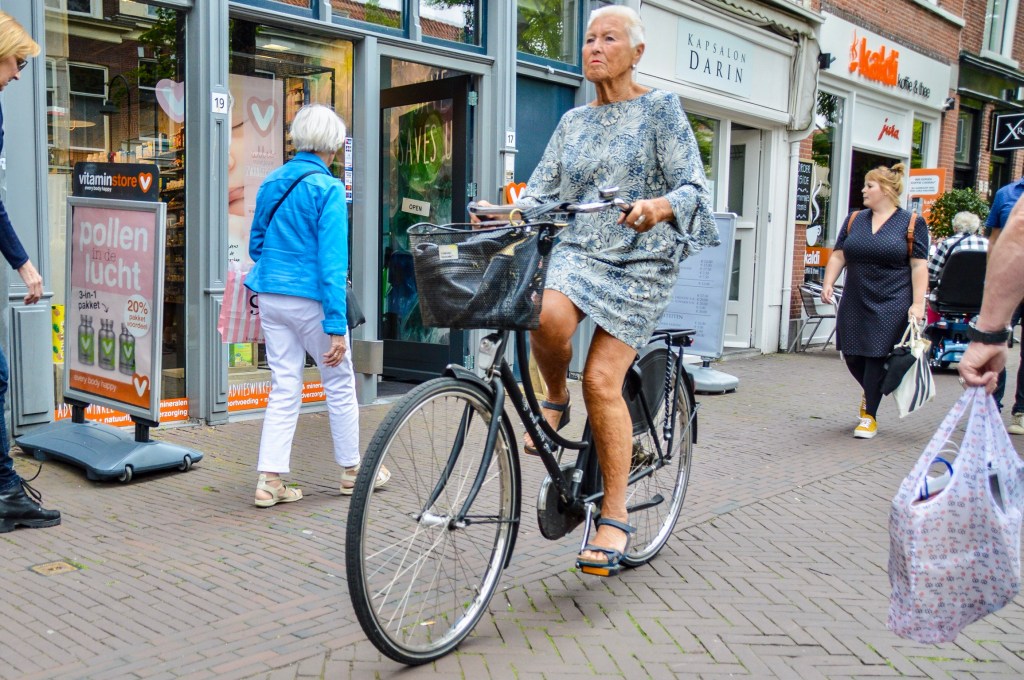
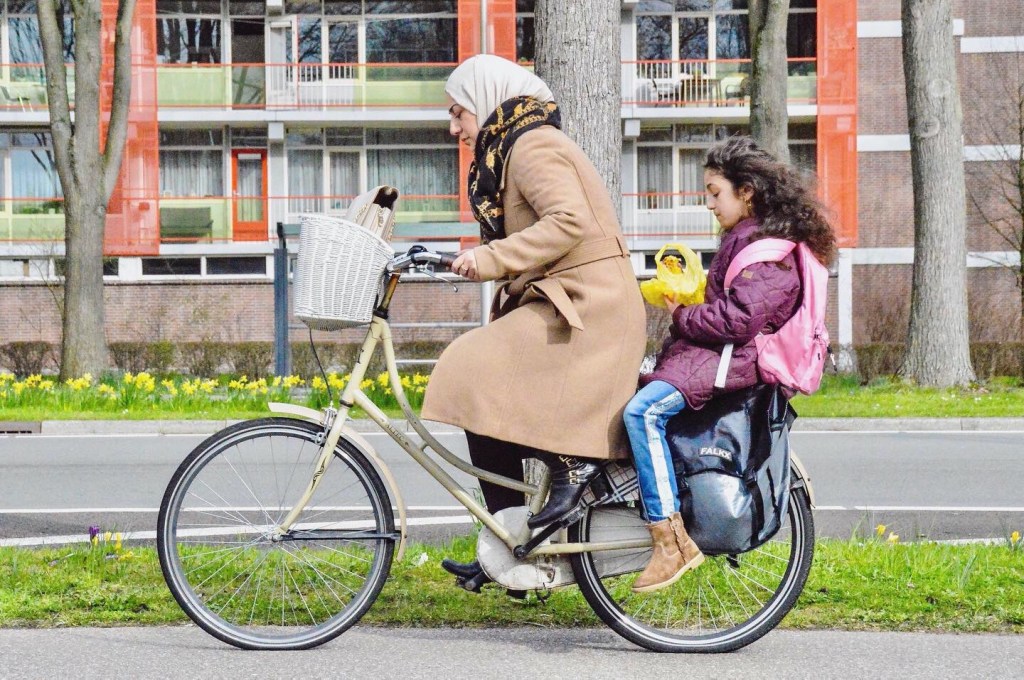
So, on the occasion of Curbing Traffic’s anniversary, this edition of This City’s Story looks at some “must see” stops when visiting this small city of 110,000 that play a role in improving the quality of life for us and countless other residents in Delft. A city that is friendly no matter your age or ability, where women make up half the mode share for cycling, where trust is ingrained in the way the streets are designed, and where access to therapeutic and restorative spaces are a short trip from your front door. Here’s a snapshot of what makes Delft a perfect day-trip, and why our family continues to choose to call it home.
The Connected City
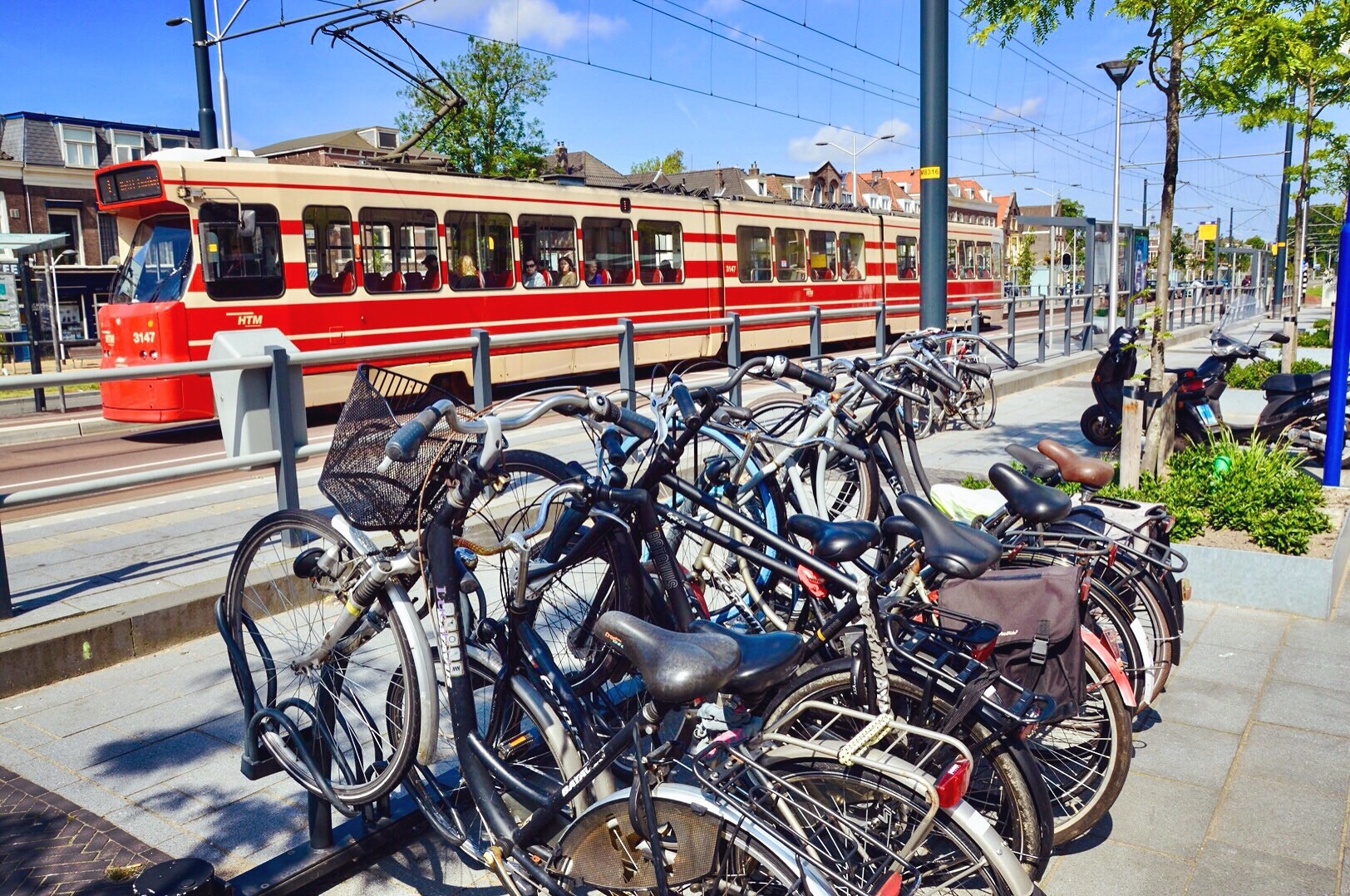
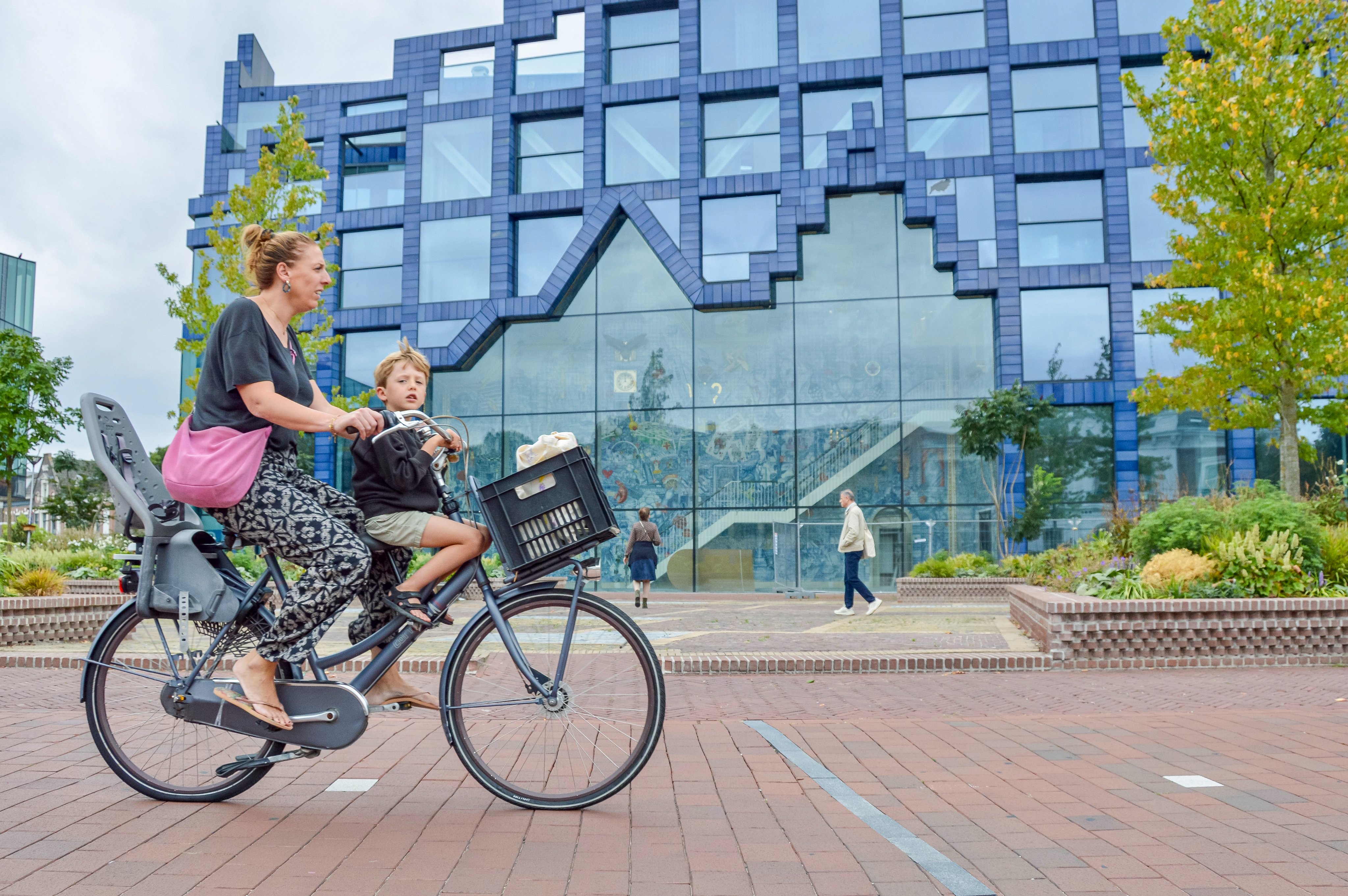
Delft is one of many mid-sized cities in the Randstad, located nearly at the halfway point between Rotterdam and The Hague and just a 10-minute train ride from either centre. It’s also a direct one-hour train to Amsterdam to the north and Eindhoven to the east. That connectivity is part of the reason we decided to stay after Chris’ office moved from Delft to Utrecht just a year after arriving in the Netherlands. Thanks to an expansion that twinned the rail tracks completed in 2018 that increased the number of trains running in Delft, he can now leave home with a guaranteed train nearly every 5 minutes and be at the office in an hour without our family having to uproot to live closer to work.
While the frequency of the train is certainly something to be envious of, it is the transformational results of that project that make the area around the station a must-visit. Prior to 2009 when construction began, Delft had an elevated viaduct running through the city, cutting off the neighbourhoods of Hof van Delft (where we live) and the Westerkwartier to the west from the old city centre. Stories from residents who lived here in that time, living anywhere near the viaduct was a noisy, smelly, and dirty affair, with reports of adjacent buildings would need regular cleaning from all the debris coming off the trains and tracks, and the space under the tracks serving as car storage and that lacked any social safety for residents.
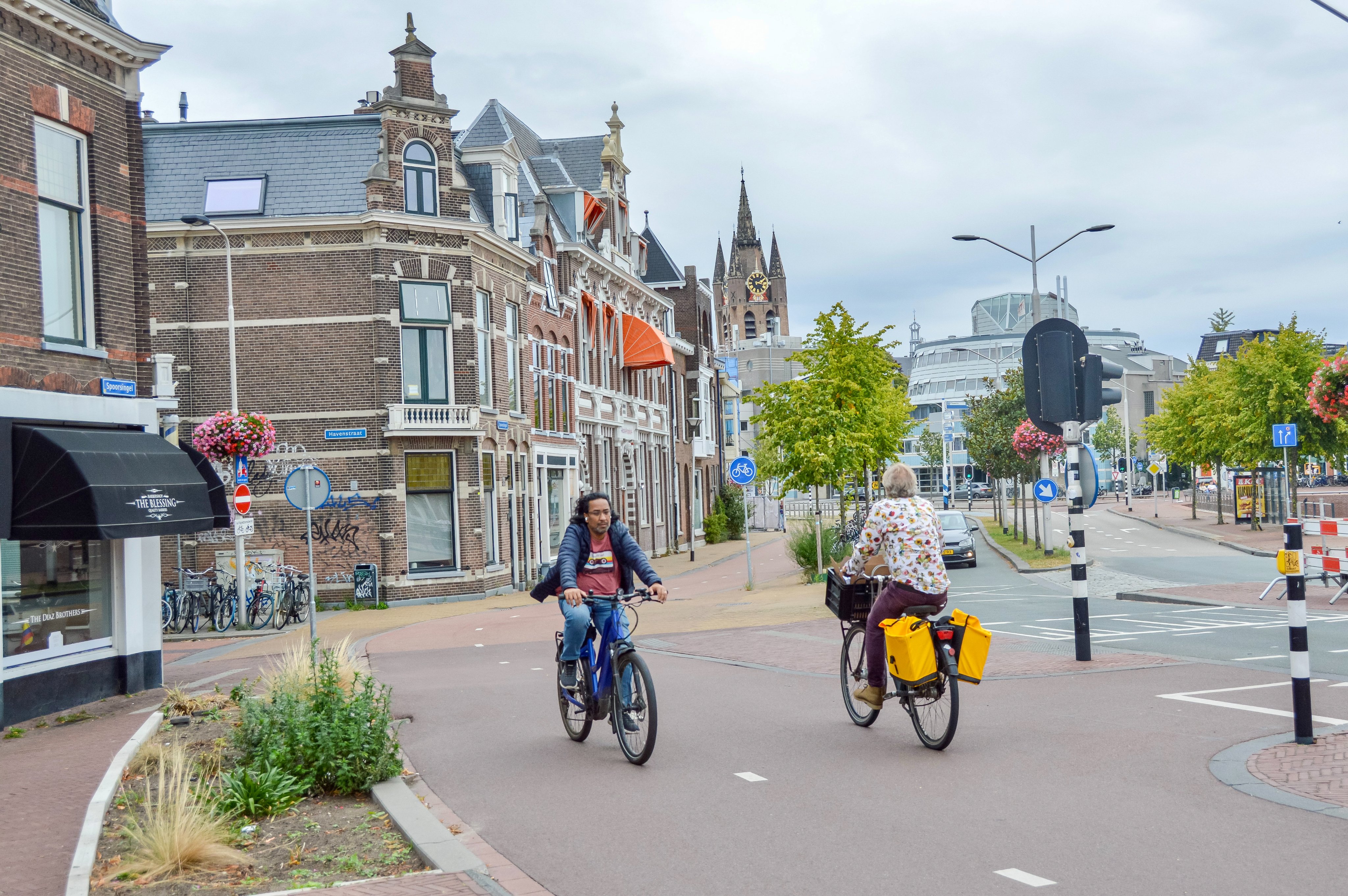
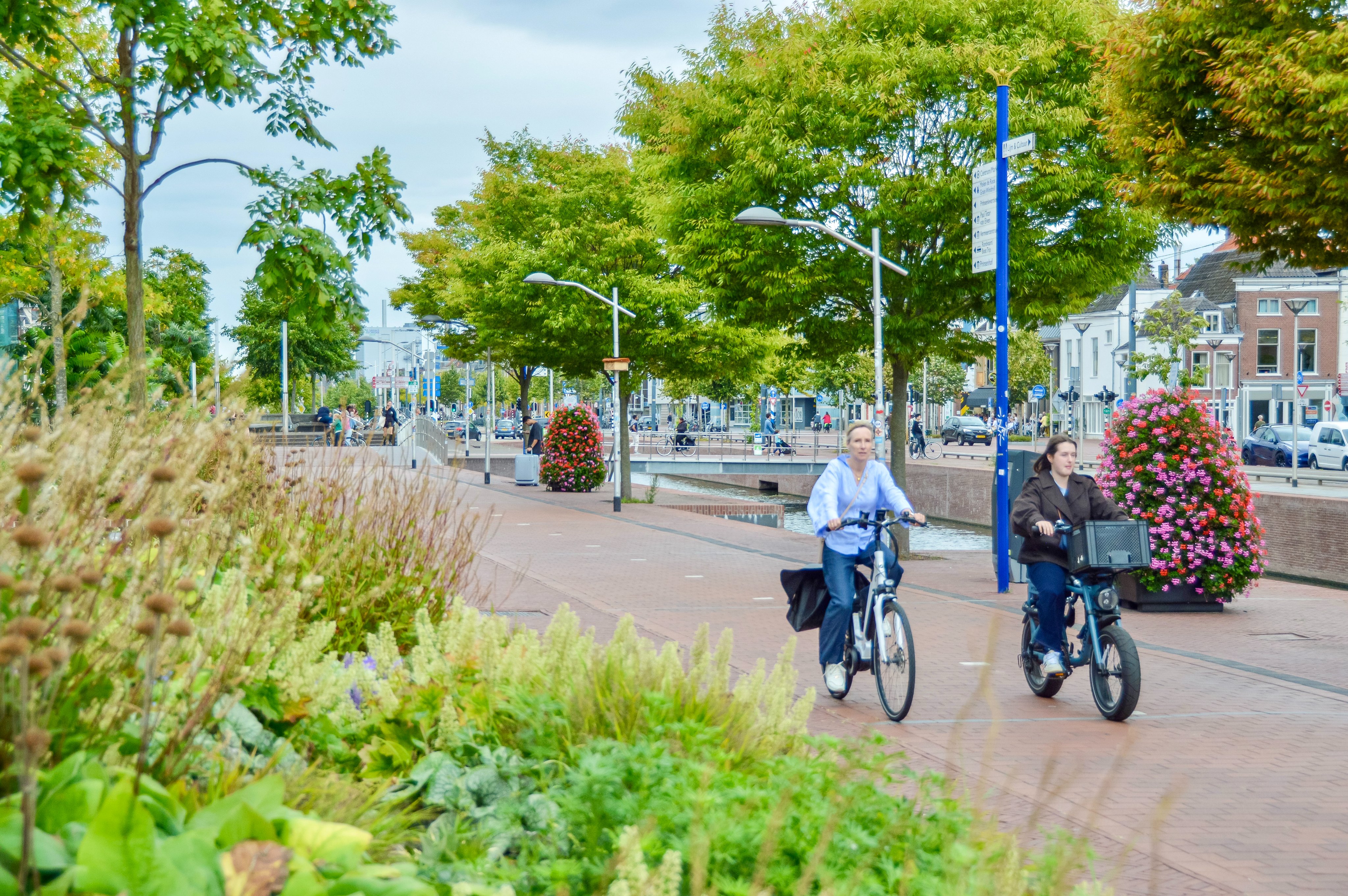
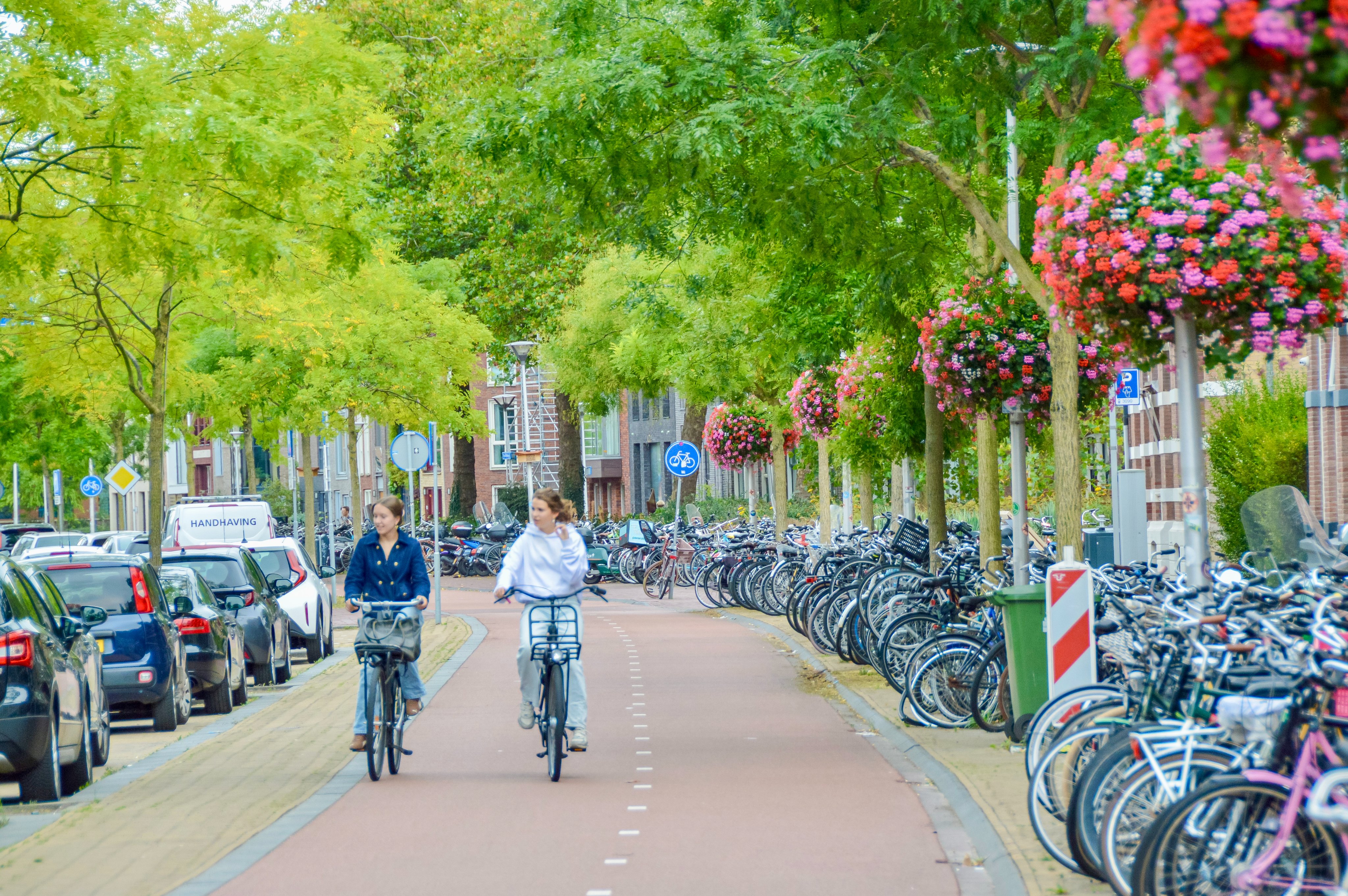
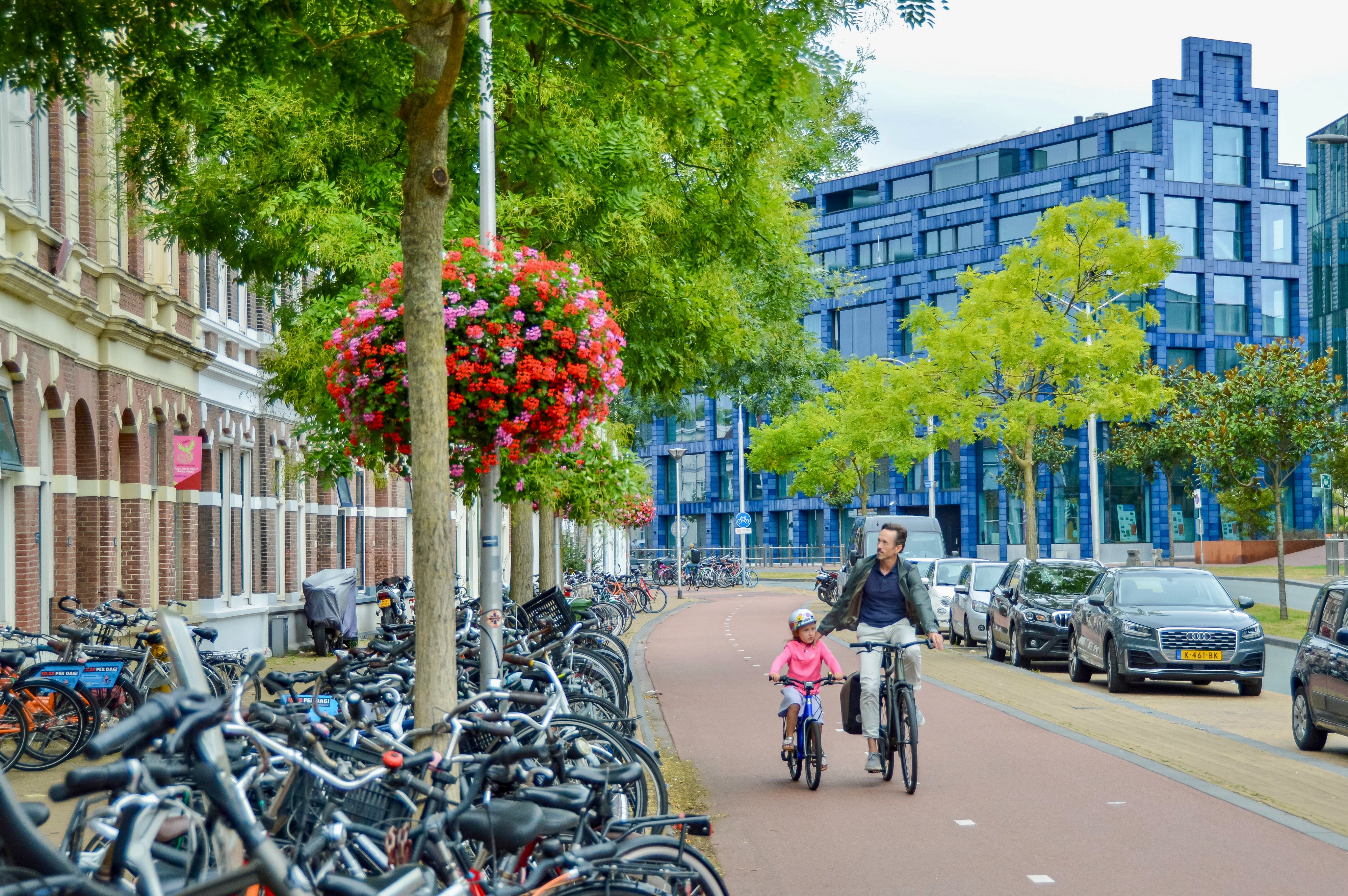
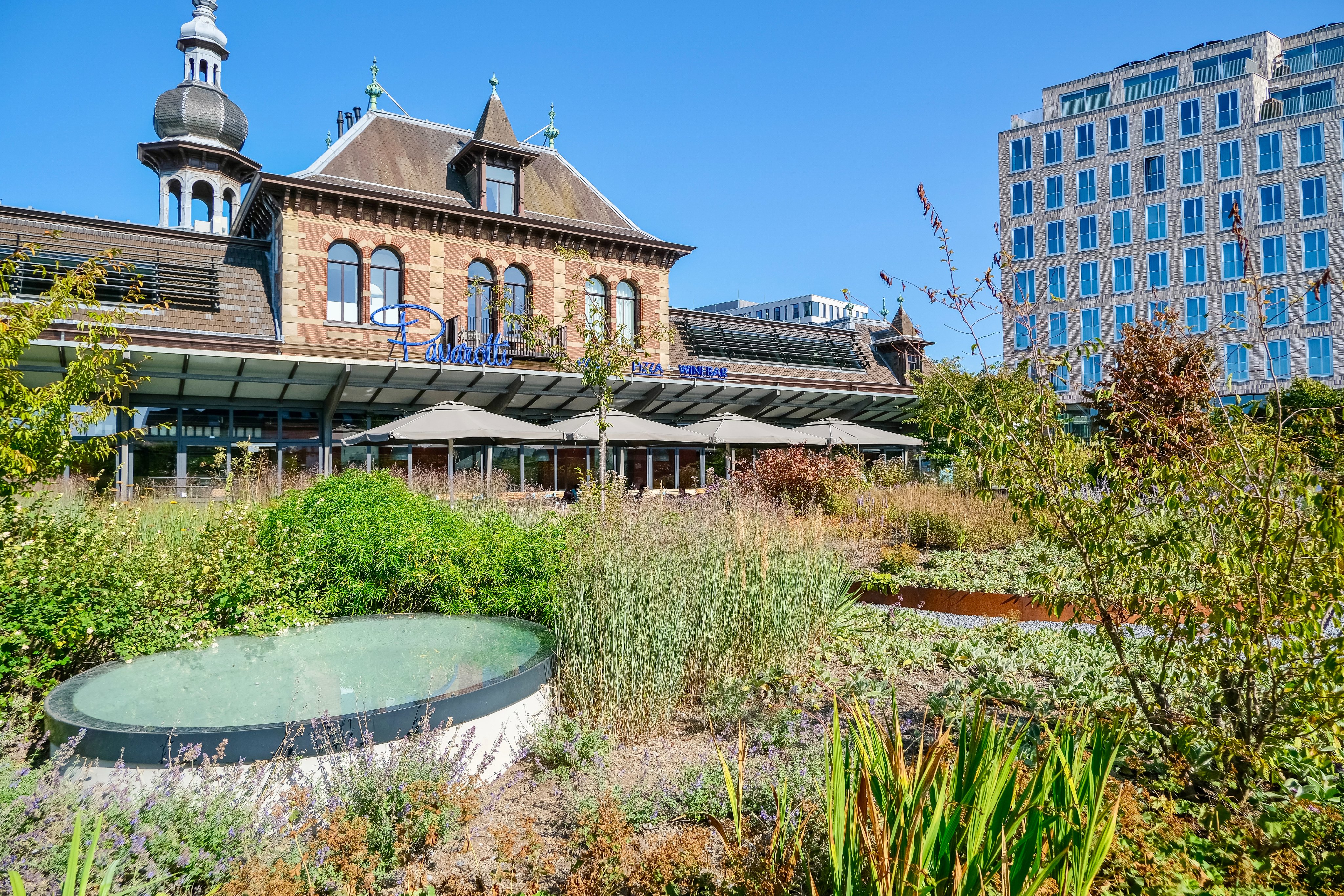
The construction to twin the tracks meant burying the line underground, unlocking the potential to reconfigure the streetscape and create what is now a wonderful welcome mat to anyone arriving by train. In the place of car-parking and the viaduct, the Phoenixstraat and Spoorsingel are open and airy, with broad cycle tracks on either side of a restored canal, trees and green spaces to water capture in rainy months and shade in summer months, and a two-lane road to carry a reduced amount of traffic. Since the writing of Curbing Traffic, the City has also built lush planters on the north side of the new station building and is nearing completion of a liner park to the south that are fast-becoming welcoming public spaces for residents and visitors alike.
The project may have nearly bankrupted the city, but the results have had an immense impact of the quality of noise – there’s nothing quite like coming home from busy travel to the quiet when you exit Delft Station – and increase in social spaces, and connection not just to cities along the train routes, but with the city itself.





The Hearing City
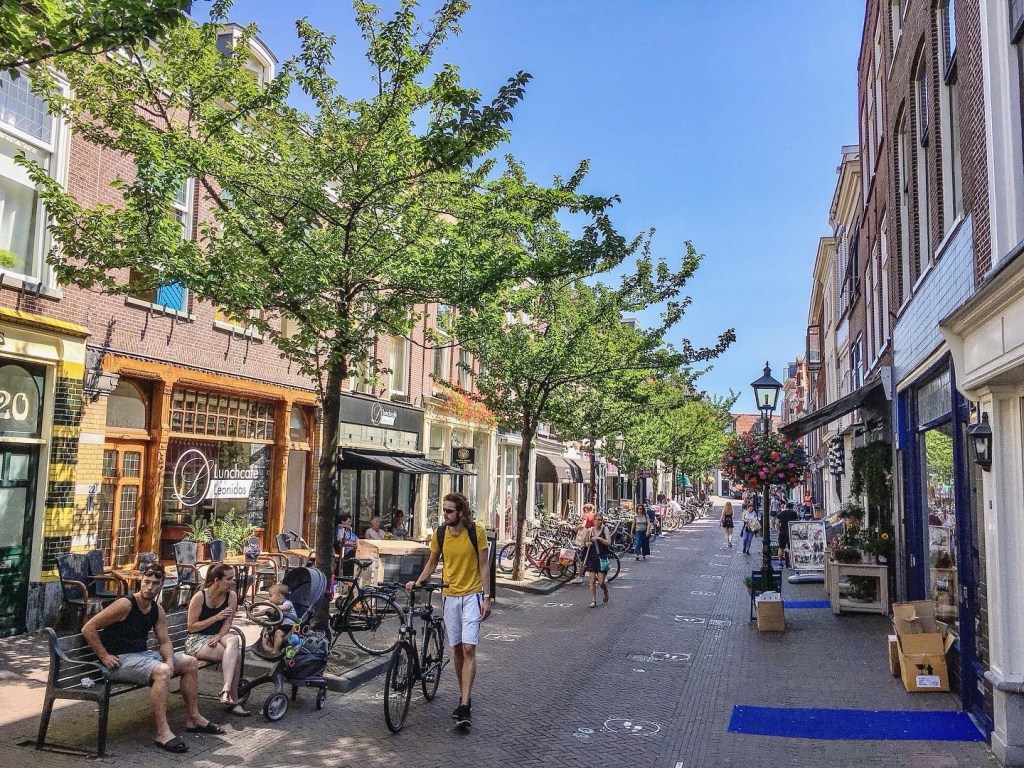
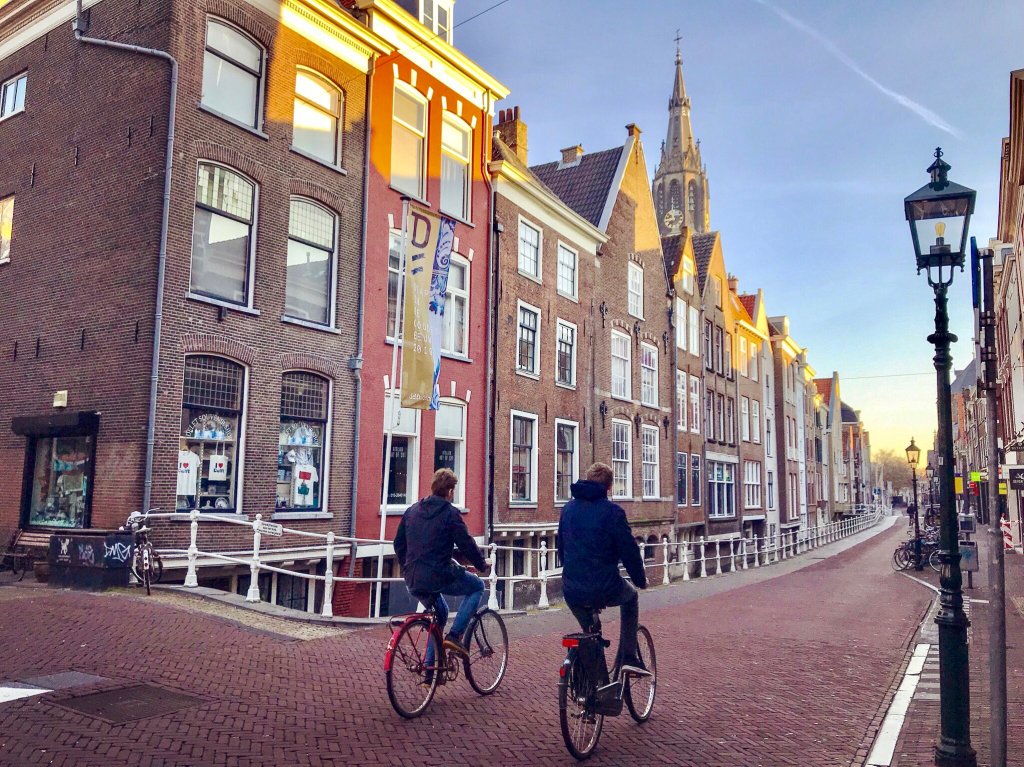
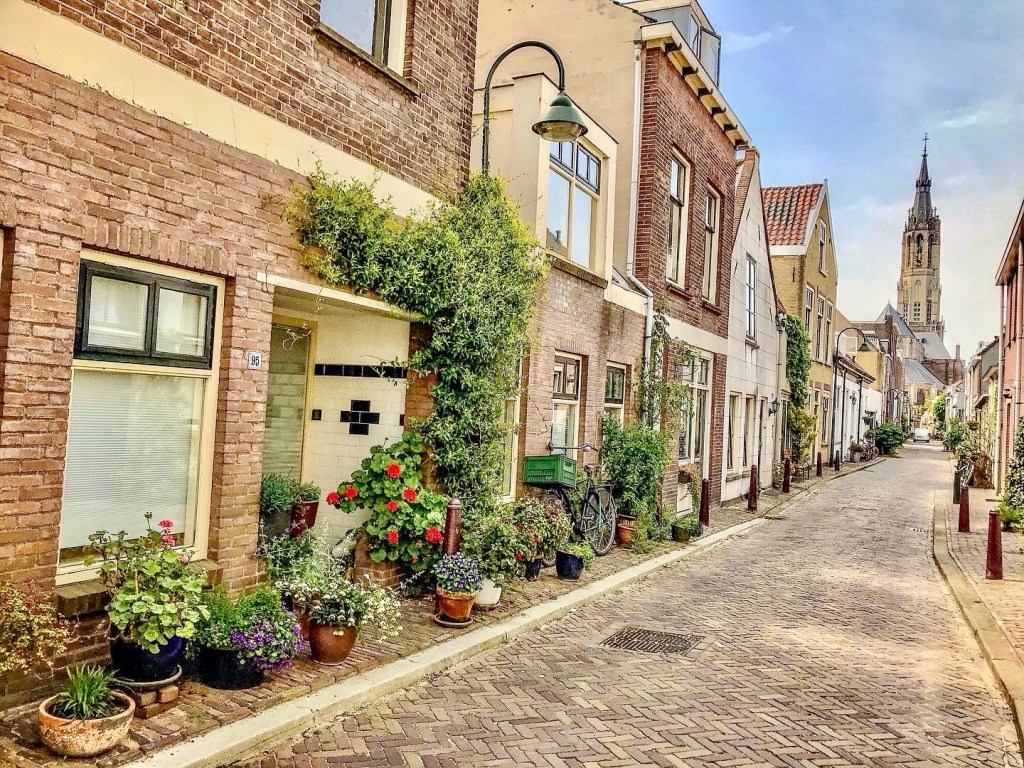
After enjoying the calm outside the station, just a short walk takes you into Delft’s city centre, and beautiful trip into history with its Old and New Churches, narrow Dutch streets, and of course the iconic canals. We often find ourselves mesmerised that we truly do live in a postcard.
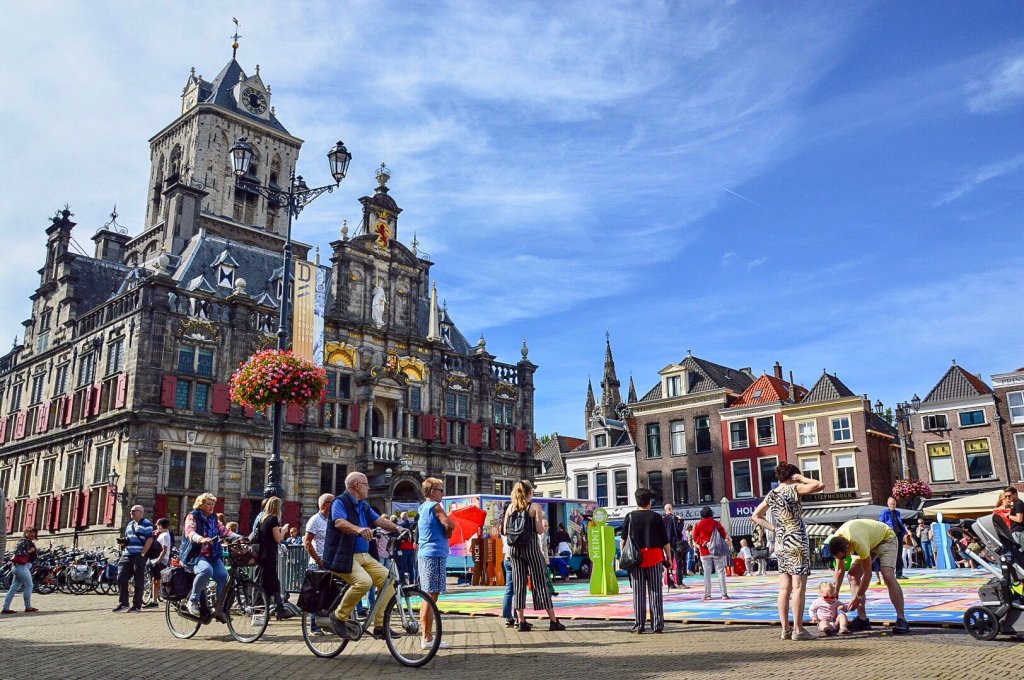
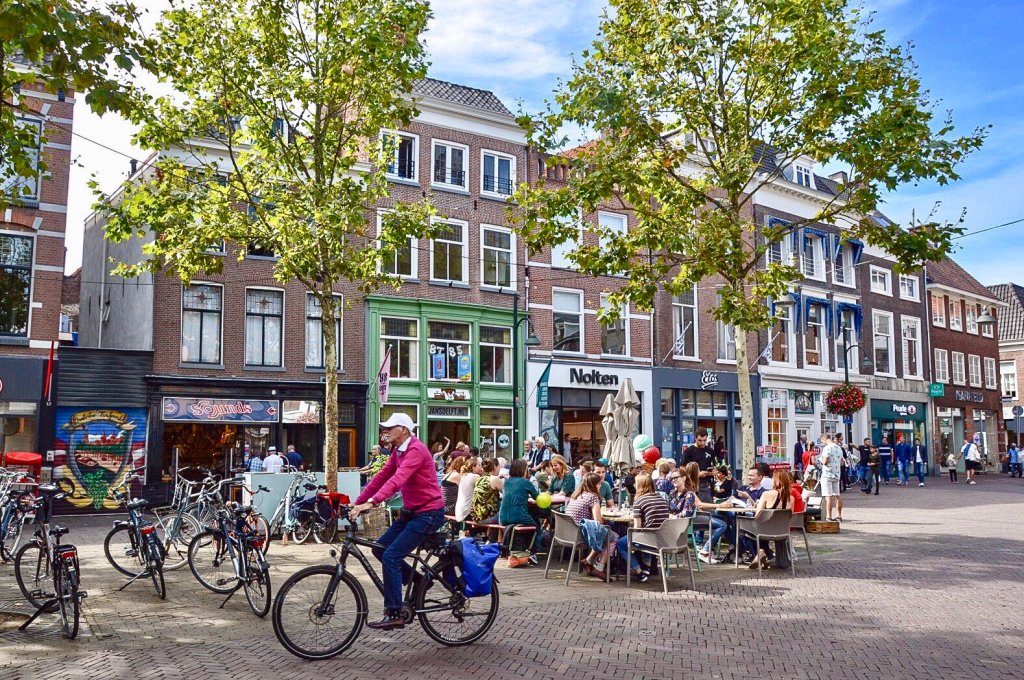
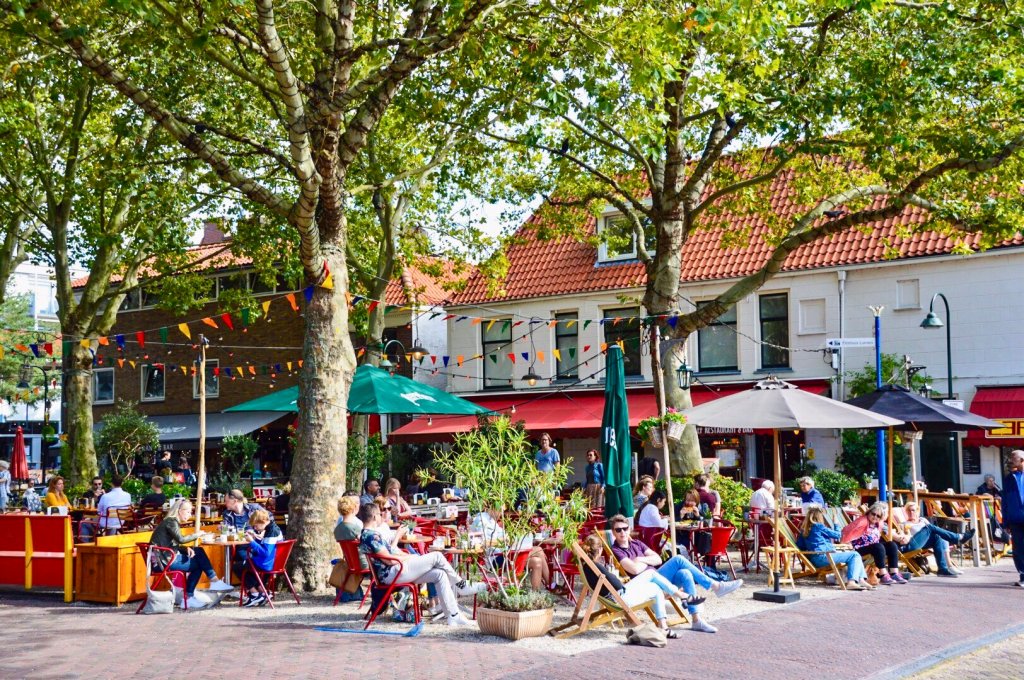
But much like the transformation along the rail line periphery, Delft’s centre is also the stage of some remarkable urban transformations that all began with a policy idea emerging shortly after WWII to create an autoluwe binnenstad (low-car city center). Today, cars are all but absent from the centre thanks to ongoing efforts since then to shift public space from the storage of cars to space for people, the most notable being the Grote Markt, or main square. A pilot implemented in 2003, and not without a fight with local retailers, transformed the living room of the city that was once a parking lot, complete with a bus loop, into a vibrant public space that hosts a weekly market on Thursdays, and countless events throughout the year including the annual King’s Day celebrations.
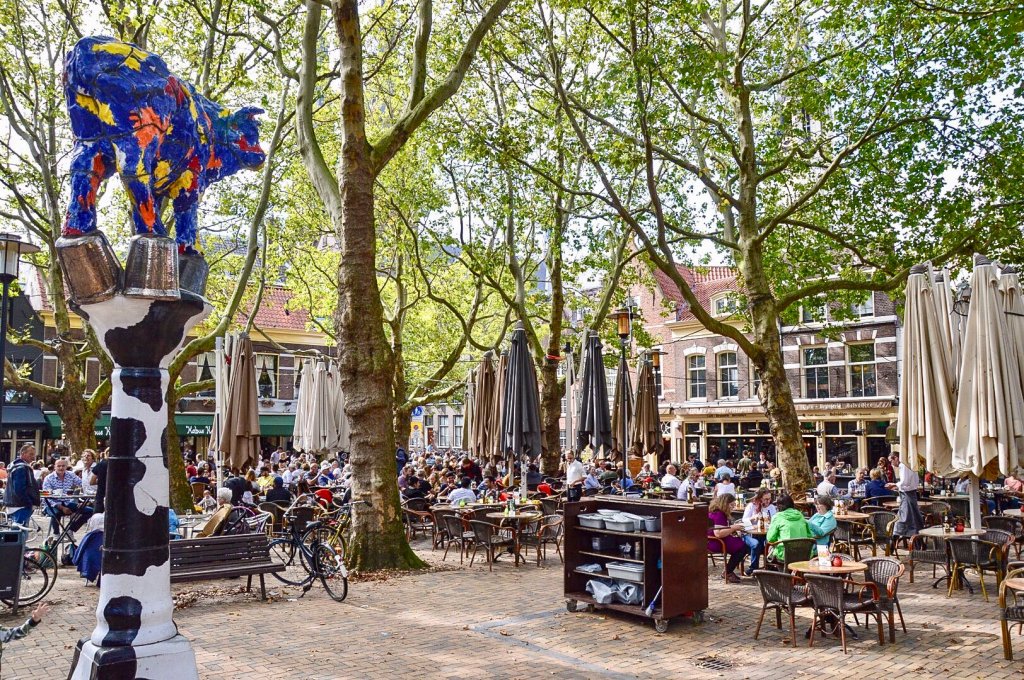
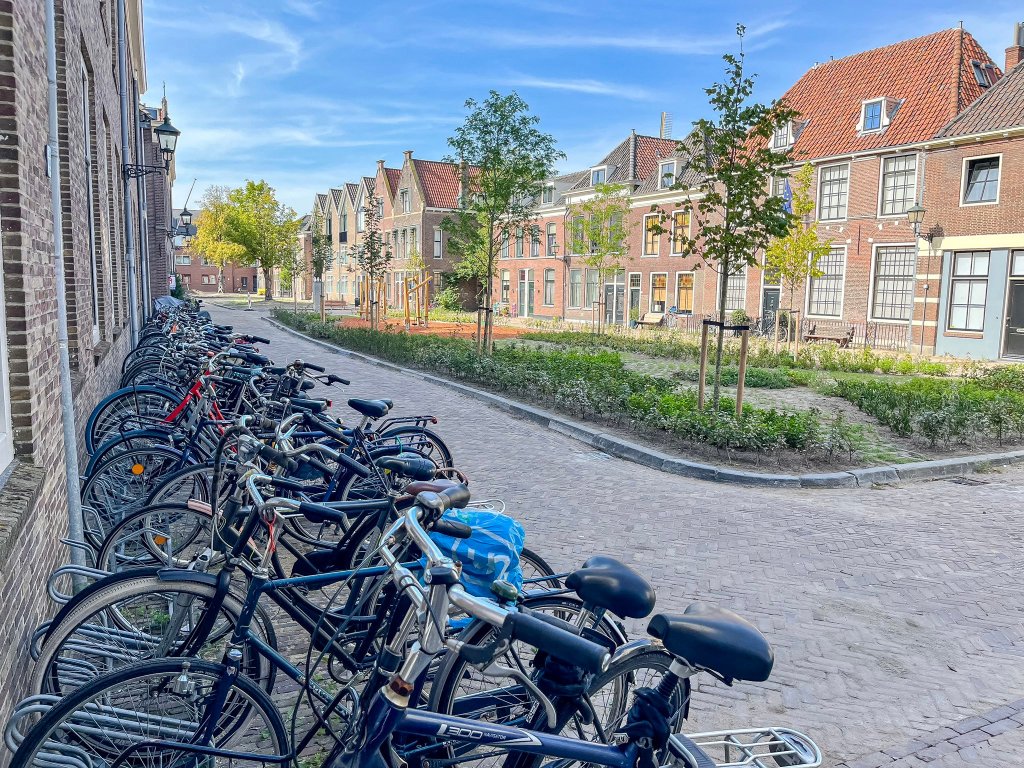
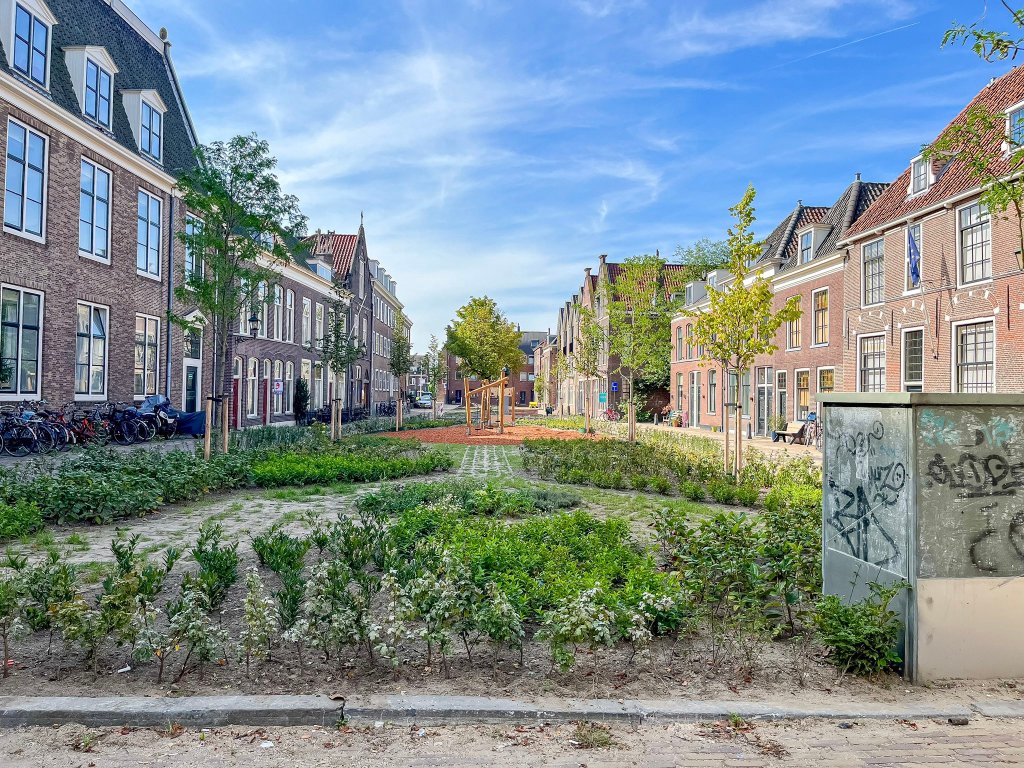
The work continues as each year more and more car parking spaces are removed along the canal and in other squares throughout the city, like in the Bagijnhof that is now green space complete with a playground for neighbourhood children and seating for those wanting to enjoy the quiet and local birdsong. Those car free canals are also the place for spontaneous gathering, or in the case of the Chamber Music festival, mini-concerts to be enjoyed by passersby by. Delft’s centre is a delight to the senses, something only possible because of bold decision-making made over 75 years ago.





The Resilient City
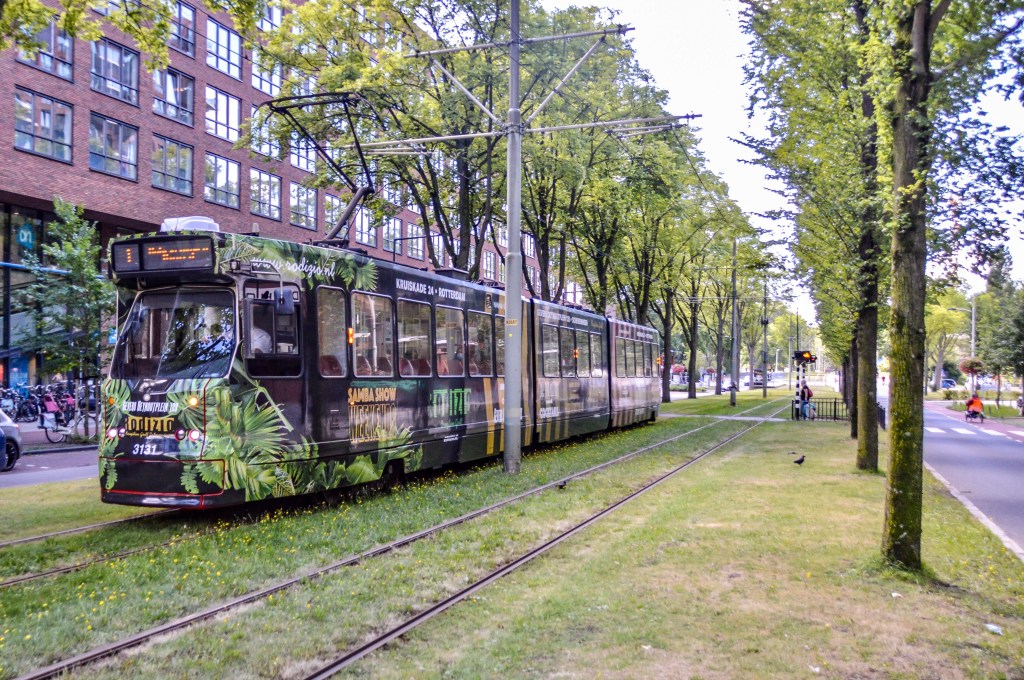
Many of the urban planning decisions made in Delft over the last few decades have also been looking at how to future-proof the city. There are of course efforts to install solar-panels of the roofs of public building, and investments in public transport connections like the rail-line upgrades and a new tram line through the Technical University of Delft campus. But it is the transformations to public spaces that may be the most underappreciated but having the most impact of Delft’s resiliency.
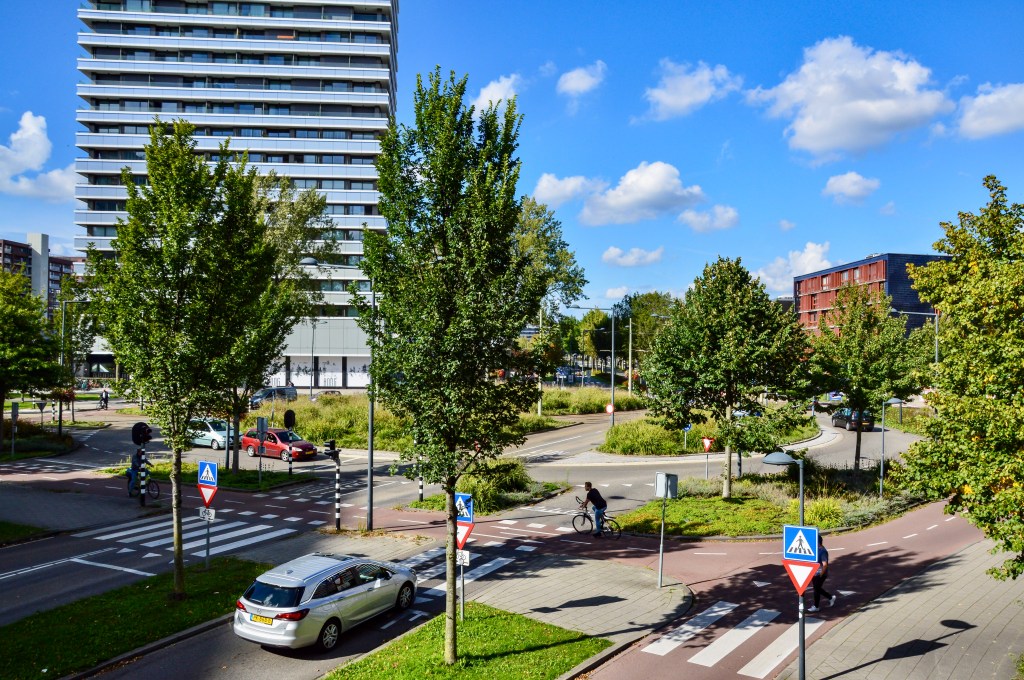
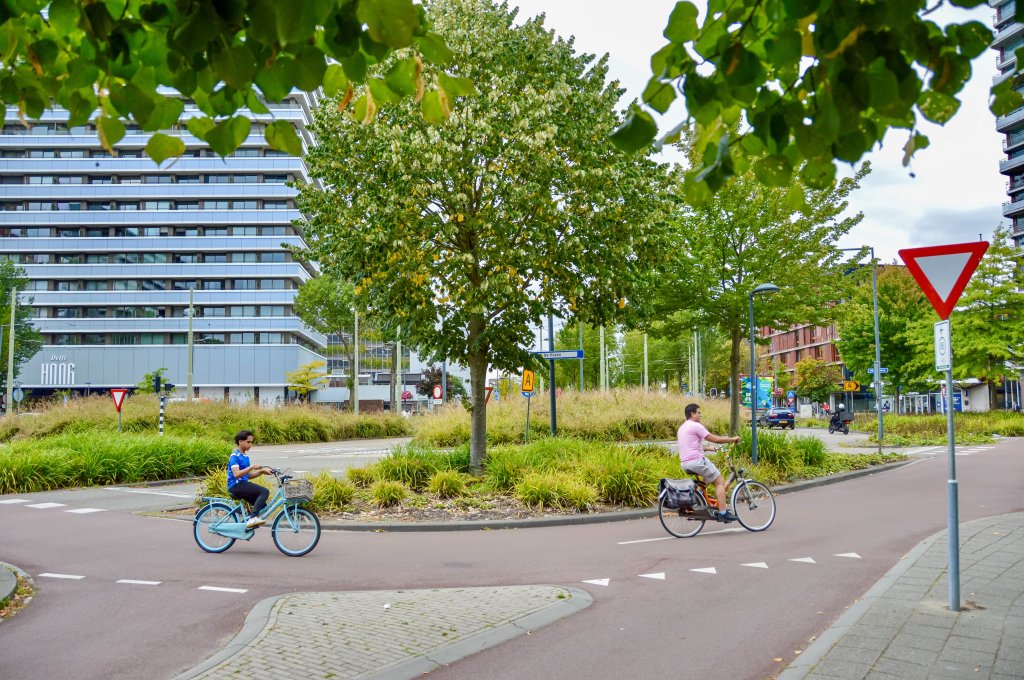
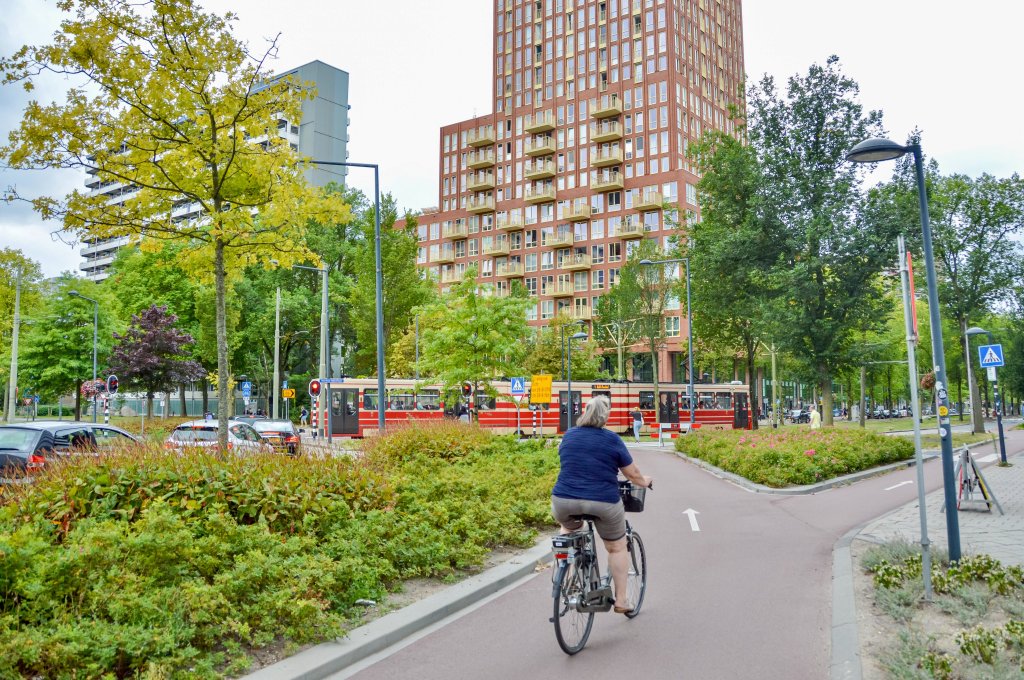
Away from the car-lite historic centre or the big budget project of burying the viaduct and replacing it with a linear park, in the neighbourhood of Poptahof a more subtle change has been occurring. There, a former four lane road a massive intersection at Delflandplein was given a road diet. By shifting to just two lanes of car traffic, two 4-metre bidirectional lanes on either side, and trams and dedicated bus lanes running through the centre lanes, a paved area of about 5,575 square metres was cut roughly in half, with the perimeter and center of the traffic circle filled with flowering sedum, wild grasses, and perennial plants. Additionally, nearly all the non-asphalt surfaces are permeable, able to capture excess rainwater in the (numerous) wet days of a Dutch winter and provide cooling in the increasingly hot summer months.



This City’s Never-Ending Story
One of the things we find so special about Delft, and why we chose to write a whole book about it, is because its story is still being written. A year doesn’t go by where some new improvement or adjustment is made to the public space that makes it a more enjoyable place to move through and to spend time. When we moved from Canada, we wanted to give our kids a place to spend their teens that gave them the freedom to discover the city on their own. The place has not only left a strong impression on us, but our kids now dream of a future where this city is still their home as well, and where they can be a part of writing its future stories!
Want to learn more about Delft? Curbing Traffic: The Human Case for Fewer Cars in Our Lives is available for purchase from Island Press HERE.
Or better yet, contact me to organise a “Curbing Traffic Cycle Tour”, visiting these and other locations highlighted in the book, as well as a few new stops along the way.
 Modacity Creative
Leave a comment