
The Slovakian capital, nestled along the River Danube, Bratislava may not be on the radar of many urbanists’ as a must-visit. Not far from the Austrian cultural and design capital of Vienna and the bustling and historic streets of Budapest, Hungary, it could be forgiven that some may pass up the opportunity to stop in for a visit in favour of these larger centres.
However, for urbanists like us that are intrigued by cities that are quietly shifting their story to a more human-scale European hot-spot, it is well worth a long weekend. Of course any visit should include getting lost in the pedestrian-friendly Old Town, which has been car-free since the Velvet Revolution in 1989, or a stroll along the banks of the River Danube. For us, it was the combination of burgeoning cycling infrastructure, reclamation of public space for children, and reimagining public space that invites social gathering that had us most excited for the potential that advocacy and political leadership in Bratislava is unlocking.
While we would agree with local advocates that the city is still a work in progress, the ambition is evident. Each visit uncovers something new and exciting as Bratislava’s history and future converge towards a city for people of all ages.
Start with Children: Reimagining what streets are for
Two years ago the first Start With Children Summit was held in Bratislava. Organised by the City of Bratislava and the Metropolitan Institute of Bratislava (MIB), it is a co-led of two passionate people, Petra Marko of TU-BA (part of MIB) and Simon Battisti of Qendra Marrëdhënie in Tirana, and it’s vision is simple: Creating cities that work better for children and, in turn, are better for everyone.
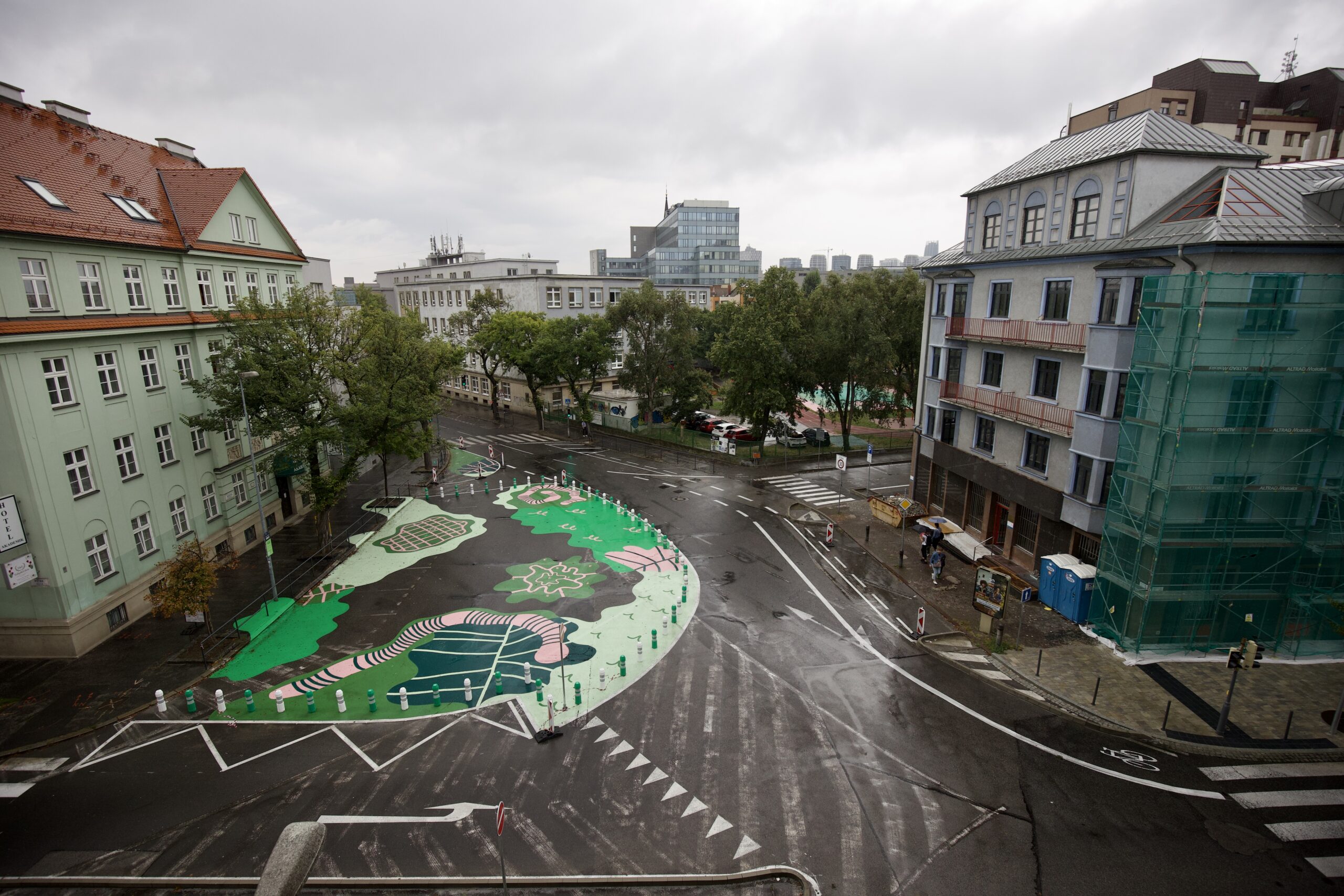
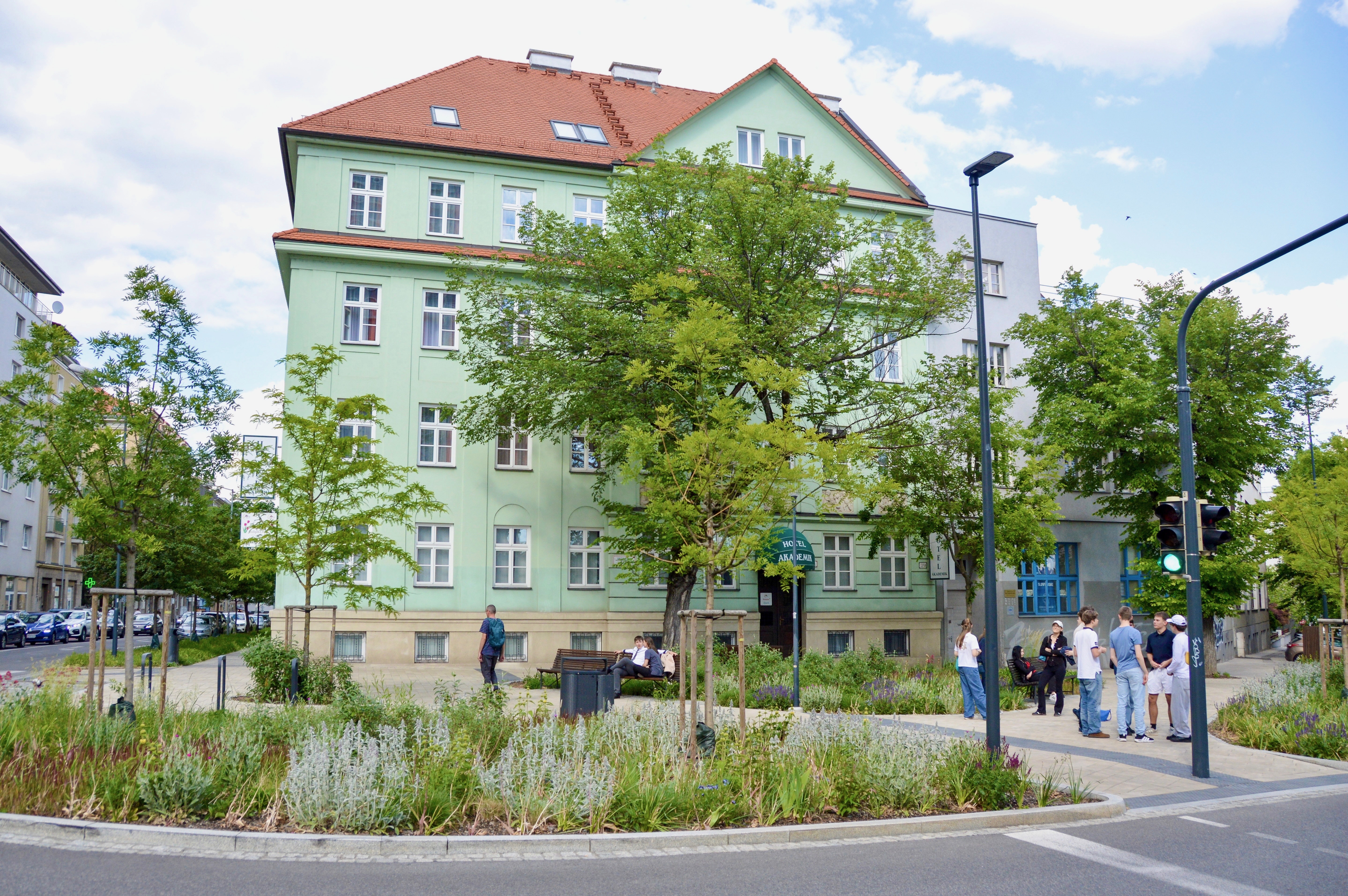
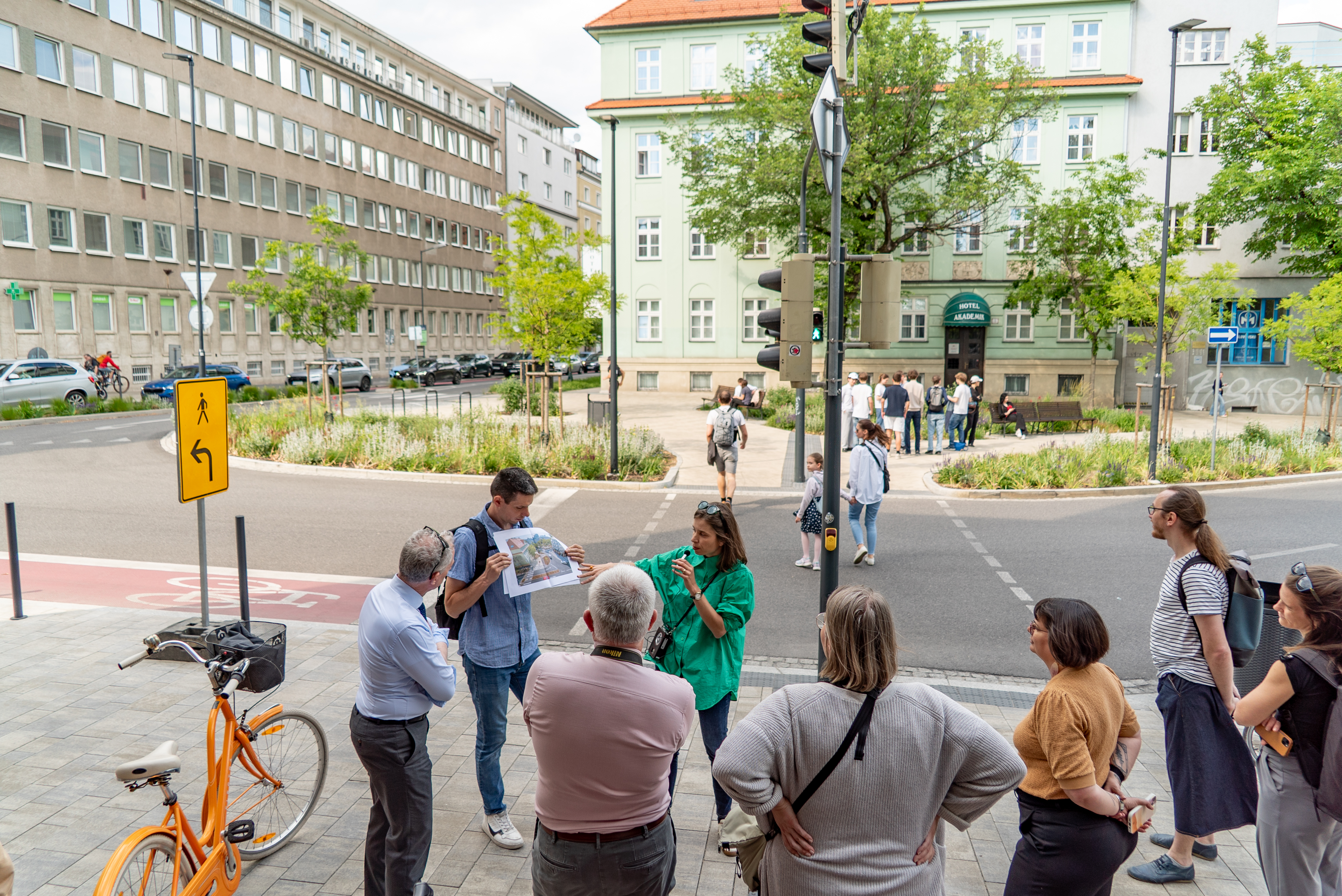
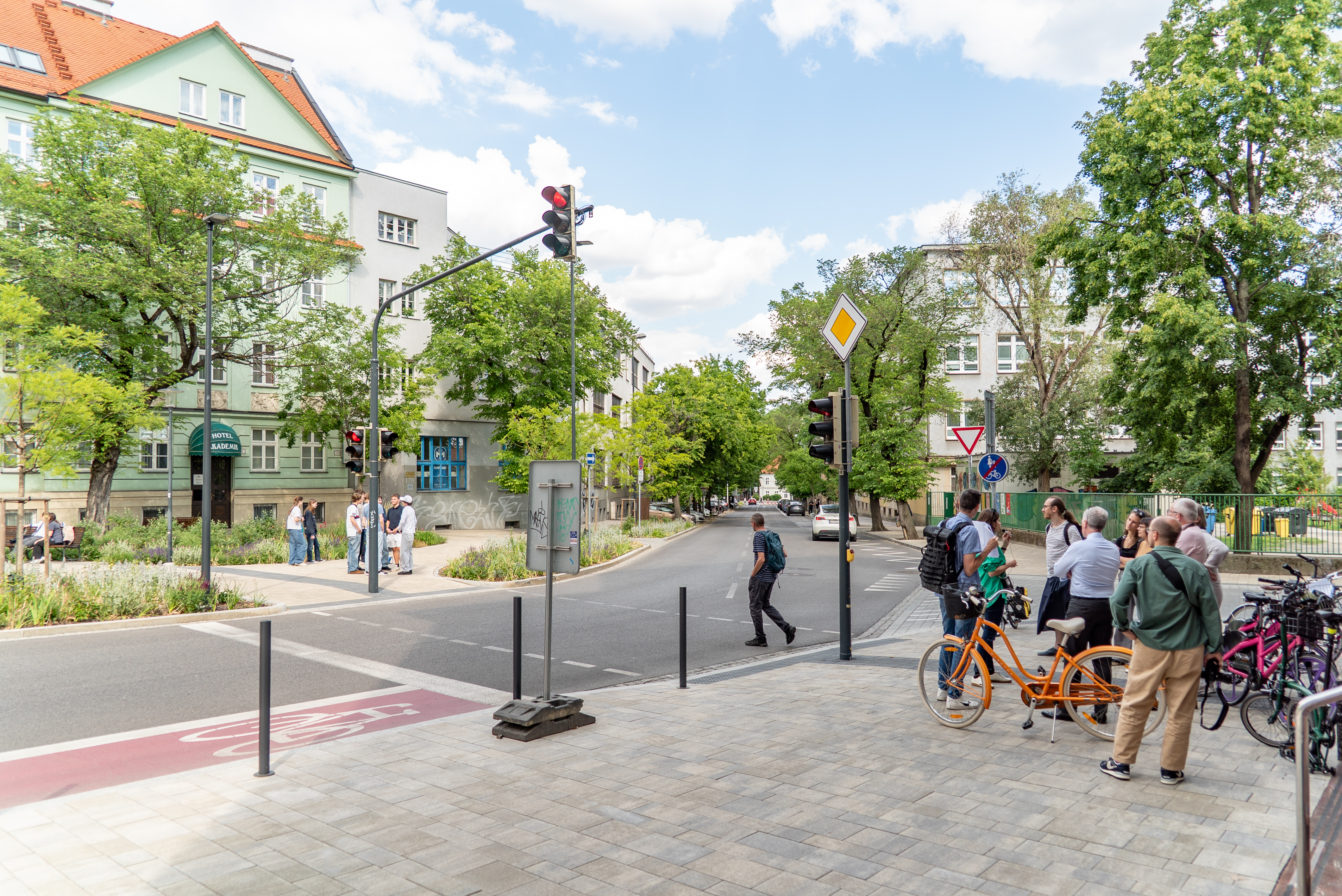
What’s exciting is this vision is not just discussed in Summit workshops and plenaries or in this year’s miniseries – the reason we were visiting Bratislava. Like many cities, Bratislava is also experiementing with transforming car sewers into school streets as a part of MIB’s City for Children initiative, founded in 2019 under Mayor Matúš Vallo as a strategic hub for urban planning, public spaces and participation. At Vazovova School, a formerly hostile intersection has been transformed first through a temporary pilot intervention and then, through evaluation and engagement, made permanent, complete with the addition of seating, trees, and lane reduction.
On a warm Tuesday afternoon, the new public space was being enjoyed by local teens just hanging out after school. While urbansists will delight at the physical design elements and reintroduction of natural elements, what stands out is that for young people, an inviting area that allows them to be social in oublic space is just as – if not more – important as how pretty it looks. It will be exciting to see the improvements like these realised in all 20 of the schools identified in the City for Children programme as Bratislava continues its journey to becoming a place that is great for kids – and everyone!
Bratislava by Bike: Becoming cycling-friendly one pedal at a time
When Chris visited Bratislava for the first Start With Children Summit in 2024, he cycled some of the city’s earliest cycle lanes with local advocates from the Slovakian Cyklokoalícia (Cycling Coalition). On our recent visit just two years later, it was fabulous to see how that initial network continues to grow thanks to their efforts to demand safer space for cycling and a municipal government that recognises the value of cycling in the city’s transport network.
But while the improvements to the network within the city centre like on Dunajská that links the Old Town to the Nivy shopping mall with a separated cycling path, what was exciting to see is how the Petržalka borough to the south and across the River Danube is now enjoying access to cycling.
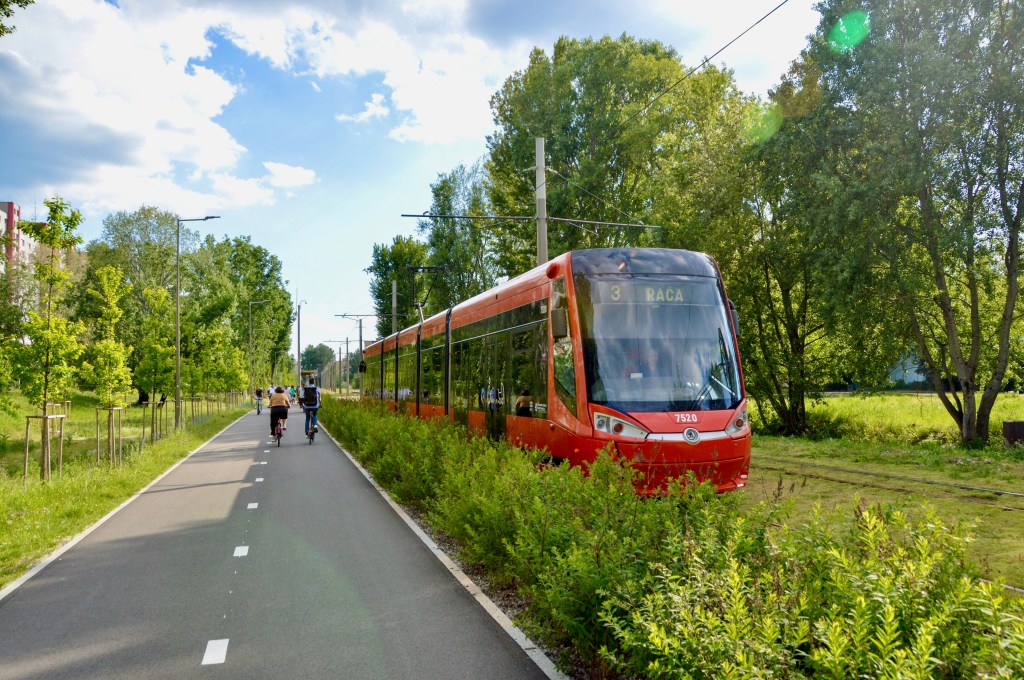
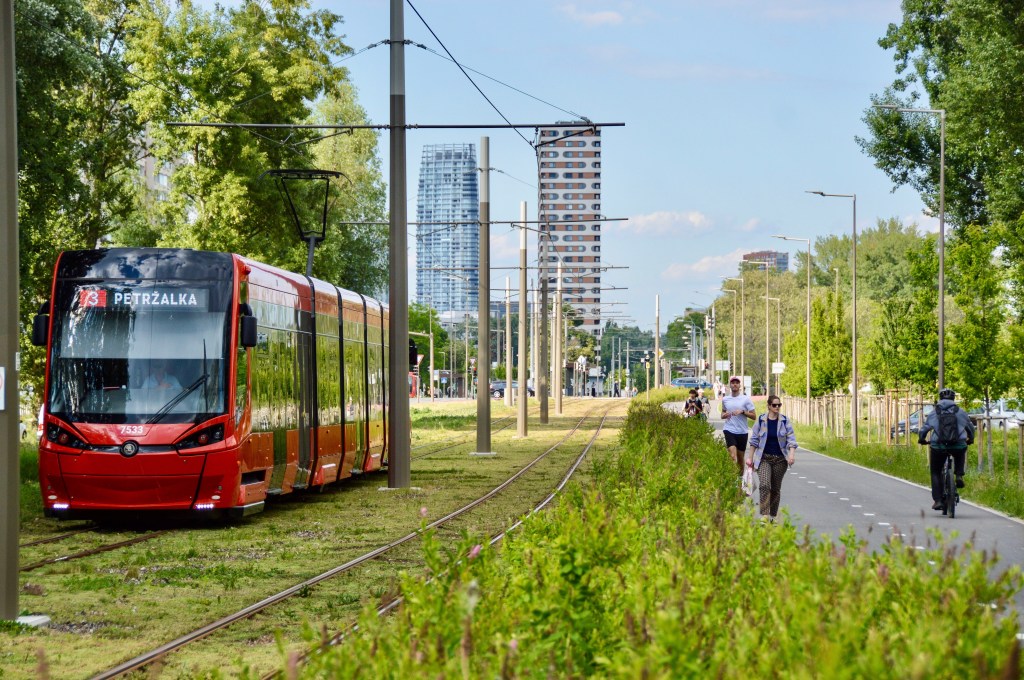
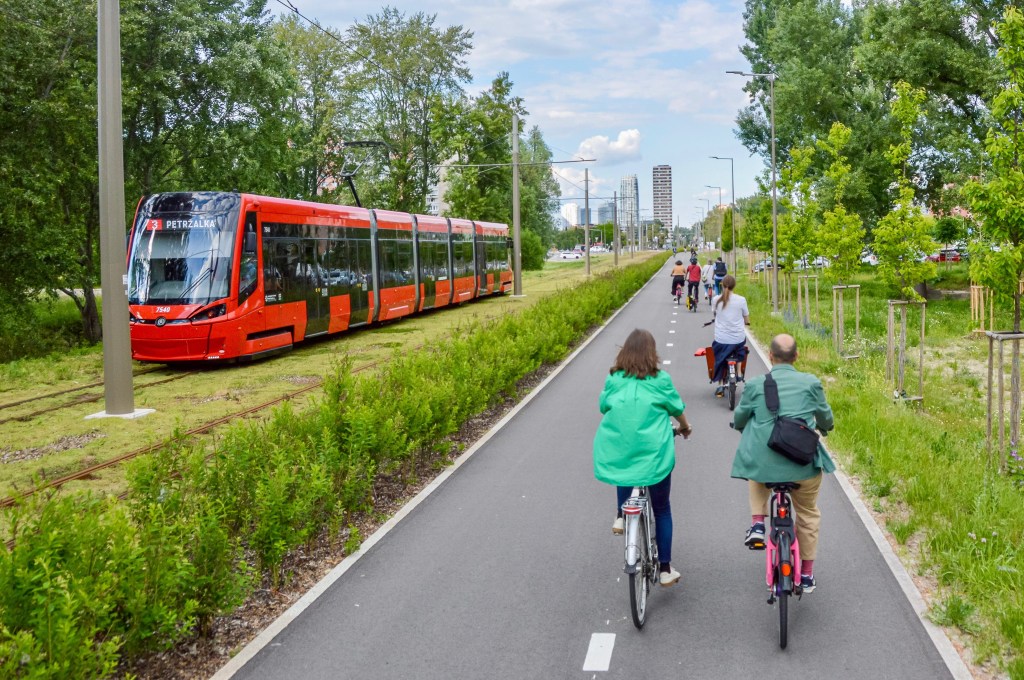
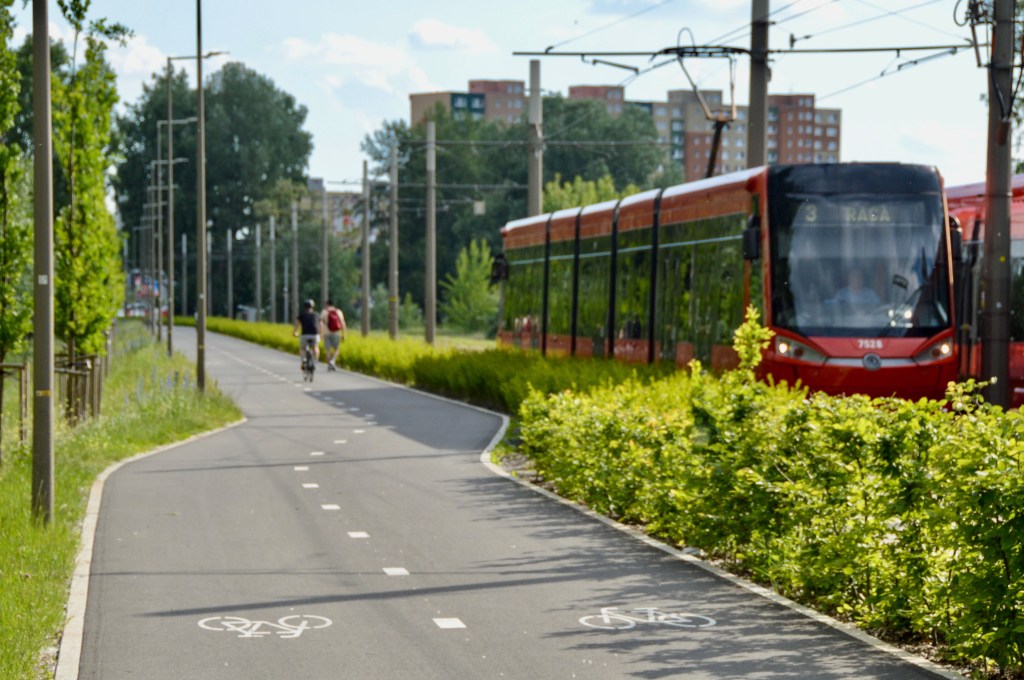
In the summer of 2025, the long-planned extension of the number 3 tram line was completed, connecting the upwards of 100,000 residents of the communist-style residential area. Tram enthusiasts will of course enjoy knowing that at peak hours, the tram runs every two minutes and are at capacity as residents now use it as a major sustainable transport route into the city. Not to mention the 22,000 sq. m. of sedum that covers the entire line except at intersections.
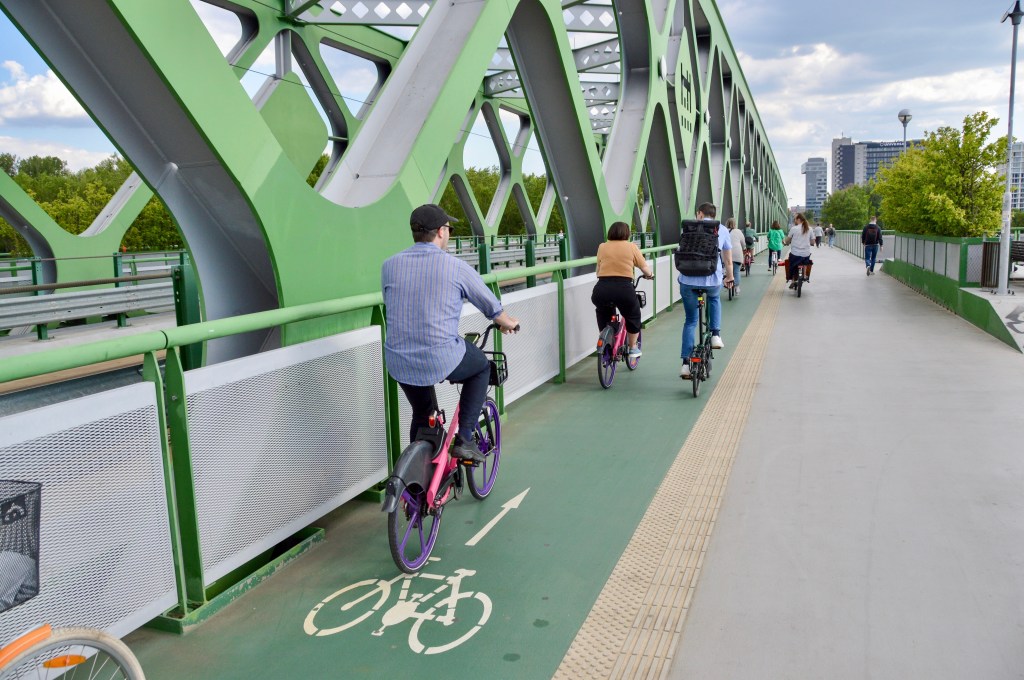
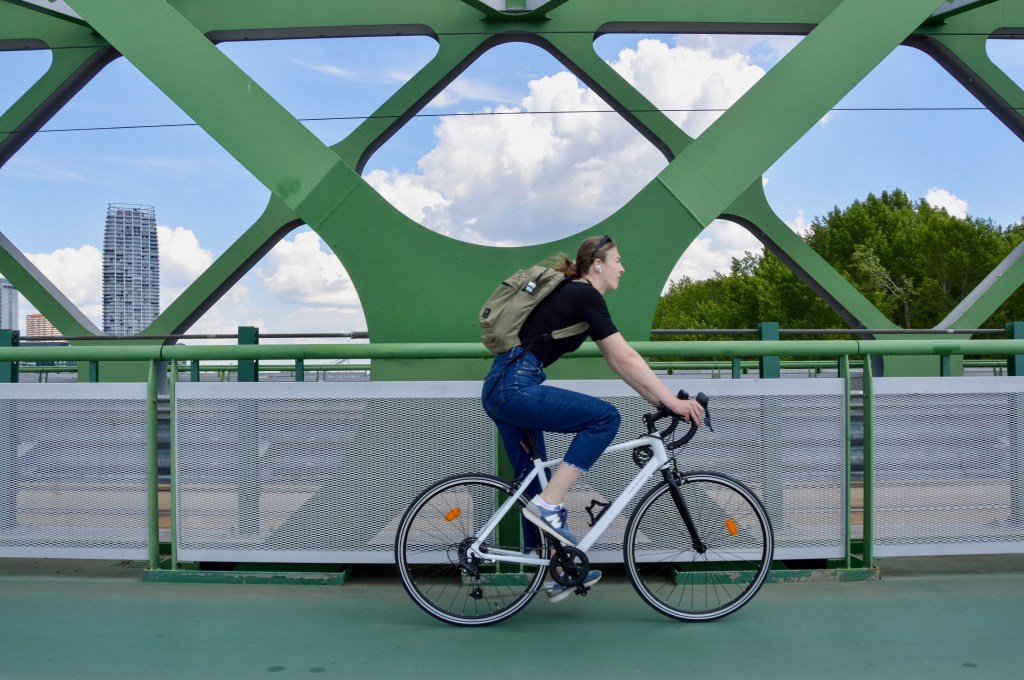
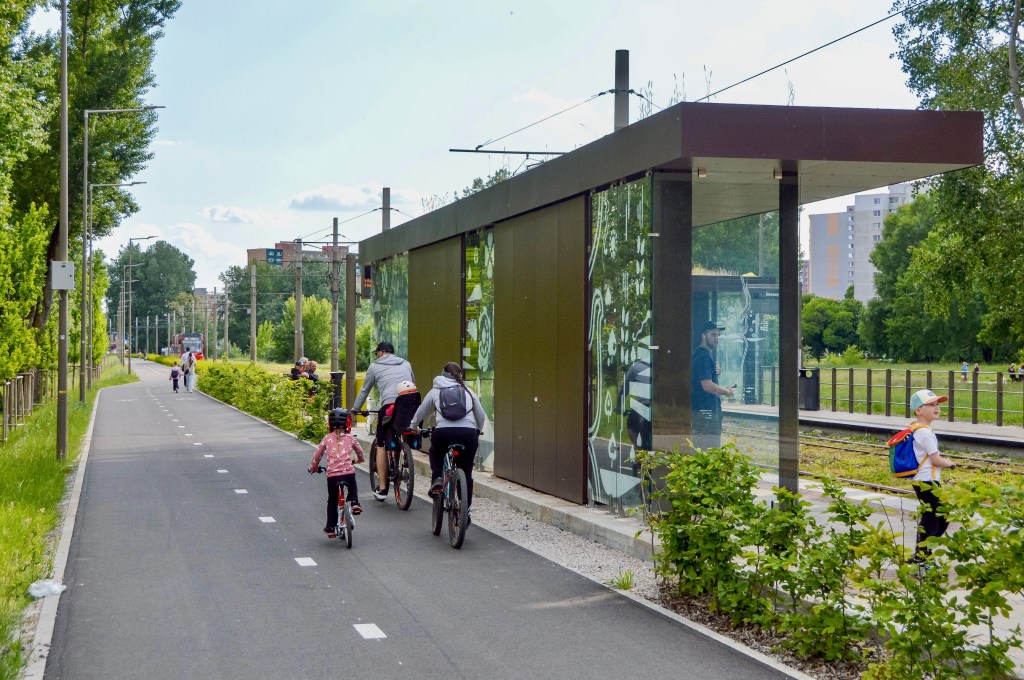
For us however, it is the 6-kilometres of cycle way adjacent to the trams that is inspiring to see, providing residents in Petržalka a safe, quiet, green and connected option for commuting and leisure alike. When cities ask how they increase cycling, the immediate answer is to build a network that actually connects not just the centre, but also the neighbourhoods further afield. The cycle path also connects to a bridge crossing only for walking, cycling, and trams, which provides a comfortable option to some of the cities other bridges that are also used by the car network. We also learned it is a key route for the growing Bike Bus movement led by local advocate Tomáš Peciar, co-found of the Cyklokoalícia, to get kids cycling to school while reinforcing there is still work to be done through this soft form of protest.
Given the path was quite busy when we visited – we may have been shouted at for being in the way – it’s a promising step in the right direction to Bratislava becoming a true cycling city.
Space for Play: Creating parks that are actually public
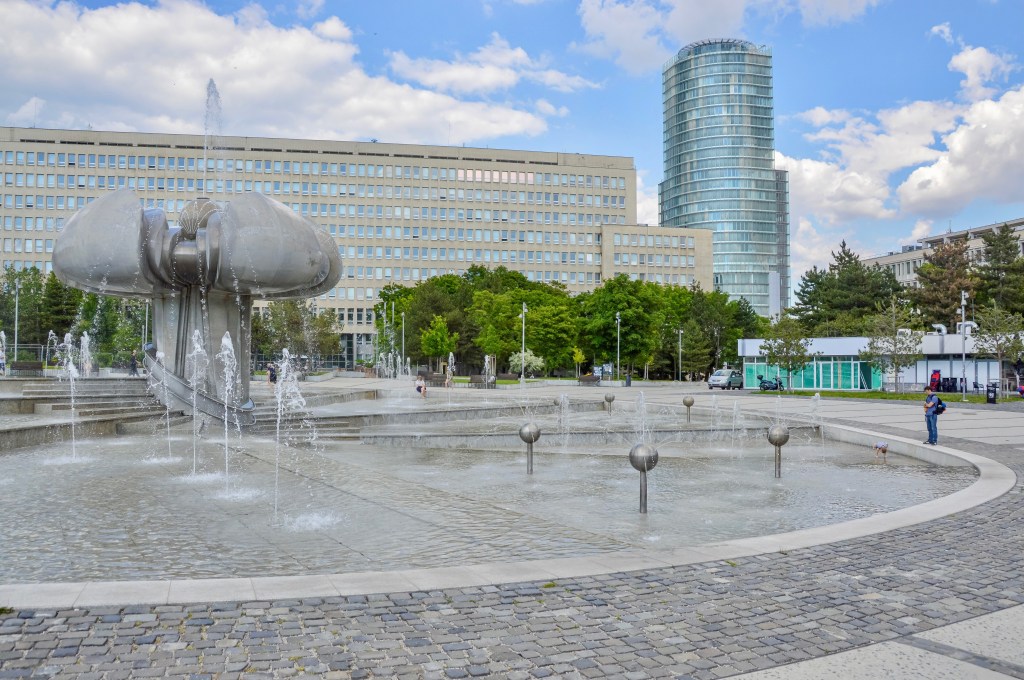
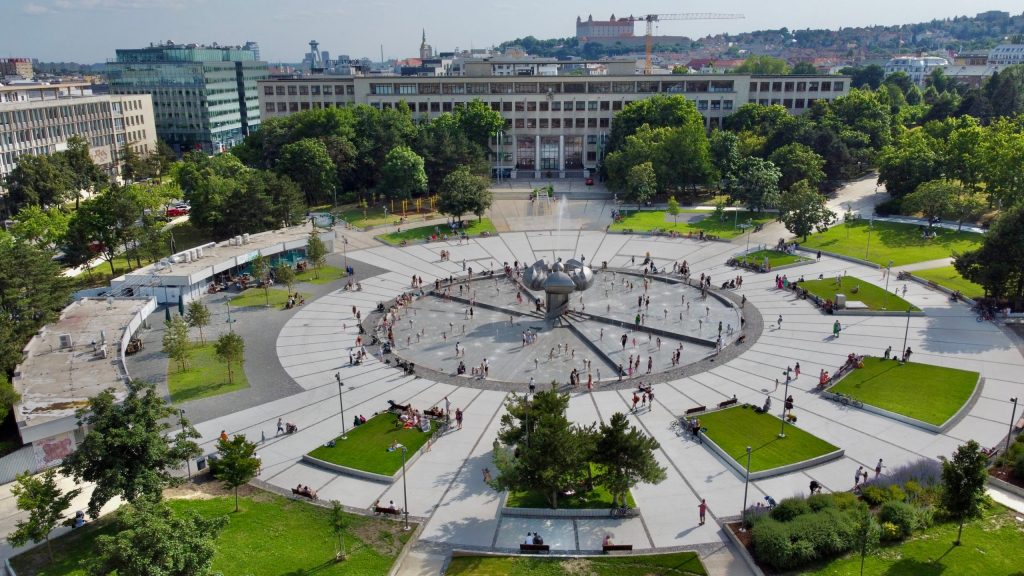
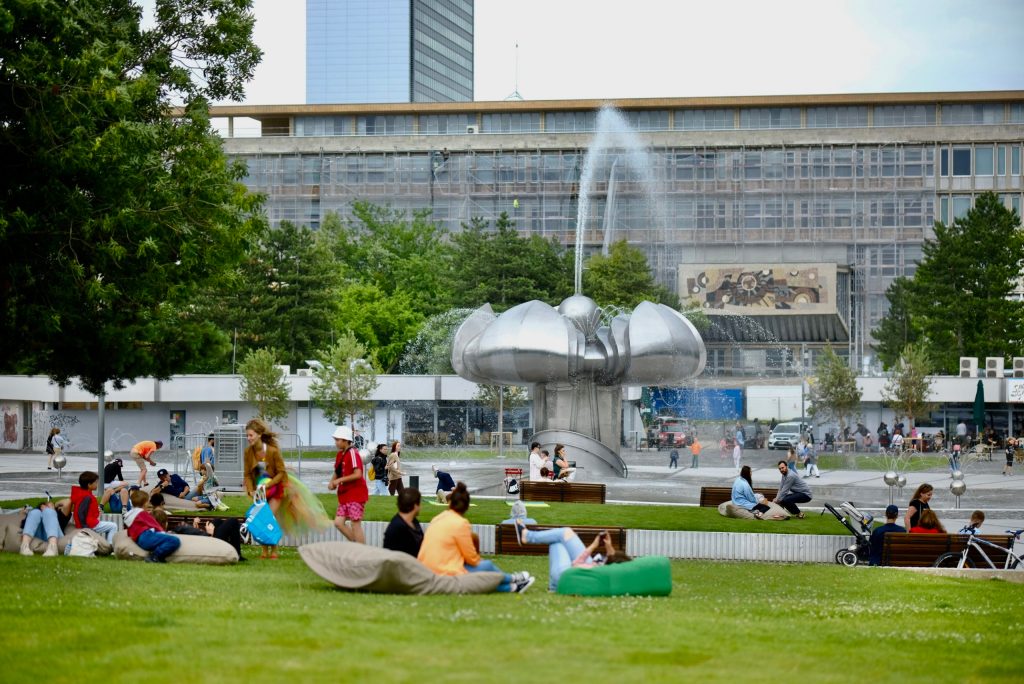
After an afternoon spent wandering Bratislava’s Old Town or cycling on it’s growing cycling network, especially with younger travellers, you may find yourself wanting to cool down. May I suggest Freedom Square? The central fountain recently recieved a face lift, and after being without water for 16 years, was reopened in 2023 to the delight of residents of all ages. We have always been big fans of water features, seeing the dleight on our own children’s faces as they run through sprinklers with other kids, splashing, cooling and down, and doing what kids do best – play!
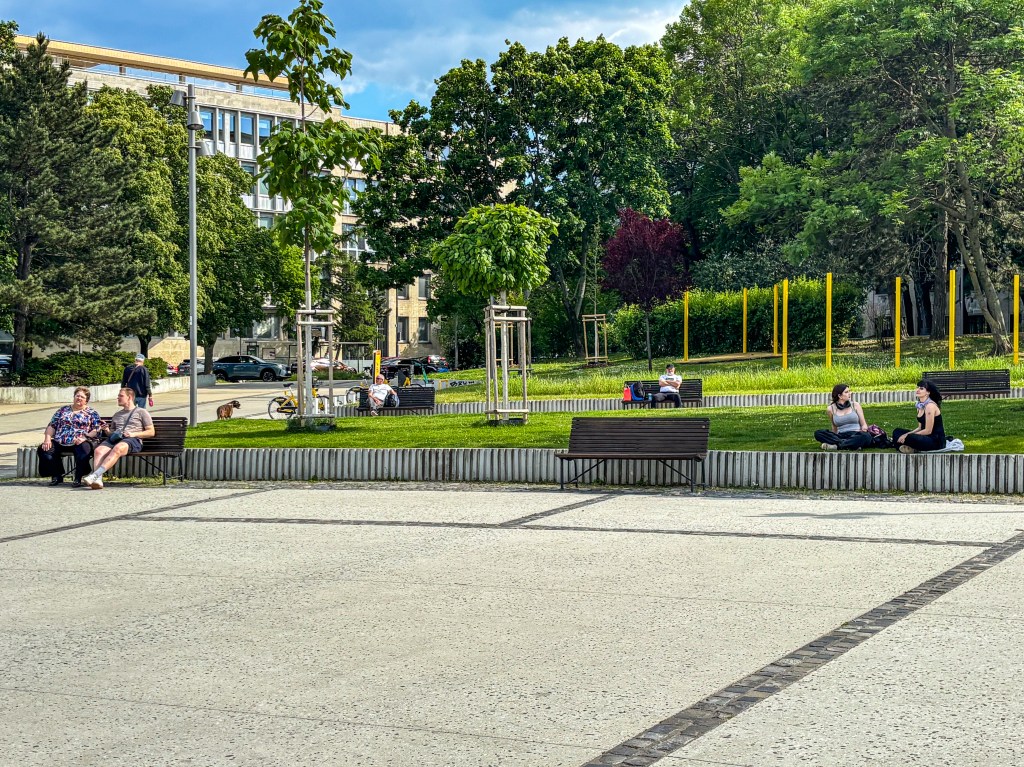
The entire area has been revitalised with cafes, benches and even a new playground, bringing life and play back to this central gathering space in the city. Even on what our local guides referred to as a cooler day – 20 degrees for us Northern Europeans was warm enough – the square was filled with children playing and splashing and adults enjoying some respite from the day. Our stay may have been quick but it was certainly memorable and left us eager to see what comes next for Bratislava!
Have you experienced some of what Bratislava has to offer? Share your experiences in the comments.
 Modacity Creative
Leave a comment