
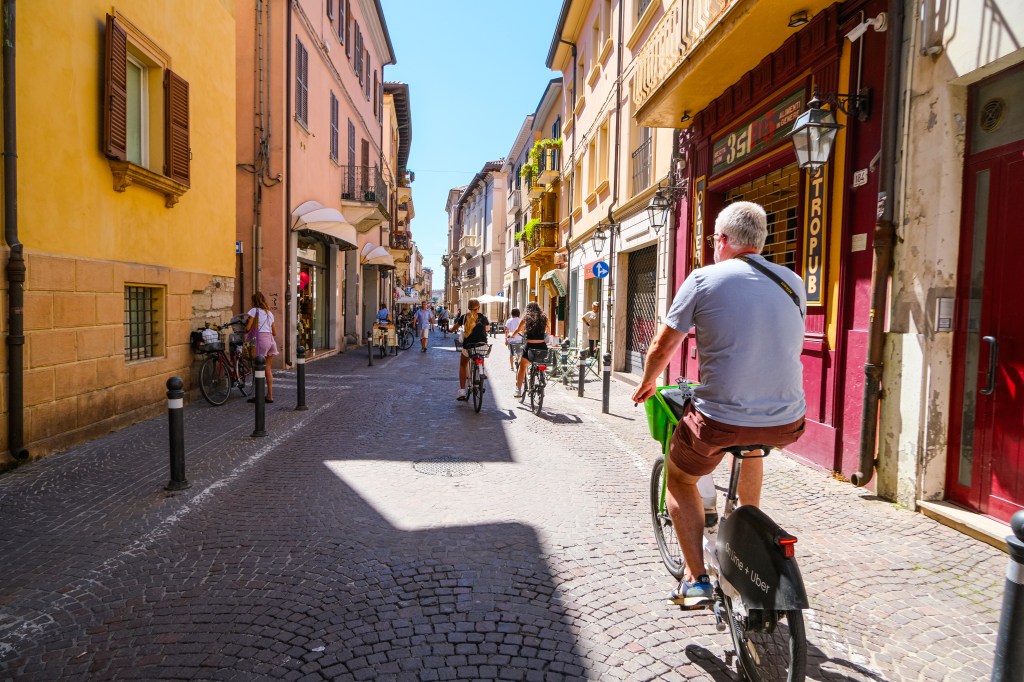
I think Laurianne Krid, CEO of the European Cyclist’s Federation said it best in her opening remarks: “Velo-City is the time when we recharge.”
Truly, each year, as hundreds of urban cycling leaders, professionals, civil servants, academics and advocates come together to share knowledge, experiences, and generate new ideas, the annual Velo-City conference is the moment when many of us find new inspiration and energy that will sustain us for the next twelve months as we all continue our respective efforts to create a world of cycling for all. Fighting similar battle for safe, connected, and accessible cycling can be thankless work, where it can feel we’re having the same debates we were having over a decade ago. Velo-City provides that moment we all need to remember the value of all that effort, and that we are not in it alone.
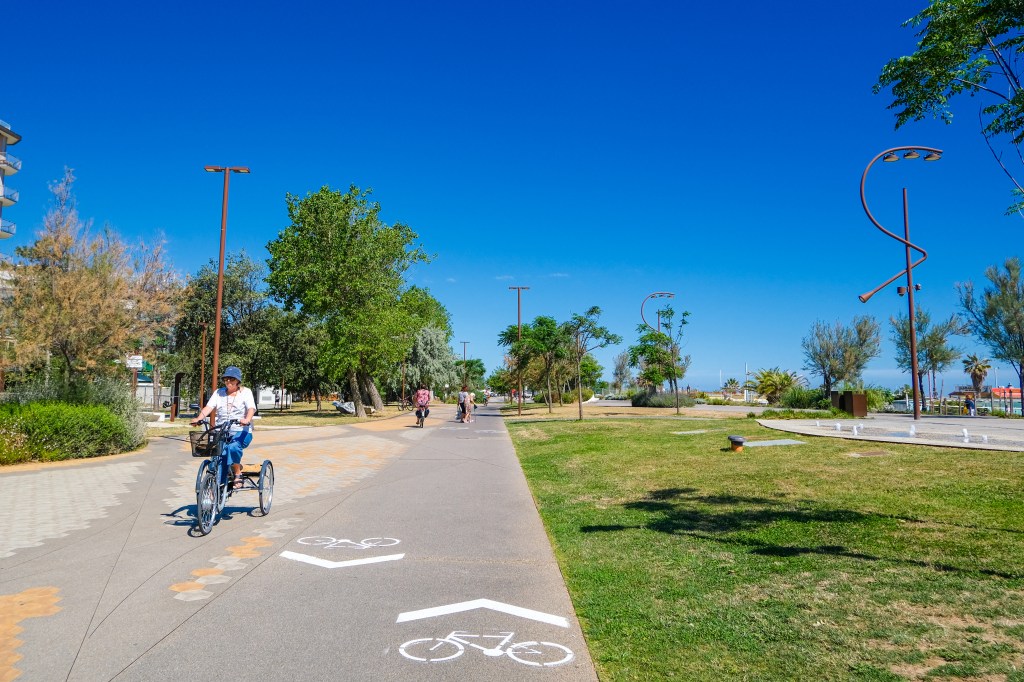
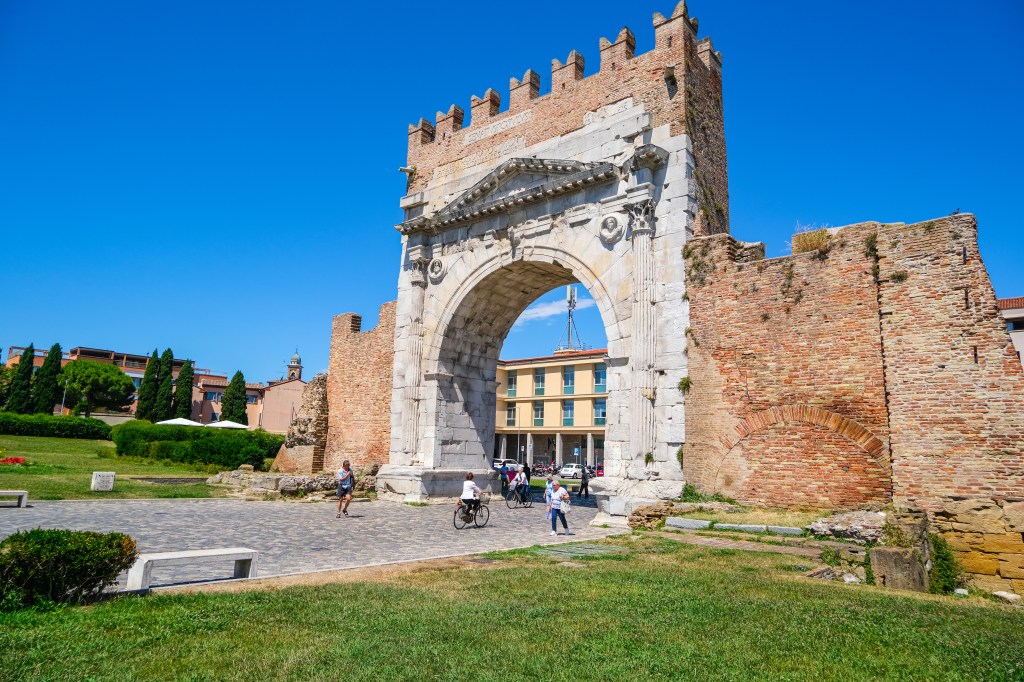
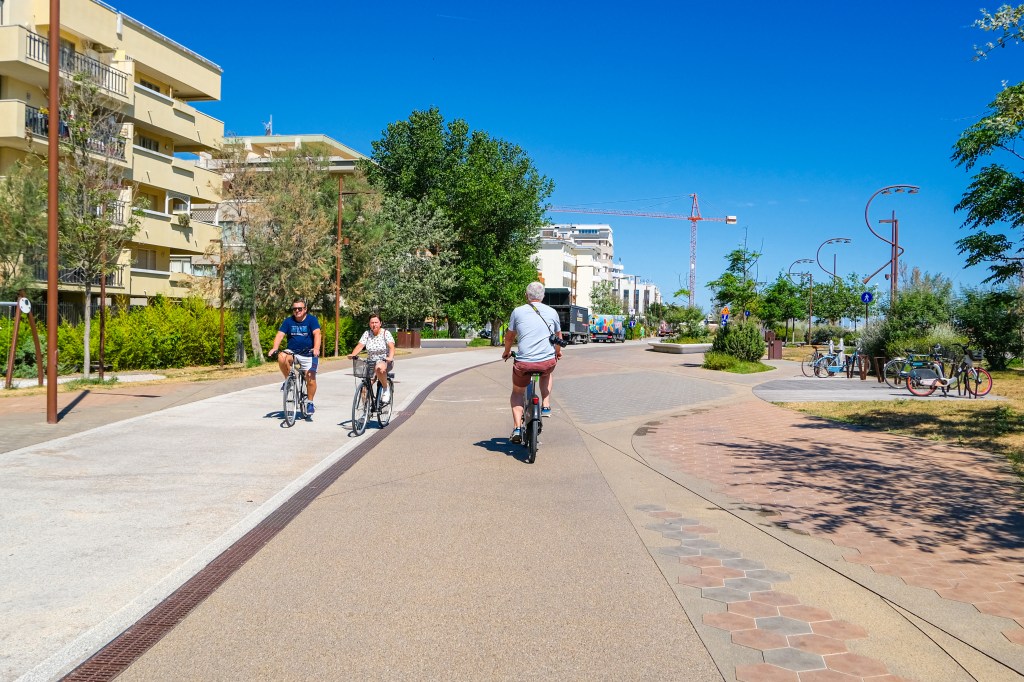
This year’s host city of Rimini on the Adriatic coast is, as Deputy Mayor Urban and Territorial Planning Valentina Rodolfi put it, virtually unique in Italy. A tourist hotspot, it is also a vibrant coastal cycling city. Fifteen years of leadership and determination has helped realise a network of routes connecting the city’s historic centre to the central green belt perfectly shaded against the summer sun, all leading to the gem of the network, a 15-kilometre waterfront walking and cycling promenade reclaimed from the car and handed back to the residents and visitors of Rimini alike. Watching a near contant stream of cyclists no matter where you are in the city, it is clear why they were a perfect choice to host a week of cycling introspection, innovation, and inspiration.
As with every year, there are more sessions than I could possibly fit into my schedule, but on day one, two key themes resonated strongly – change is a community effort and the role of communications cannot be overlooked.
In the session “Citizens as a Force for Change,” speakers from Sweden, Switzerland, Belgium and Finland shared how they each approached citizen engagement in different ways to help build buy-in or create change. Sophie Vermeyen, a community organizer and training officer with Avello and based in Brussels reminded the room that citizen shape their city and its mobility, and therefore need to be brought into the process to have their voices heard but also help them understand what it is we are trying to achieve.
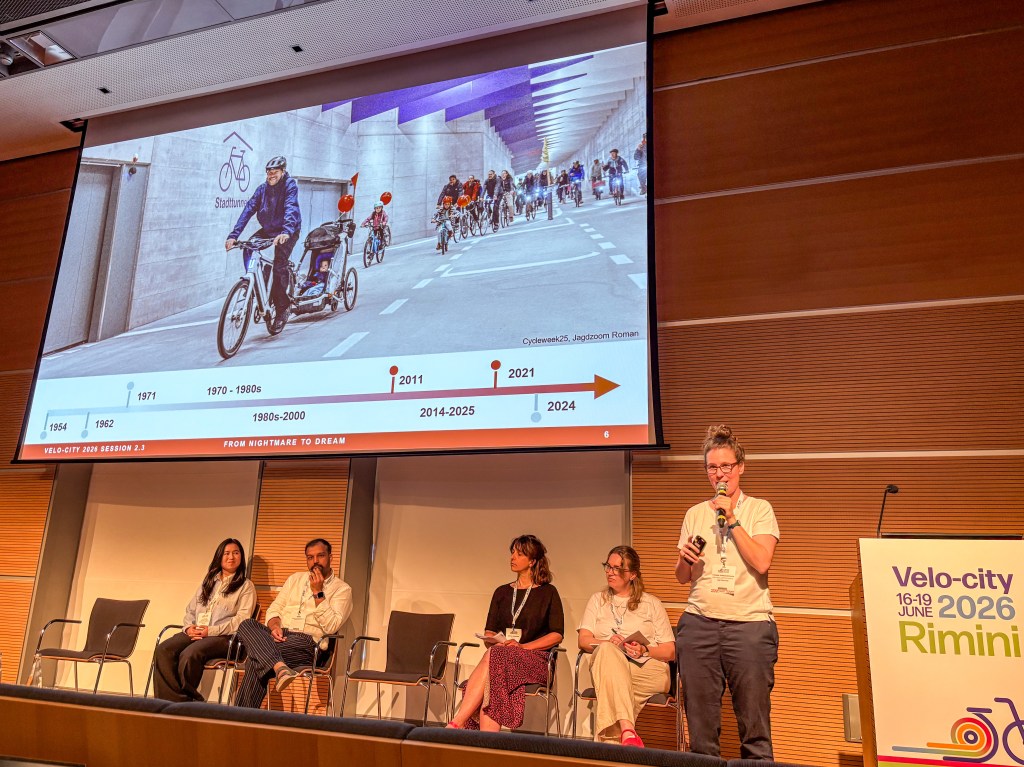
What was particularly powerful was seeing how a project over 50 years in the making was finally achieved in Zurich through fervent citizen action and an unwillingness to give up. When planners proposed a motorway through the centre of Zurich in the late 1960, protesters organised to stall the project, leading to decades of failed attempts by the government to reinstate the project, only to have citizens yet again say no to a project that would cut through the heart of the city. As Yvonne Ehrensberger, a geographer with Pro Velo Canton Zurich shared, in 2011, the contested space became the opportunity to take an idea originally meant for cars and create a vital link for cycling, and following 14 years of hard work – and yet another referendum on realising a highway that 74% of the population voted no to – a cycling tunnel under the railway station, complete with adjacent bike parking, opened in 2025. And for those who may have doubted the necessity of such a project, the groundwork laid by activists in 1971 has created a space that in its first year saw over 1-million trips, proving how actions can have a ripple effect that sparks positive action!
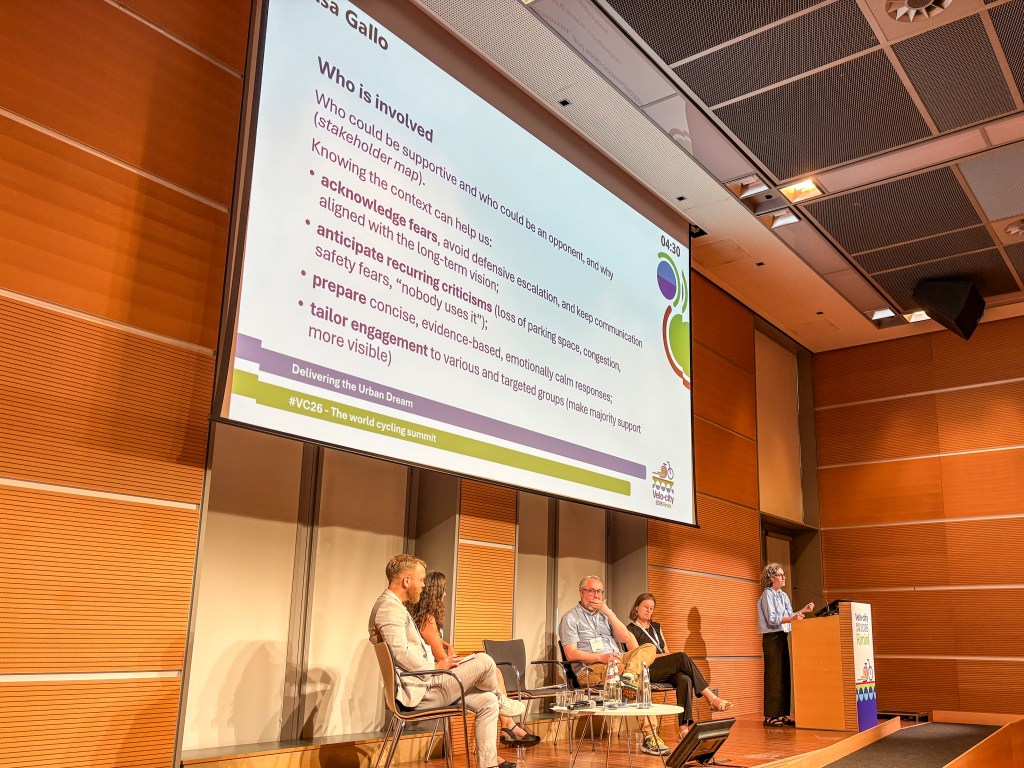
But perhaps the moment that really started my recharge was a session on tackling bikelash, where presenters reminded us of how important the role of communications is in successfully realising a lot of the project we are working on in the cycling and mobility world. Elisa Gallo, communication consultant, journalist and FIAB cycling advocate emphasised the importance of communicating a vision rather than focusing on pro’s and cons, and that context and history matter when engaging with citizens. Critically, as communicators we need to be prepared to acknowledge people’s fears, anticipate recurring criticisms, prepare messaging, and tailor engagement for the people we’re trying to connect with. Oh, and budgeting for your communications is more than a nice idea – it’s essential!
After a full an rewarding day, it’s time to rest up for Day 2, but I am already feeling energised for the work to come!
 Modacity Creative
Leave a comment