
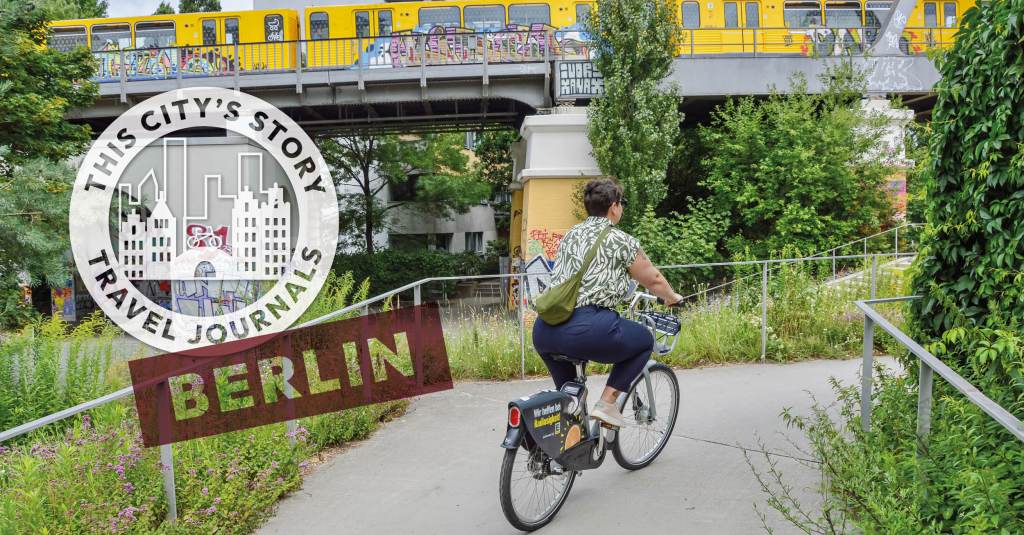
Berlin is a city of complexities. In many ways, a visit can feel very heavy from the weight of the history in the city. In other ways, it’s bursting with life, creativity, and energy. But one thing remains true: no two visits to Berlin will be the same.
Home to nearly 4-million people and spanning 891.7 kilometres square, the city is massive. Ask a local and they’ll tell you most trips are, “about 40 minutes.” Walk, cycle, or make use of the extensive public transport options (bus, tram, U-bahn (subway) or S-bahn (train)) and somehow every trip takes the same amount of time.
The size of the city is what makes every trip a new experience, but also because the city is in constant evolution. The activist spirit of the city means that there’s a continual push and pull happening as local champions try to change the city from a place for cars to a place for people. In fact, on each of our three visits to Berlin, there’s been a new pilot or demonstration project to visit as residents attempt to transform their streets despite a government at the time of writing controlled by people dissinterested in changing the status quo.
Although that can be very frustrating for those working on the ground, we think it’s what makes the story of Berlin more than just that of it’s history, but also that of it’s potential future. Here’s are a few such projects that are worth a visit.
Kiezblocks: Bottom-Up Urbanism
In neighbourhoods across Berlin, a quiet rebellion is unfolding in the form of Kiezblocks (or “neighbourhood blocks”). What began as a grassroots response to political inertia and rat-running cars has evolved into a compelling experiment inspired by Barcelona’s Superblocks in bottom-up urbanism coordinated by Changing Cities e.V.
For years, Berliners have complained about the rise of through traffic onto quieter side streets never designed to carry such volumes. While their 2018 Mobility Act promised a shift toward alternatives, progress on traffic calming has been slow and uneven. In that vacuum, residents began organising.
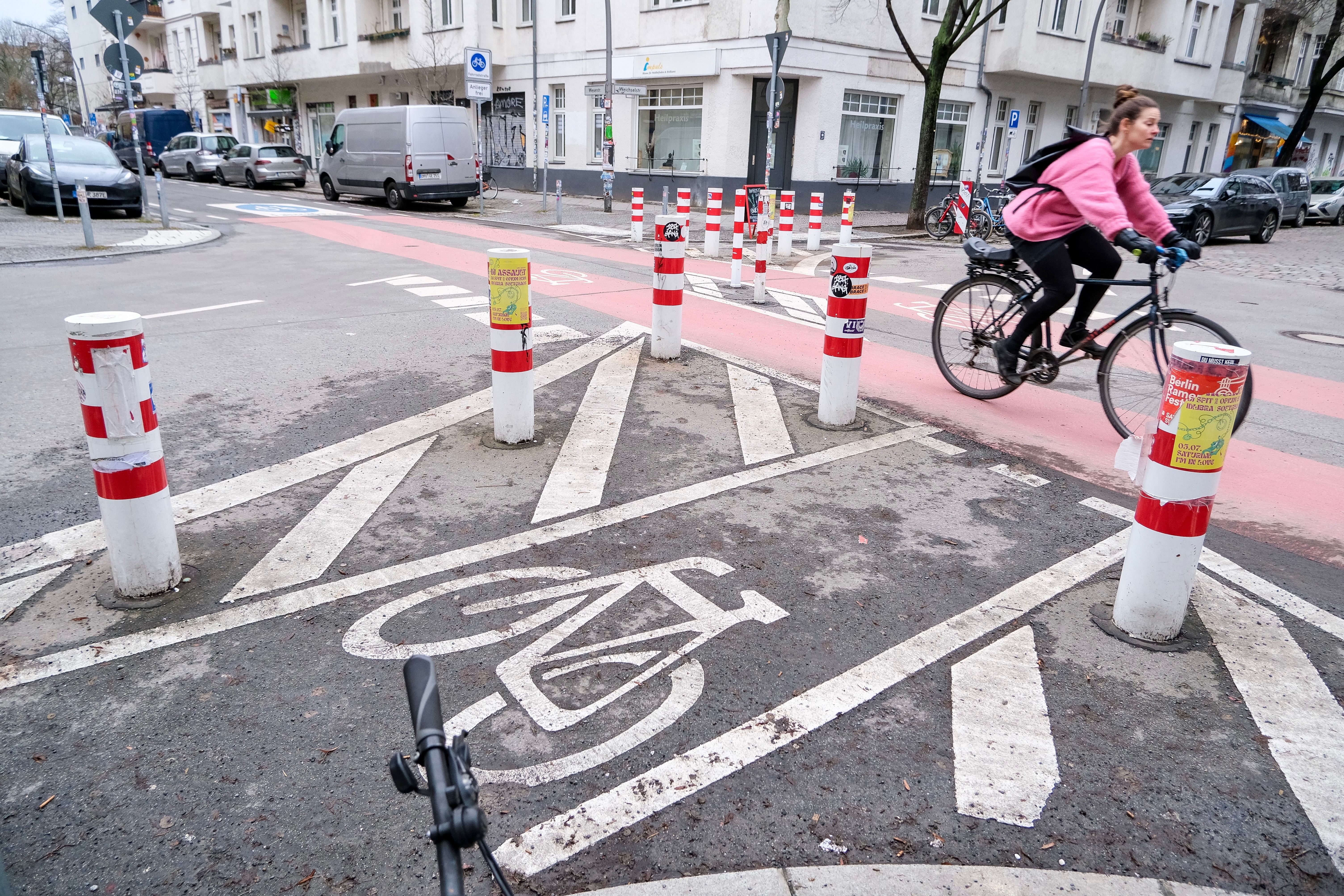
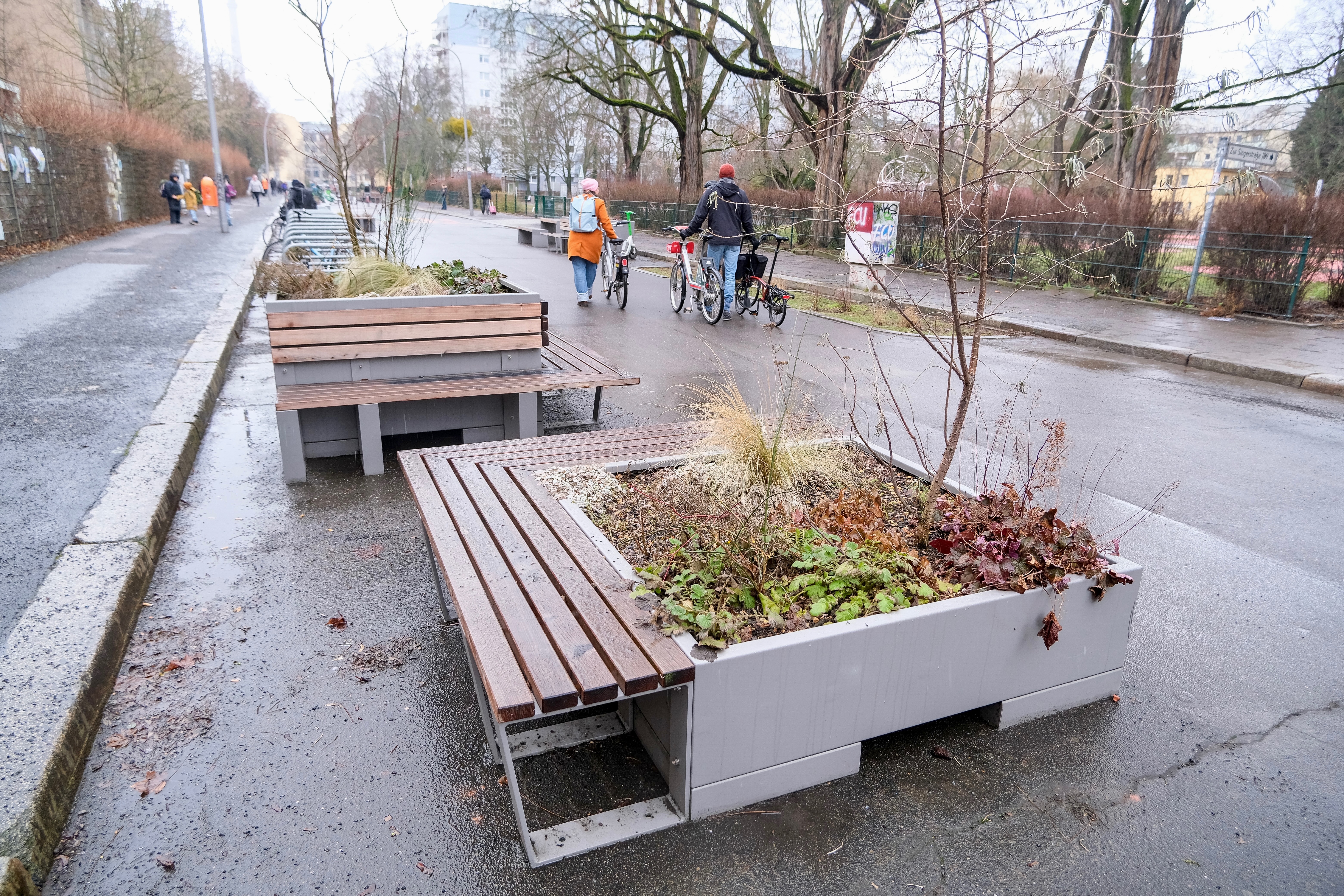
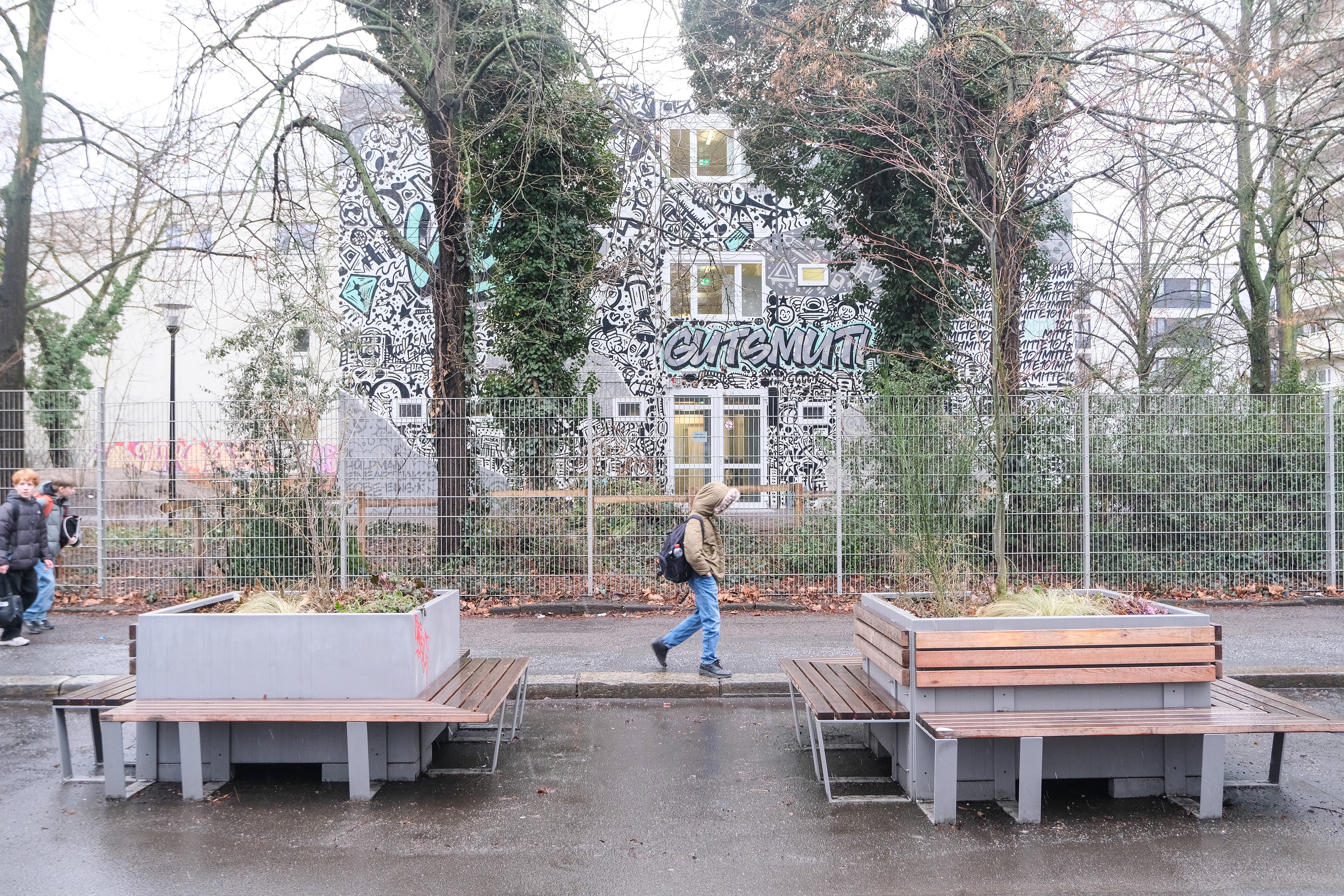
Kiezblocks propose a simple idea: prevent cars from cutting across neighbourhoods by installing modal filters—planters, bollards, parklets—that limit access to local destinations.
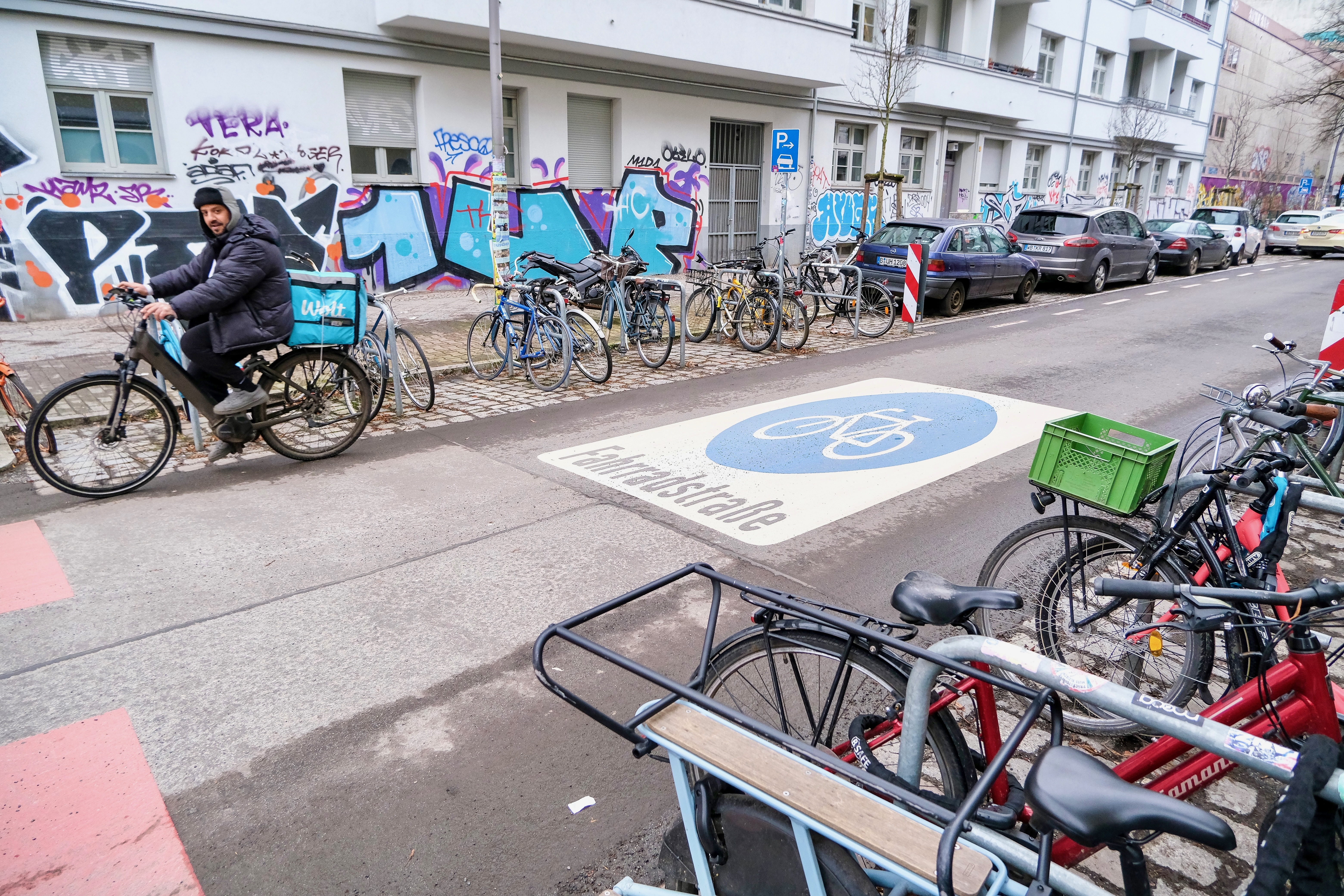
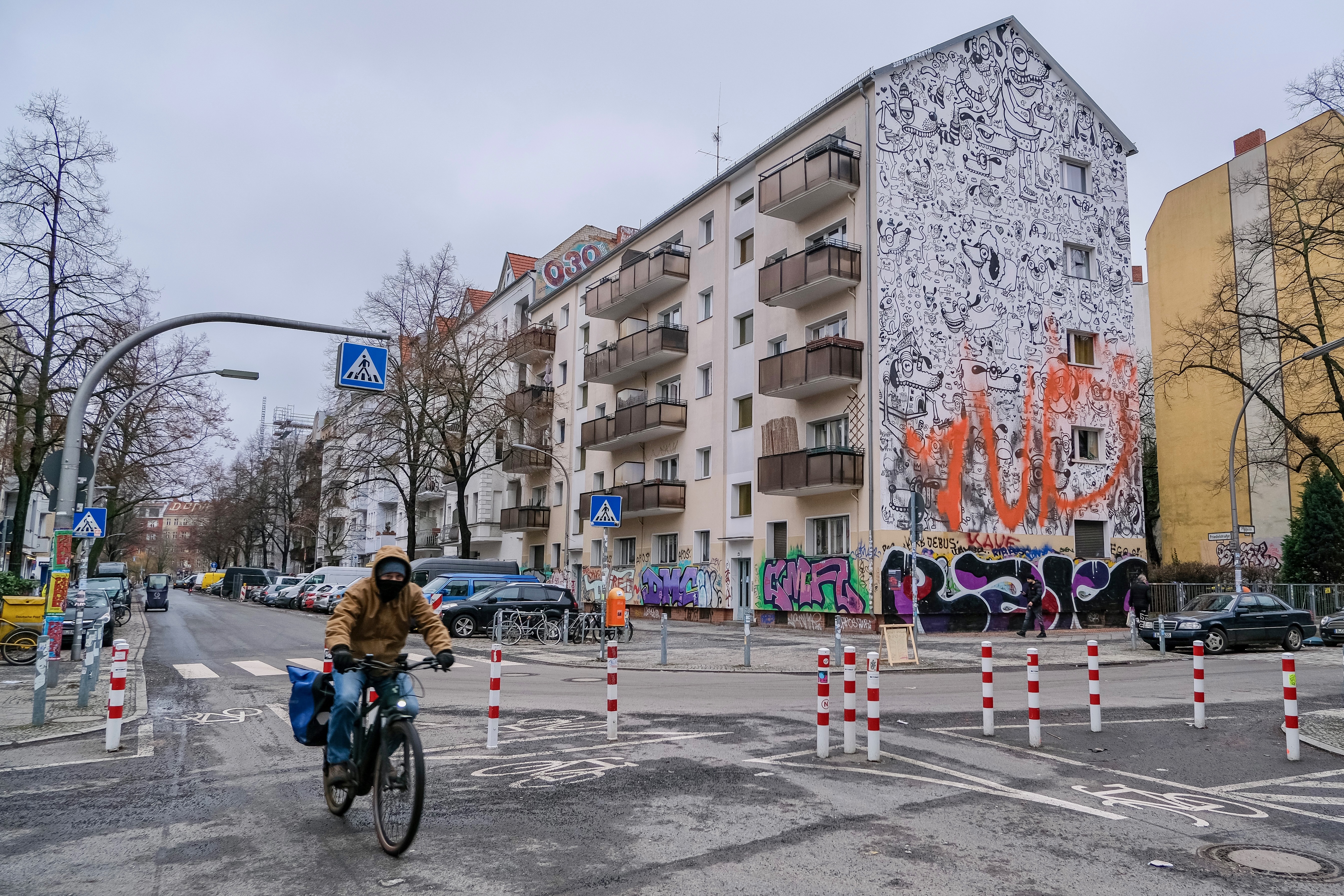
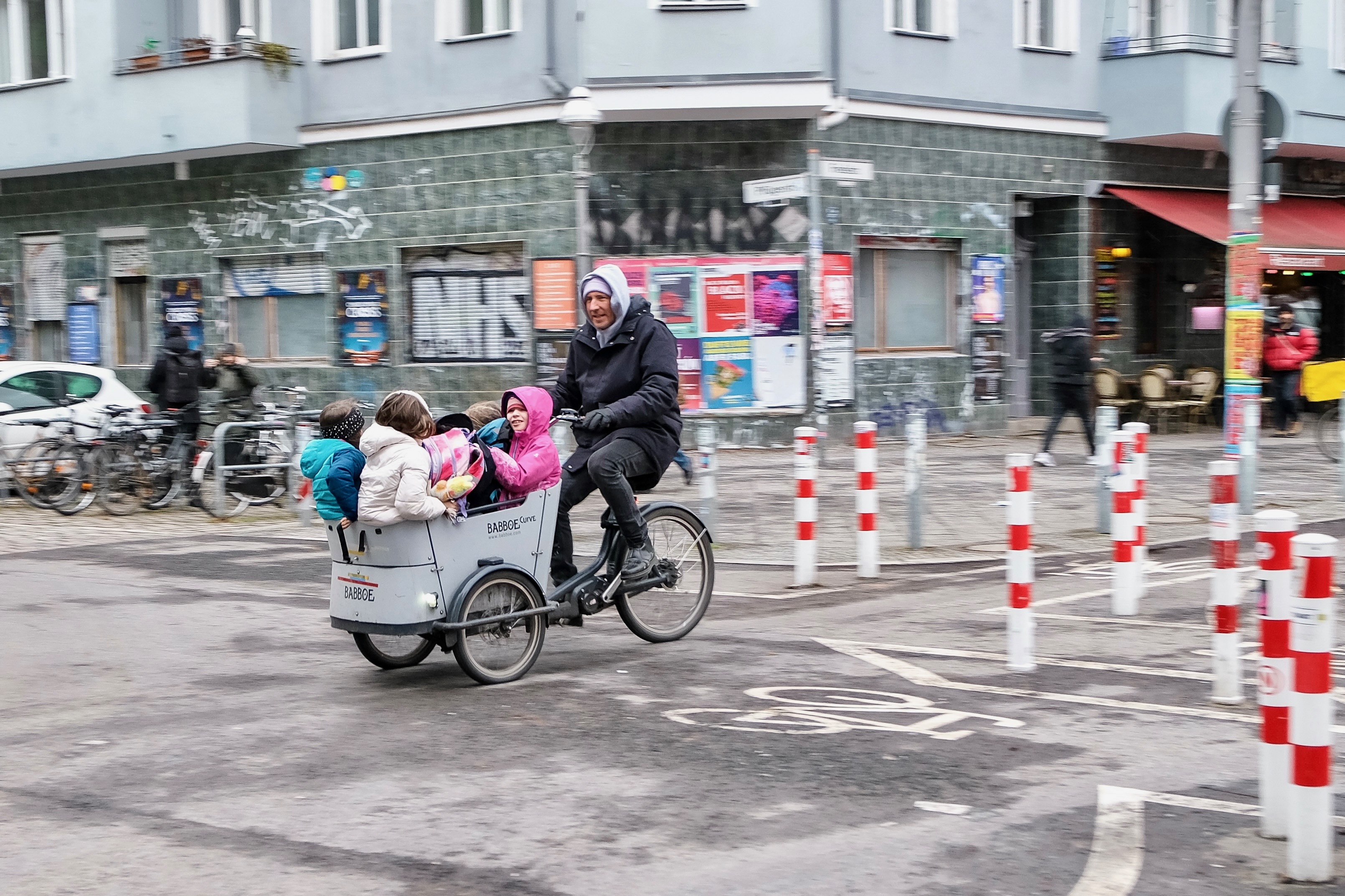
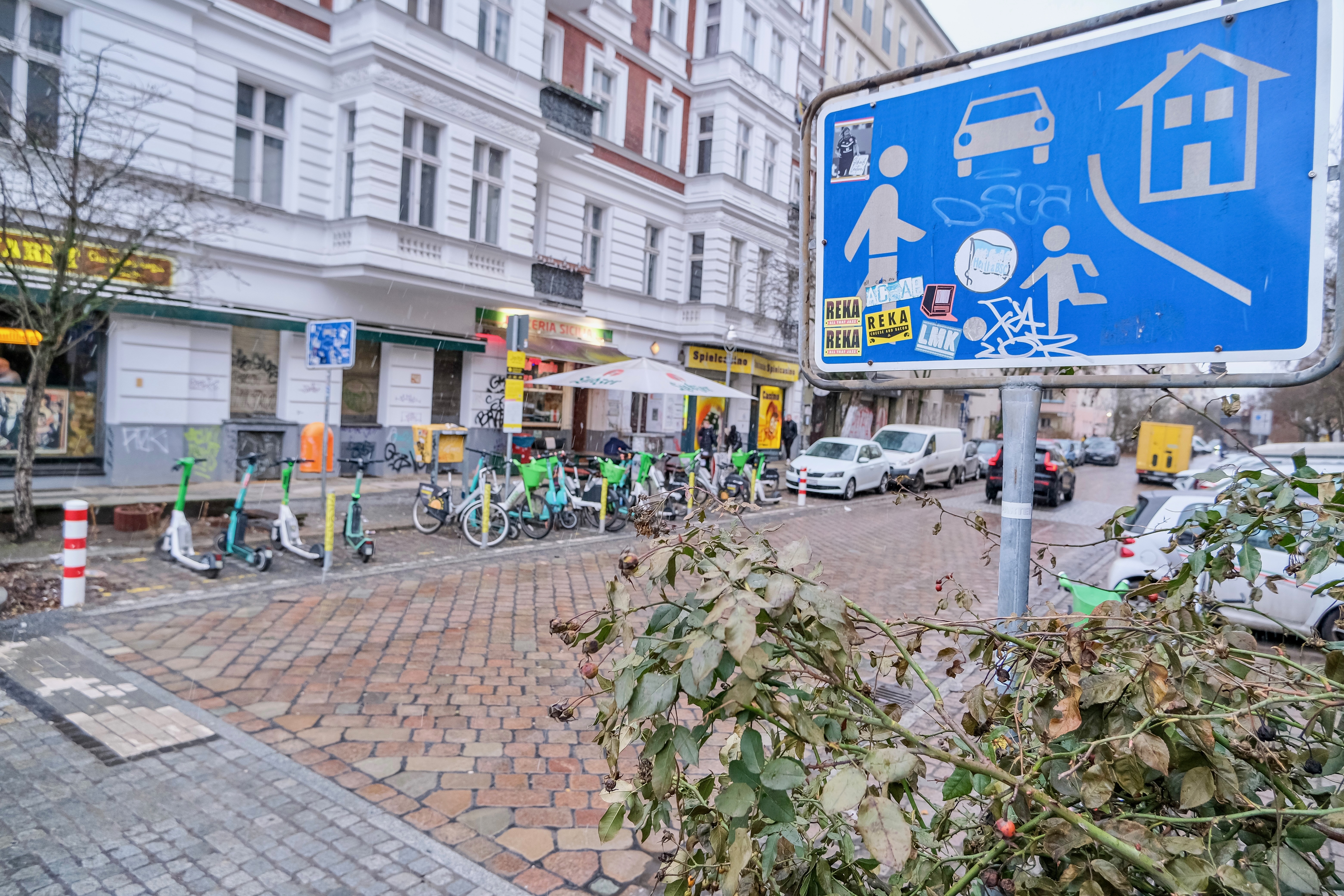
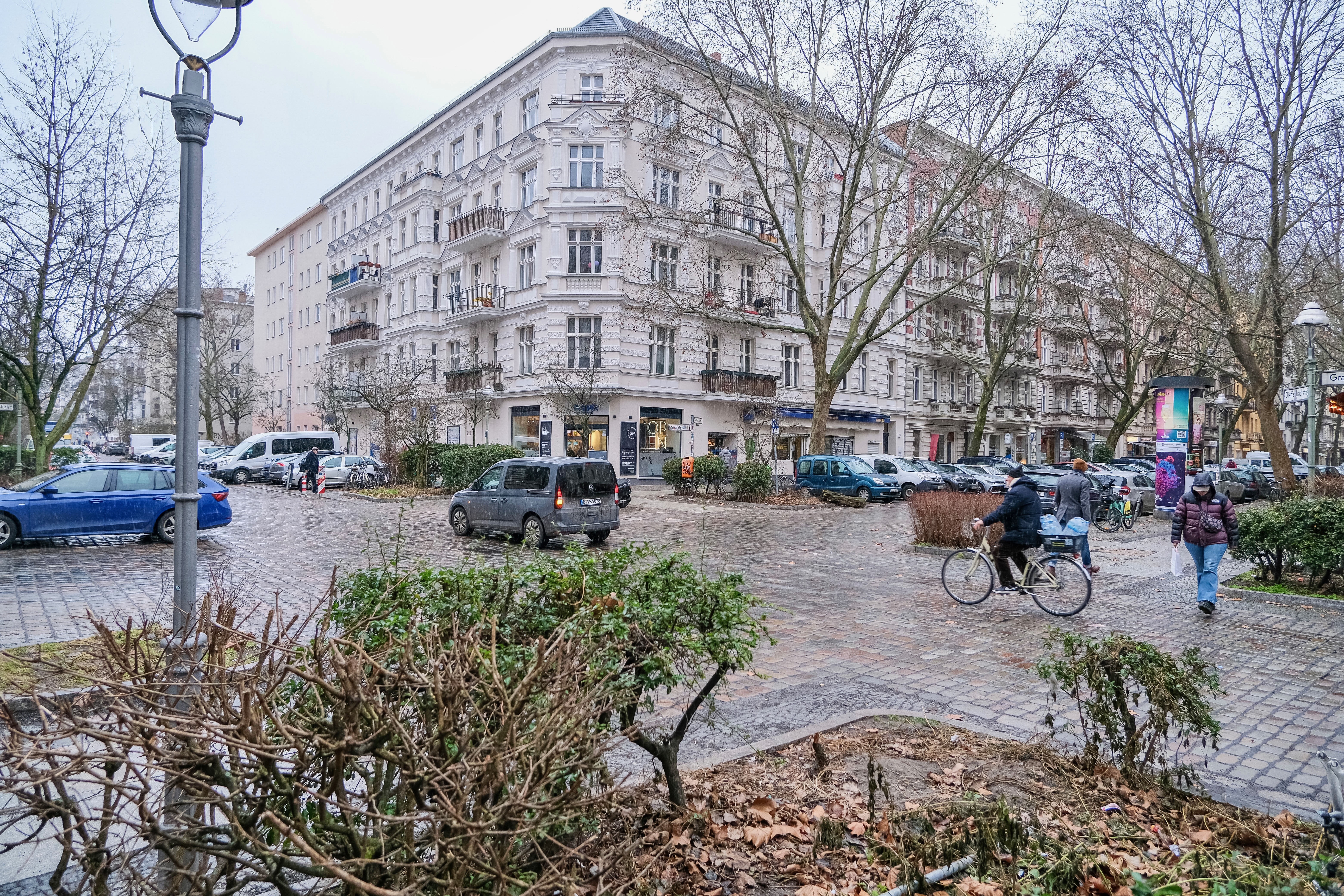
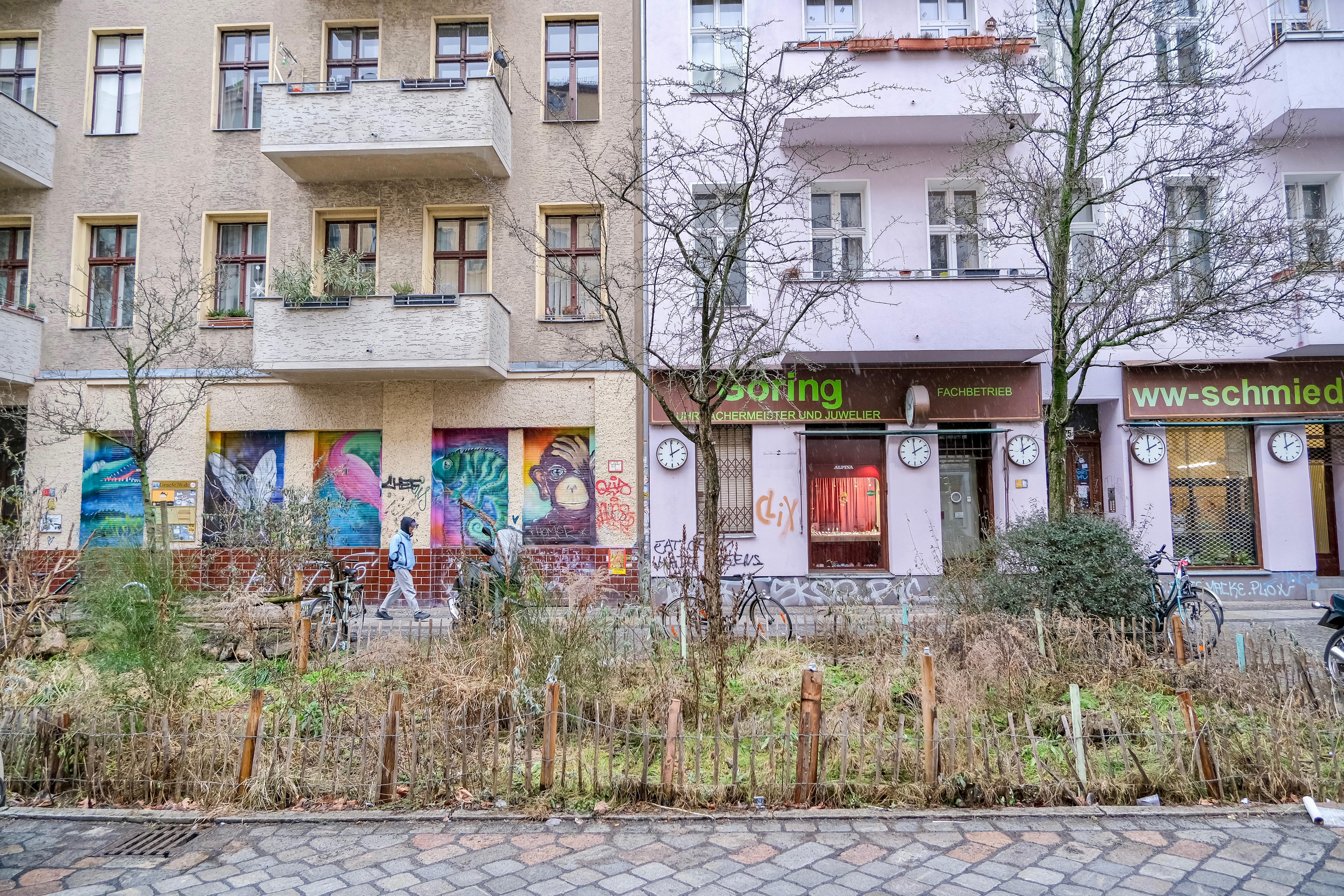
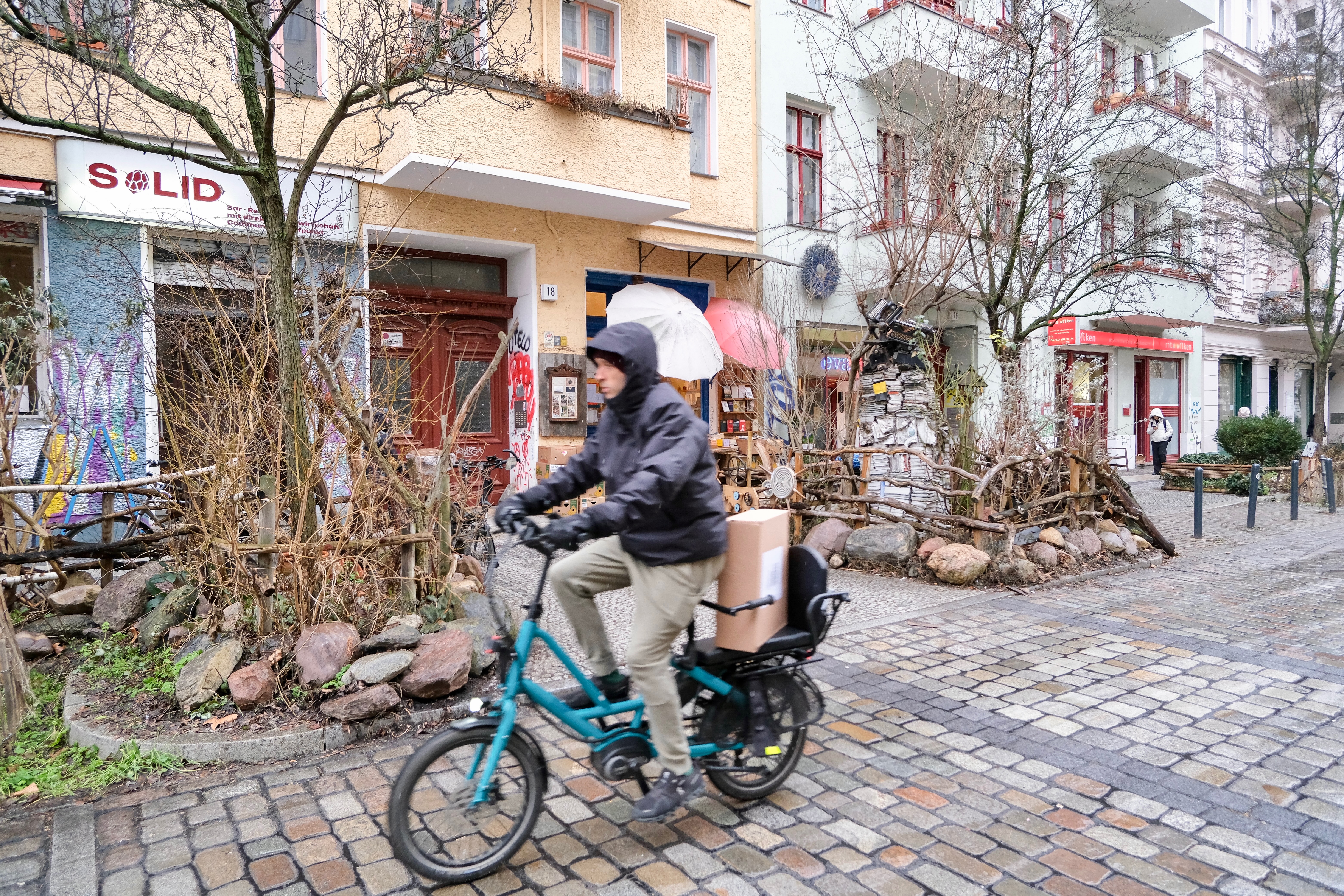
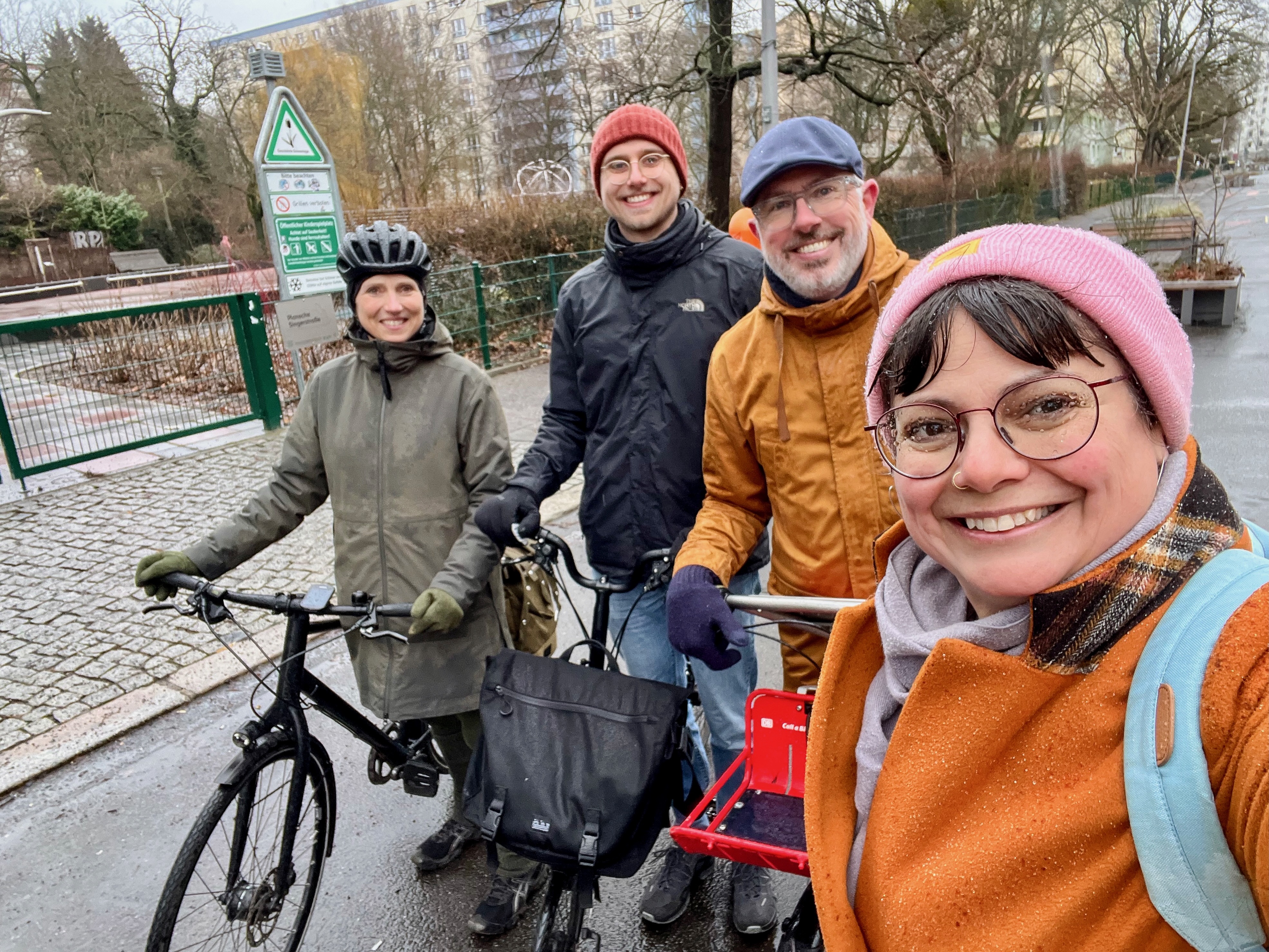
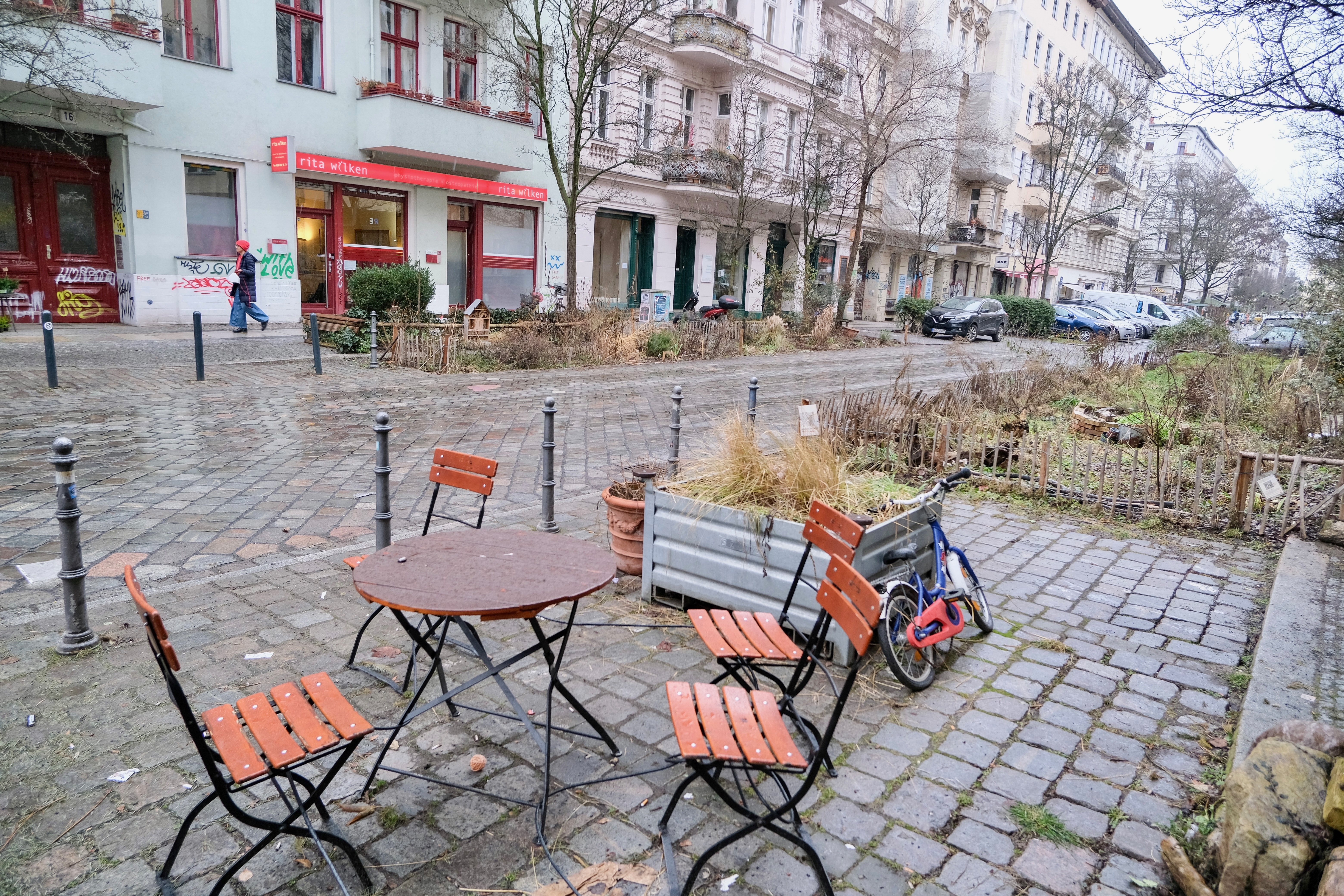
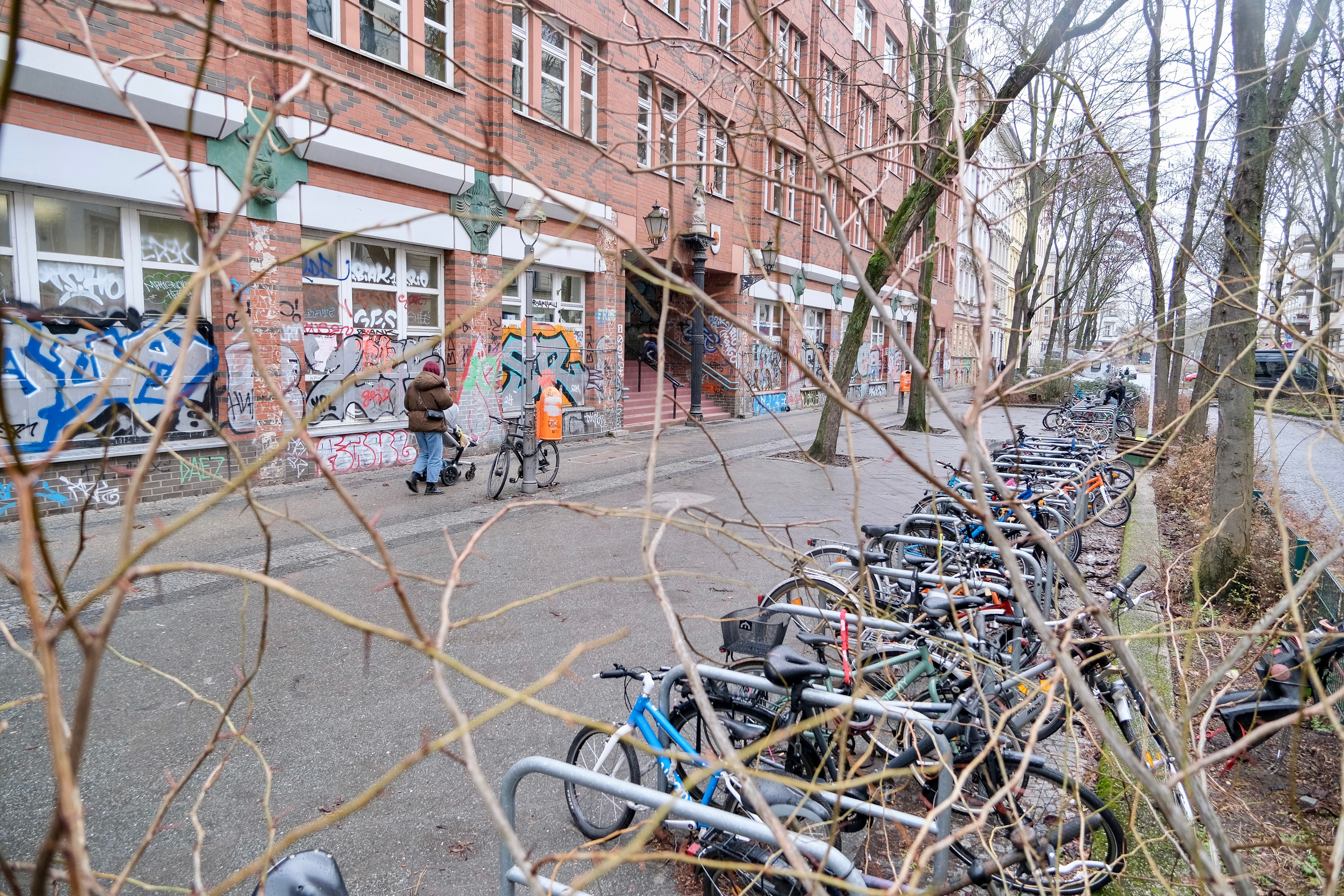
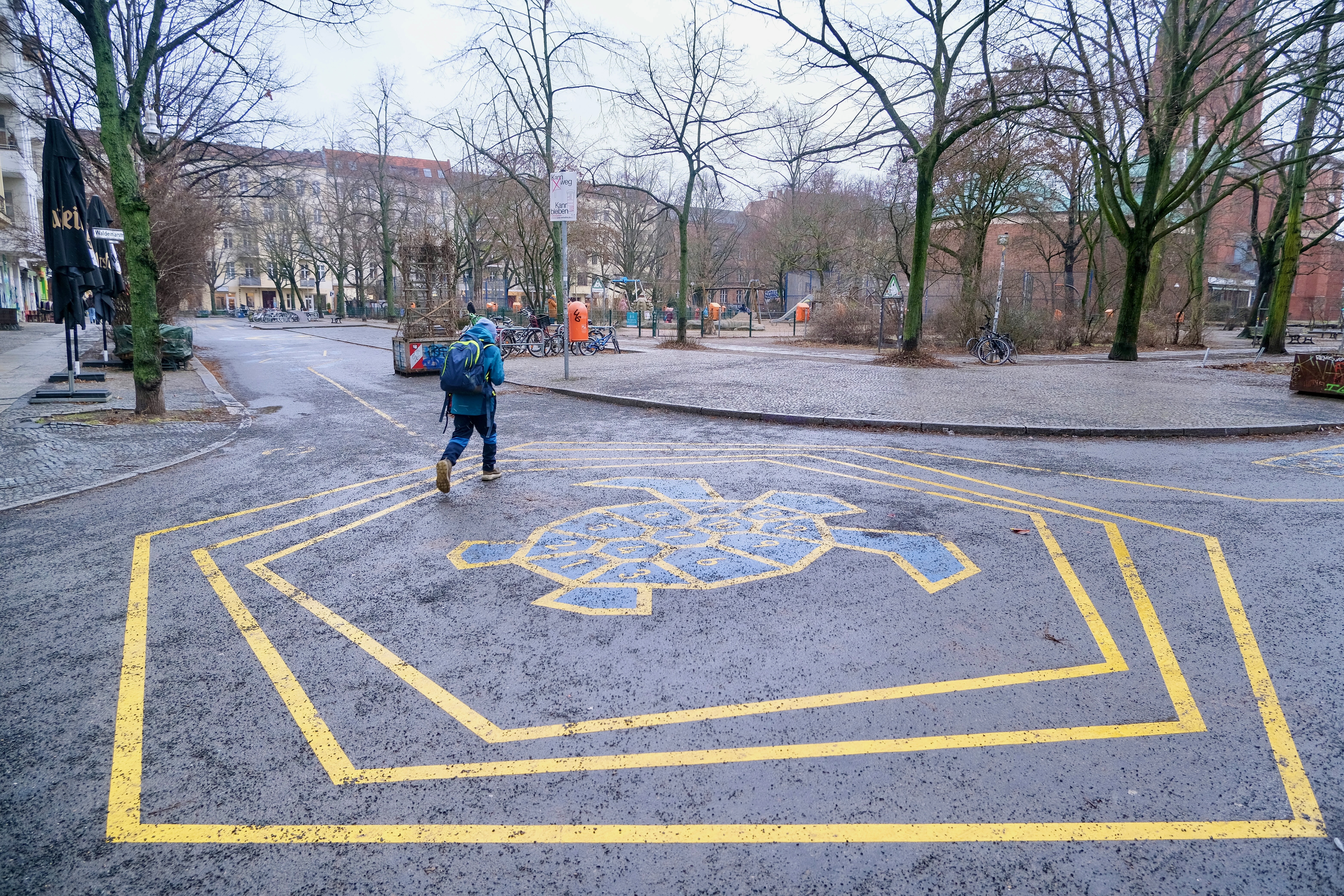
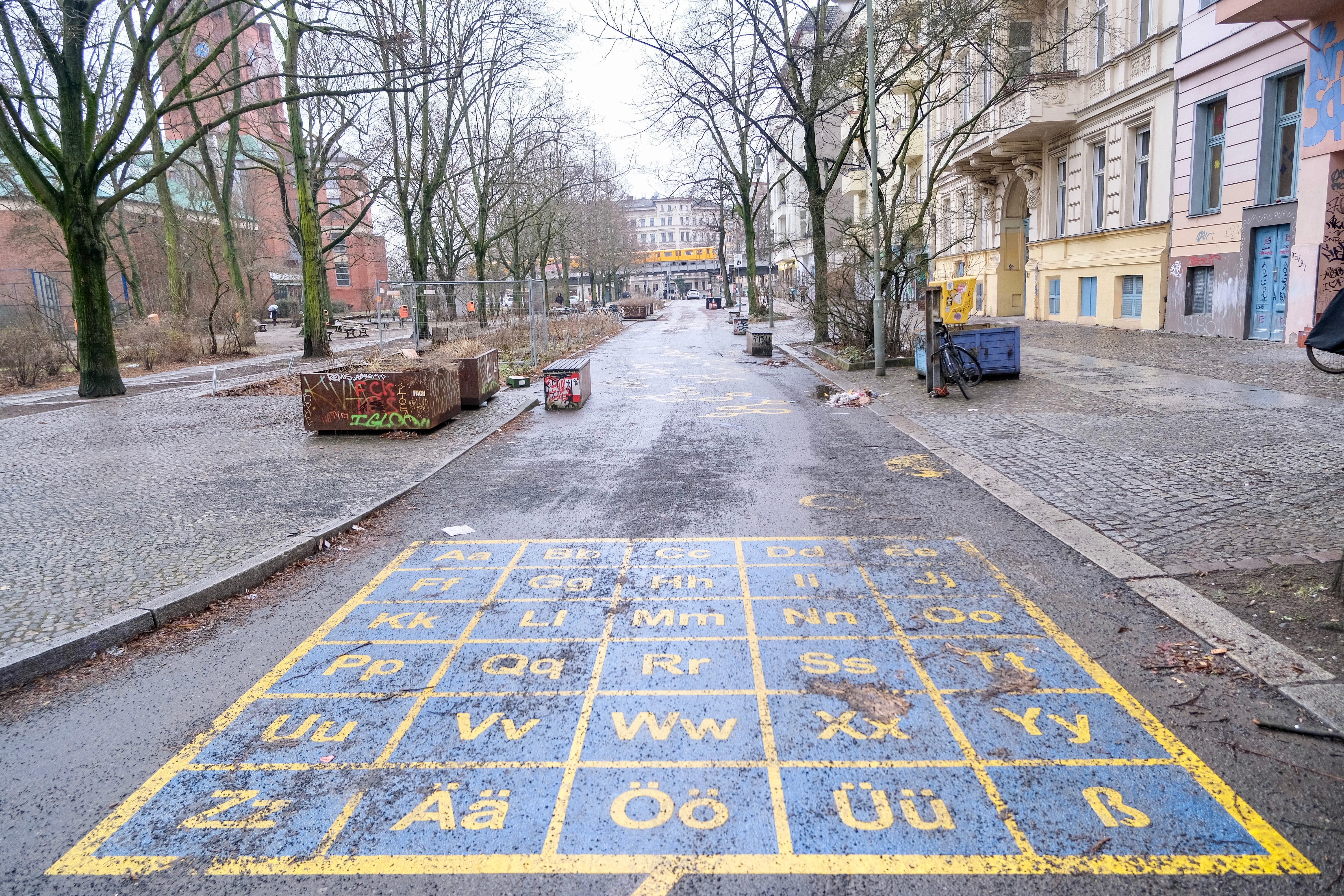
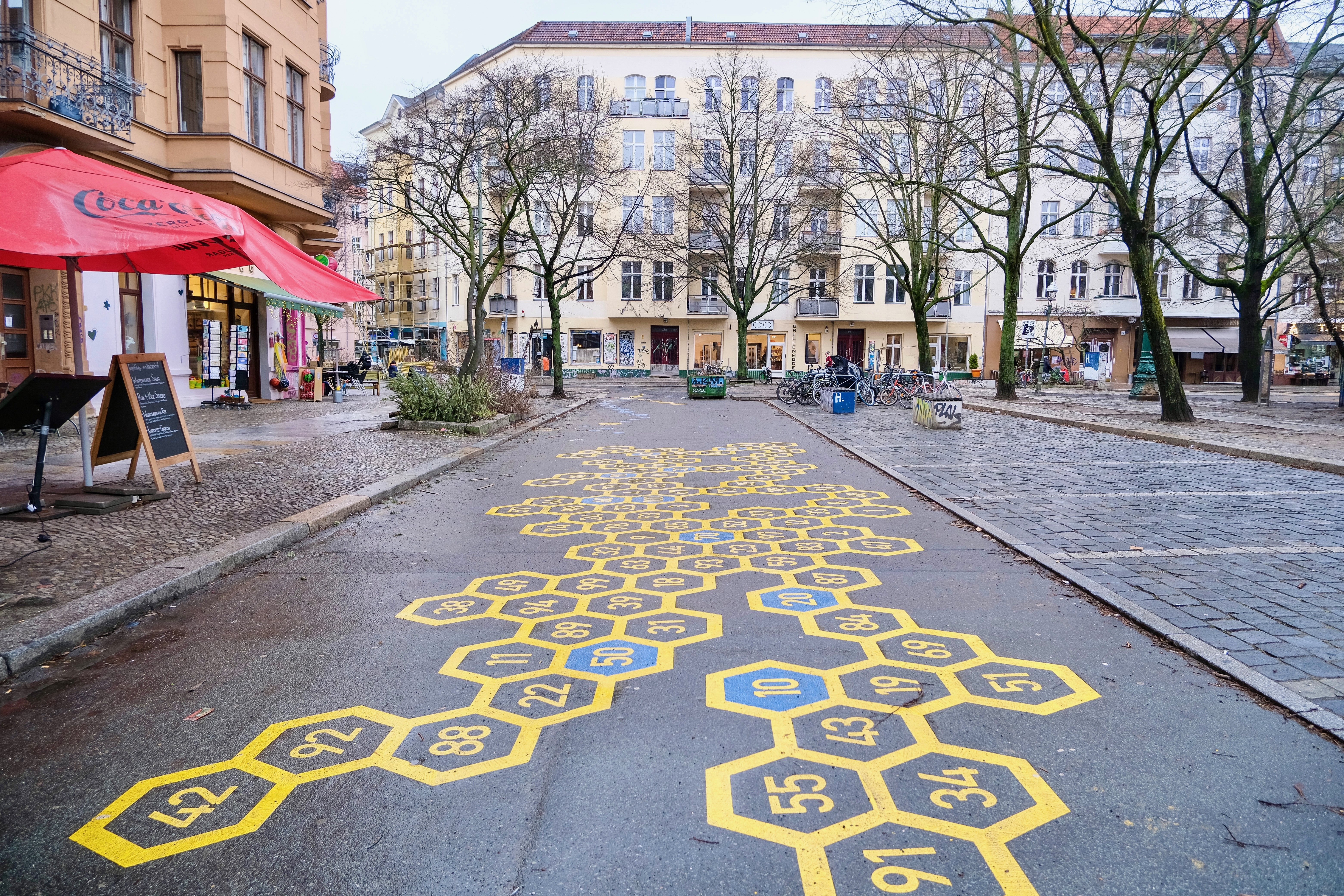
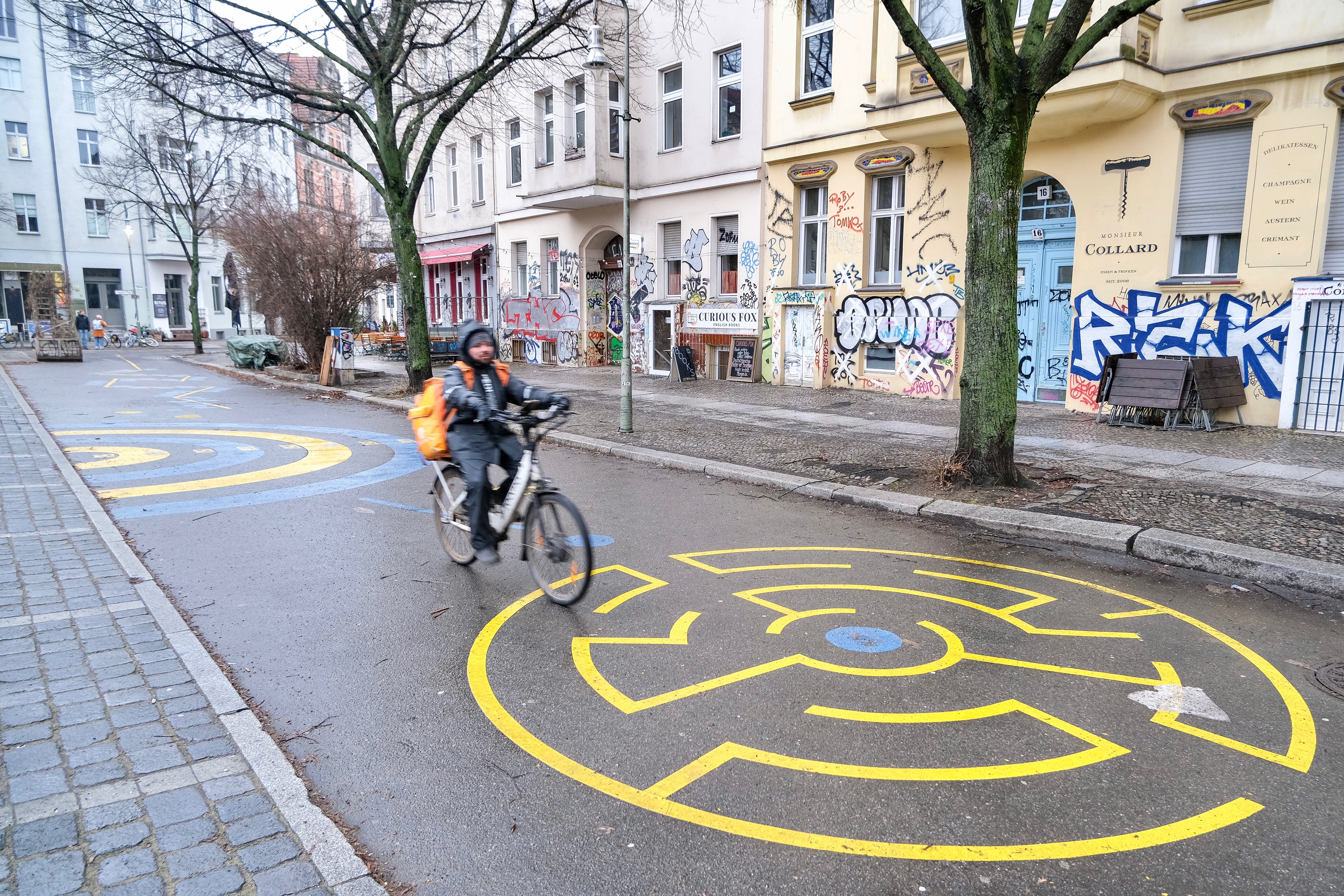
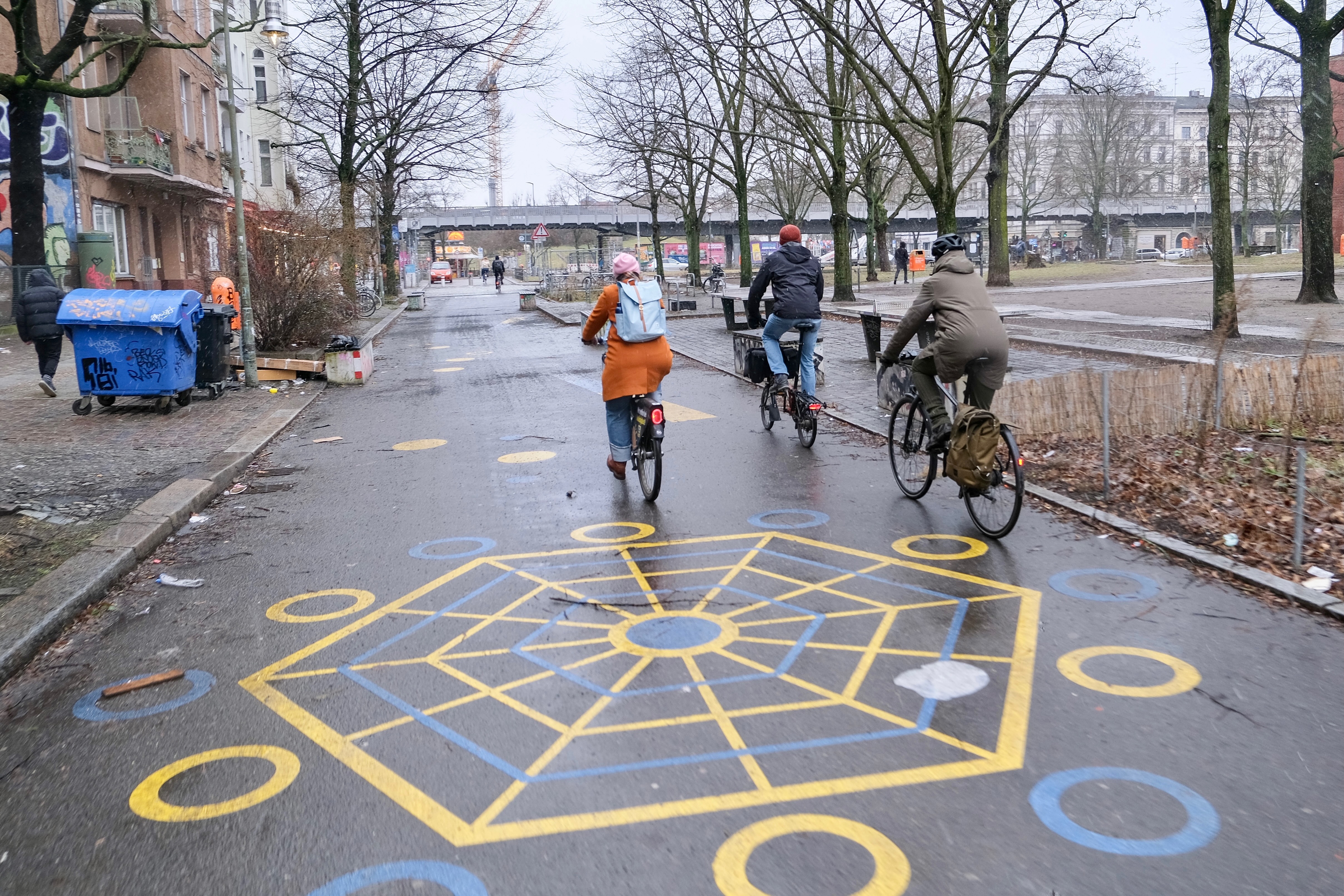
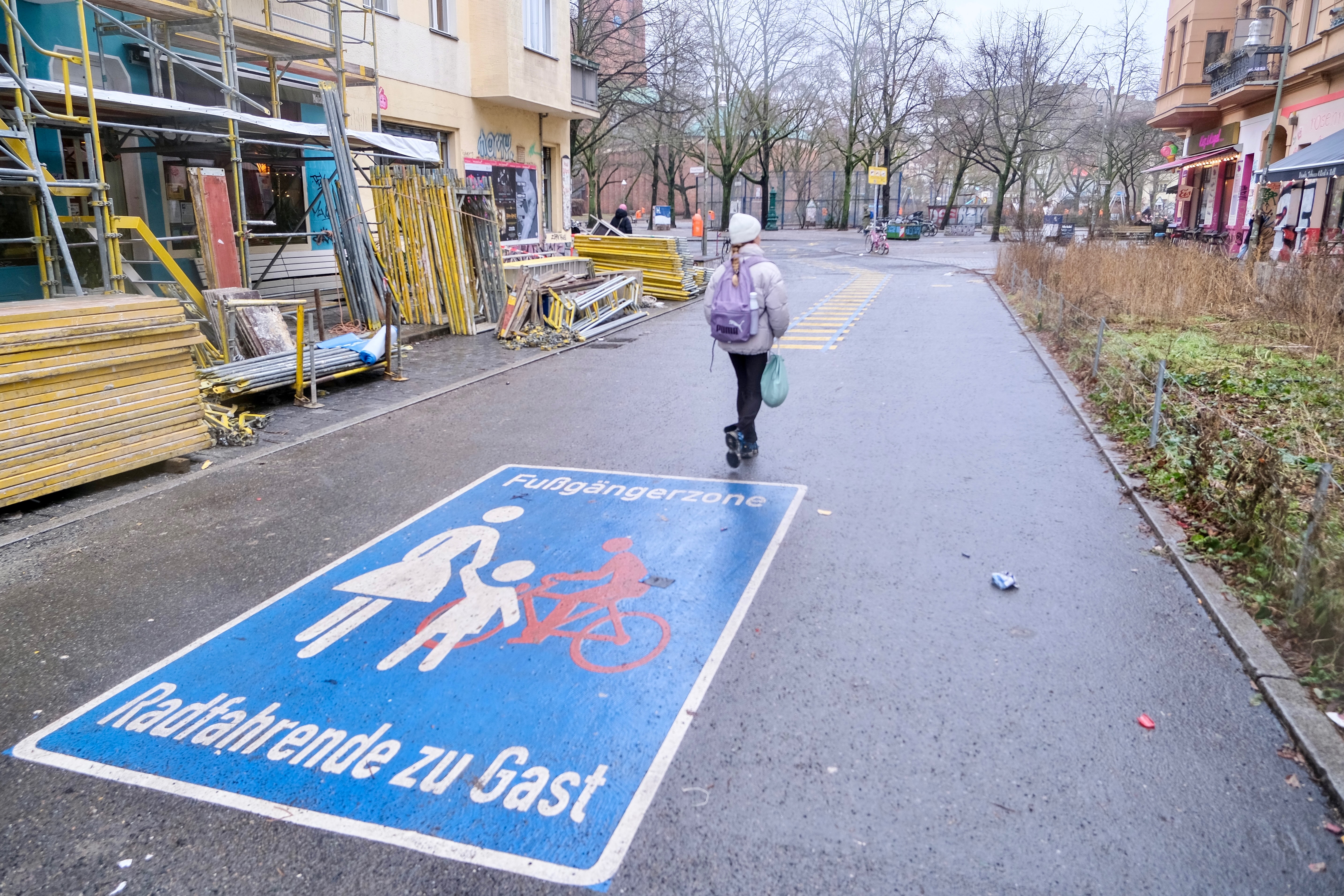
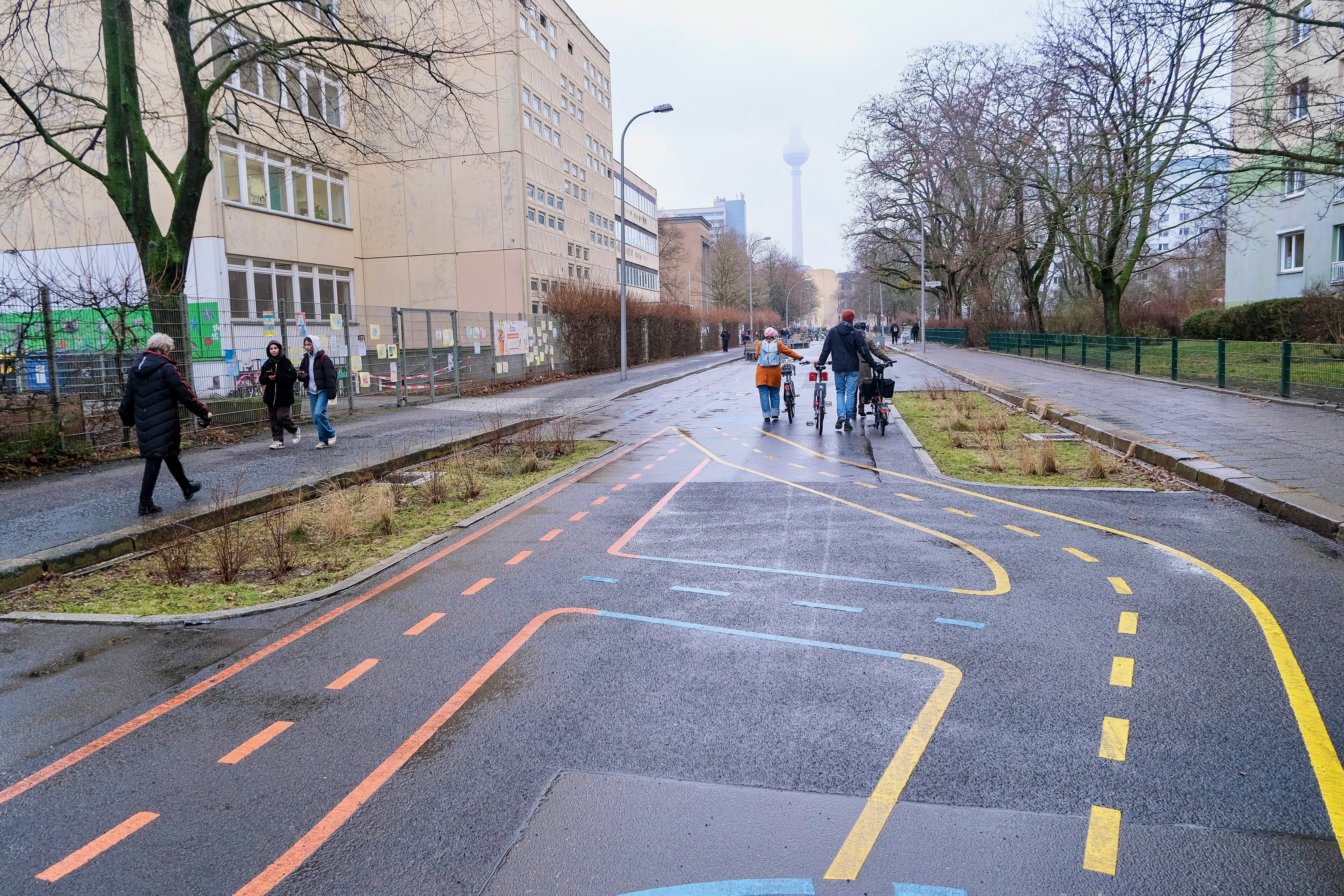
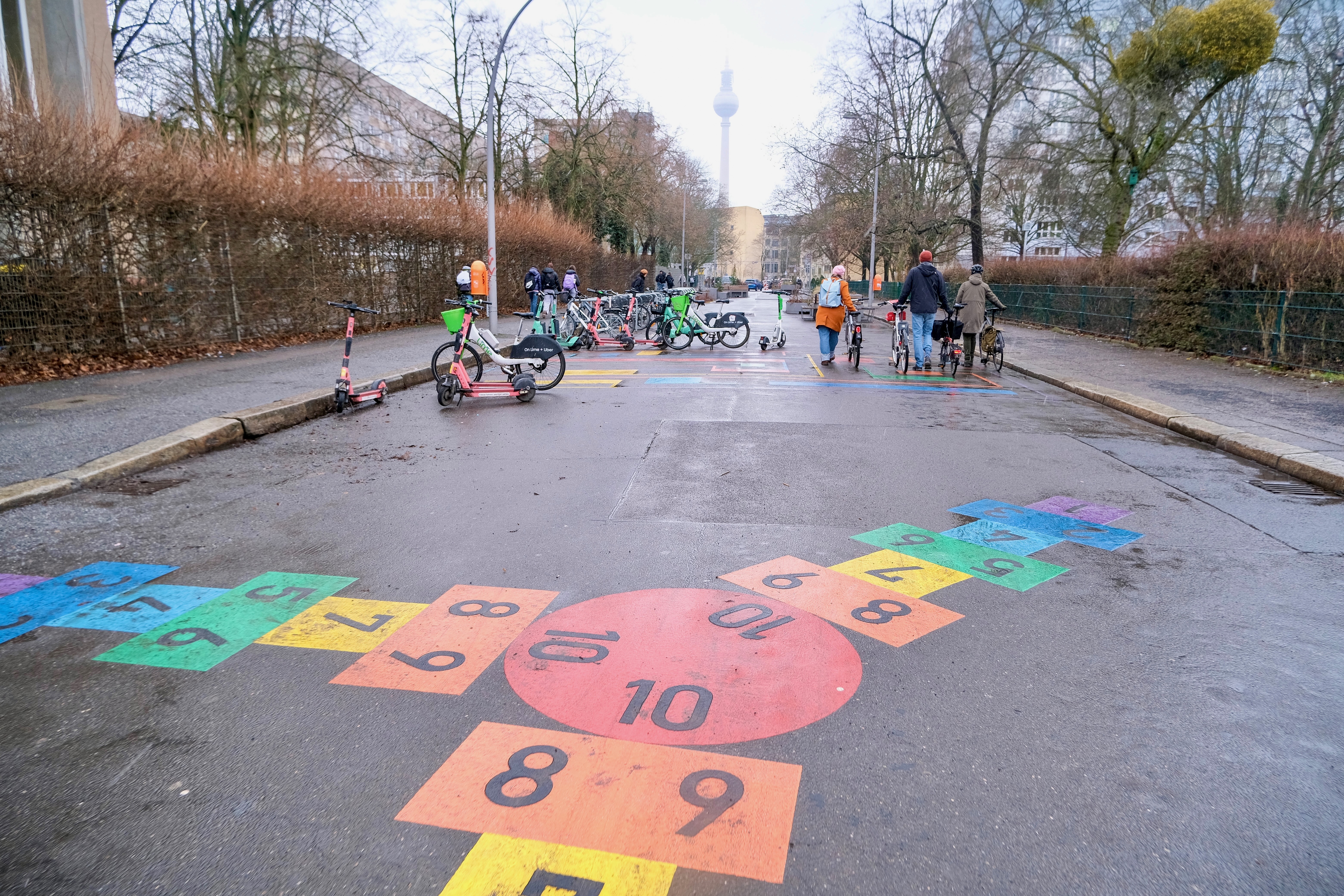
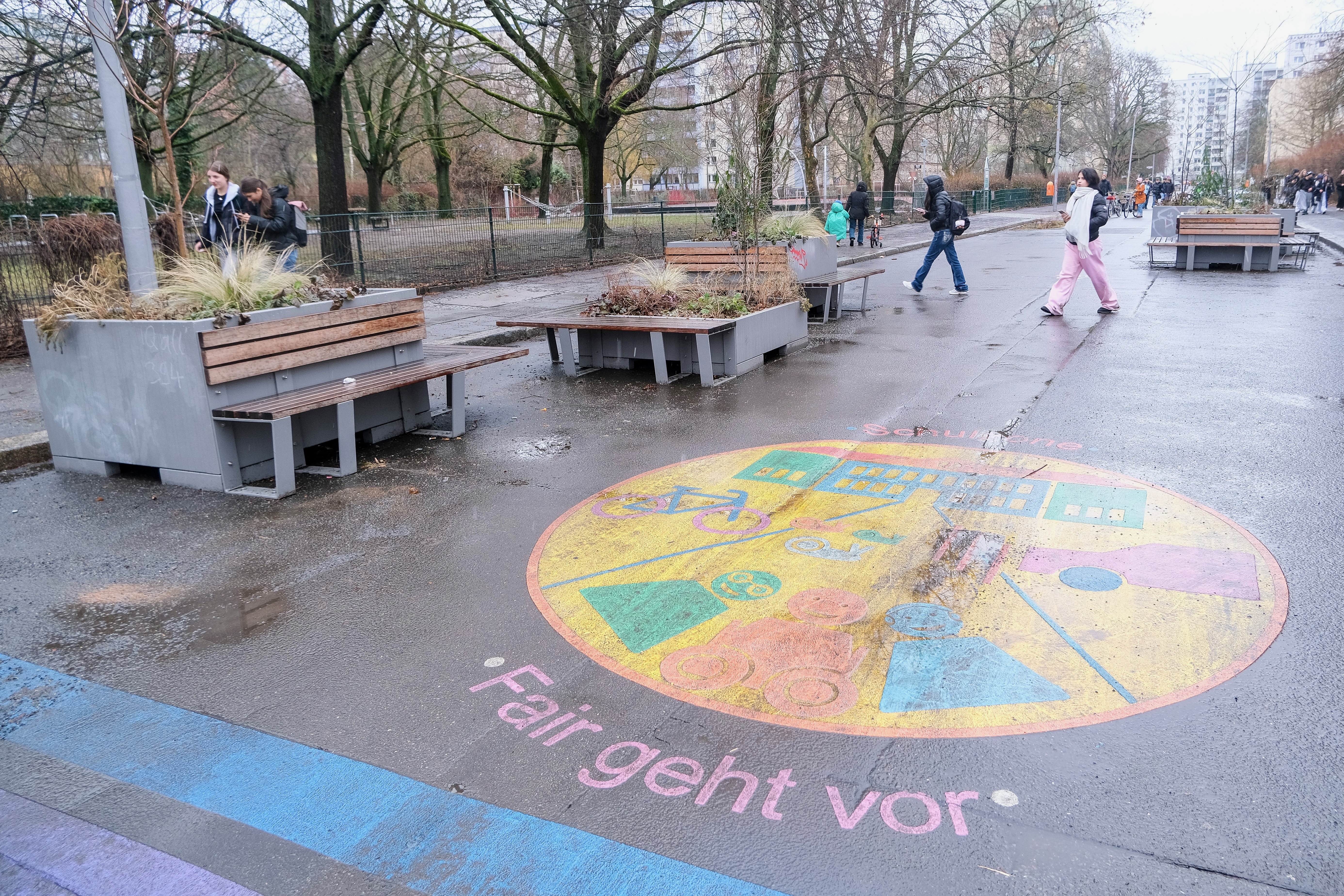
Riding through the Kreuzberg neighbourhood, we experienced several iterations of traffic calming and street reallocation. From simple modal filters on neighbourhood cycle streets, to reclaimed car-parking transformed to street gardens, and the complete removal of car traffic to create play- and school streets for communities that desperately wanted safe spaces for children (and adults) to relax and enjoy public space. While our trip only included one borough, more than 70 initiatives are active in Berlin’s 12 boroughs, which you can find using their open source map HERE.
Even on a cold and rainy February afternoon, the results are obvious. Traffic volumes drop. Children regain space to play. Conversations replace engines. Streets start to function less as corridors for movement and more as places for living. In an age of climate urgency and political inertia, Kiezblocks tell a different story: residents refusing to wait for grand masterplans, and reclaiming their own streets. Where shortcutting cars once ruled, planters and plazas now signal a new priority: places for passing time, not passing through.
Radbahn Berlin: Reimagining forgotten spaces
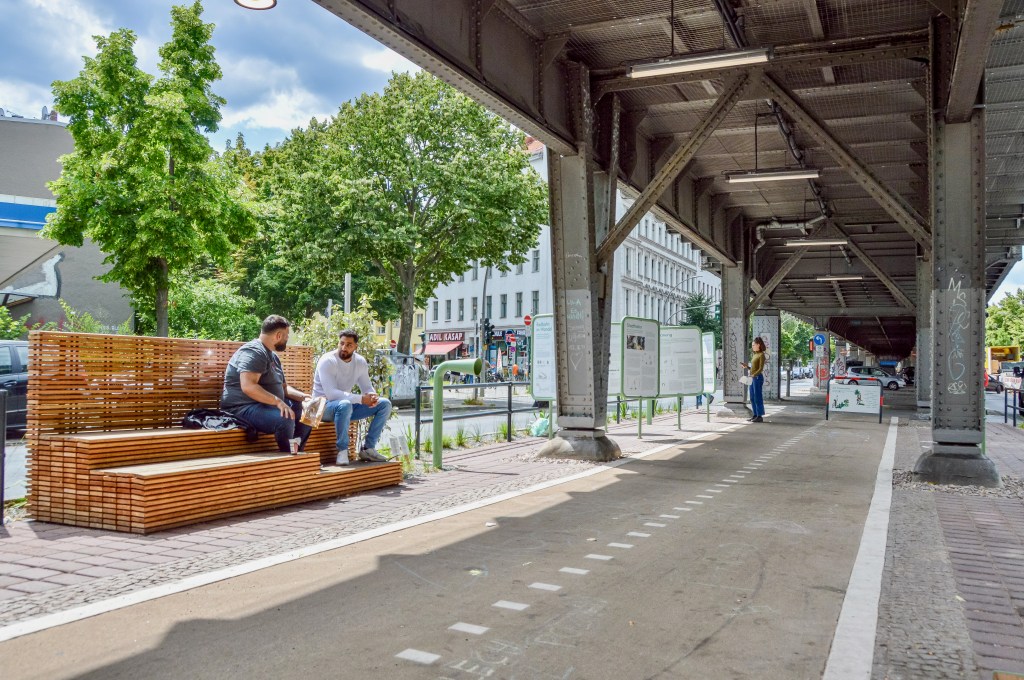
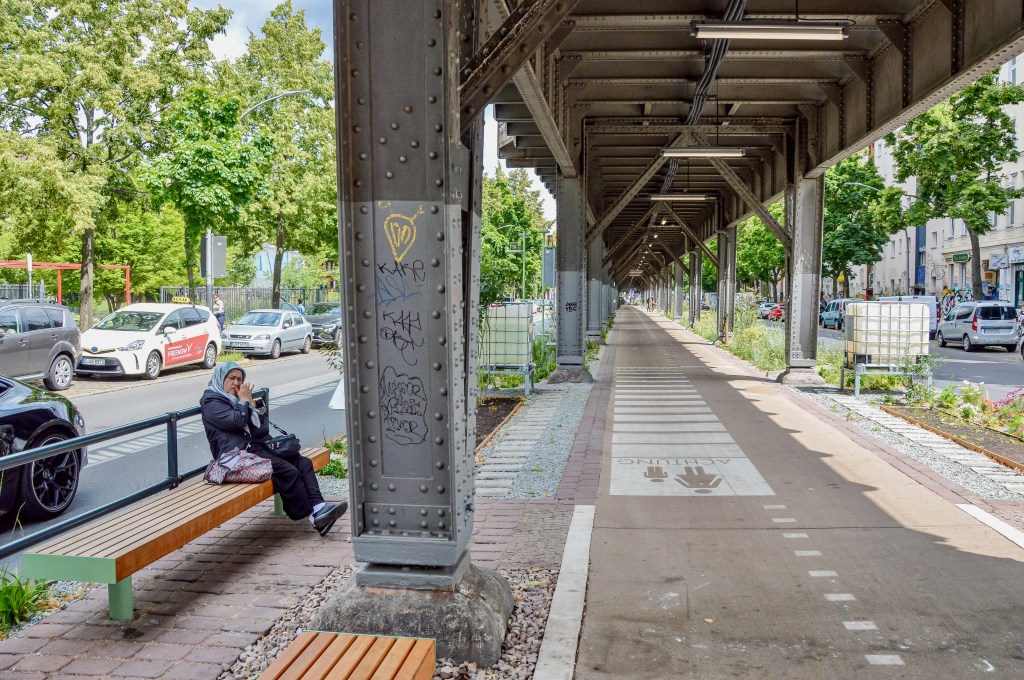
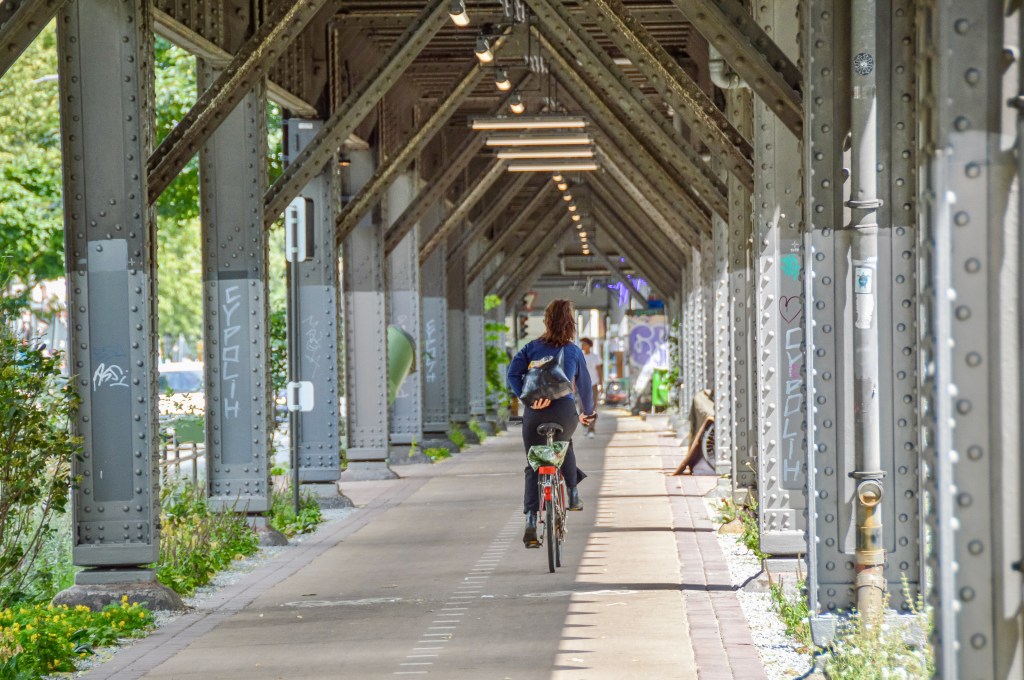
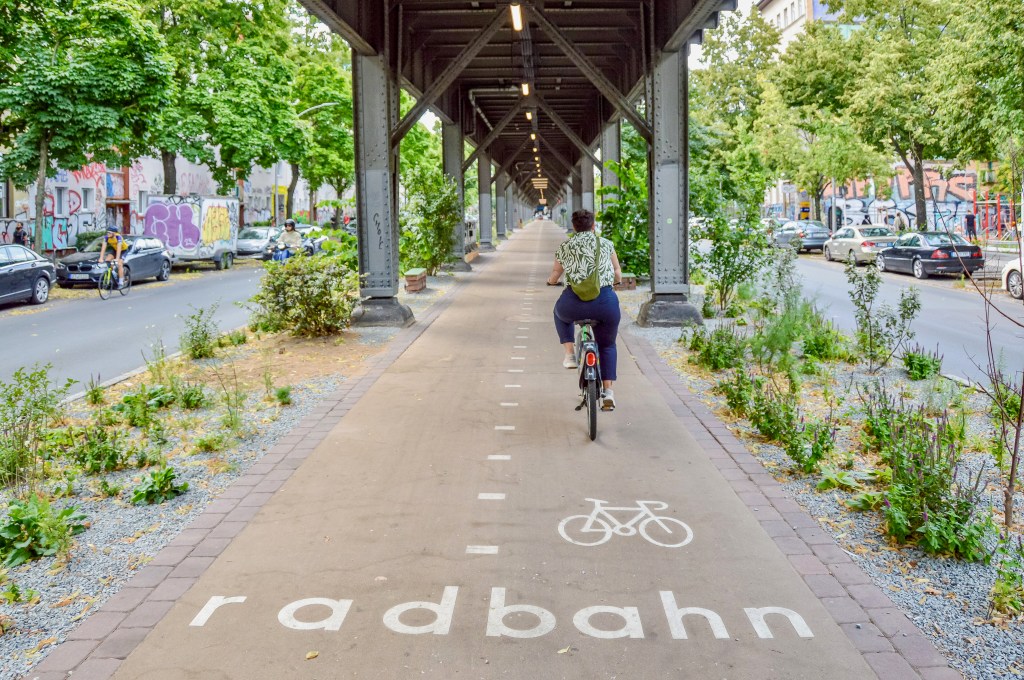
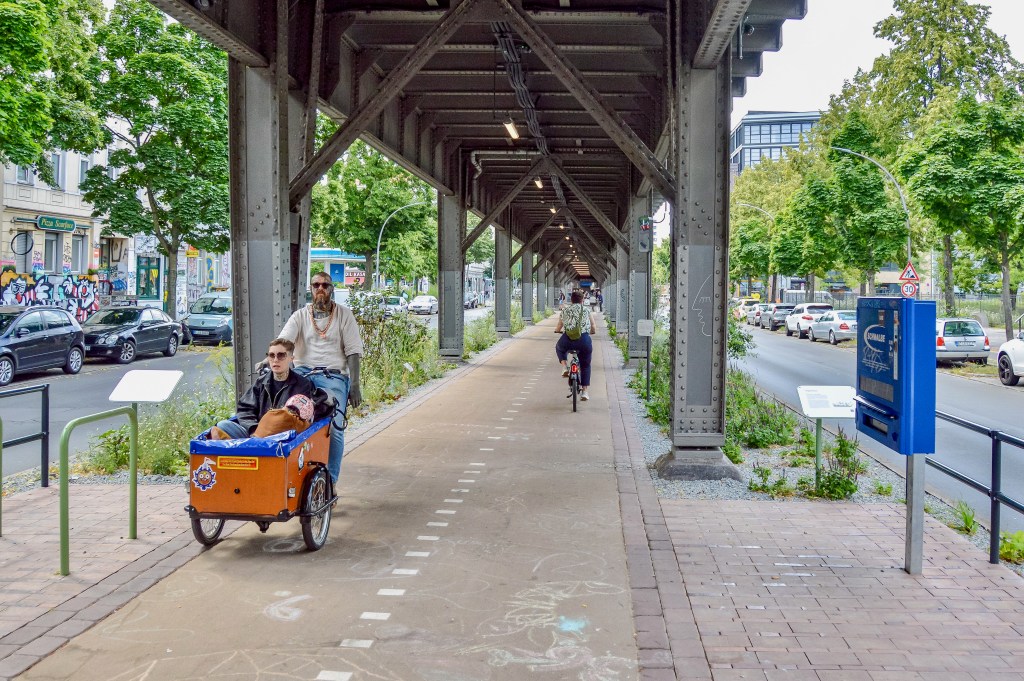
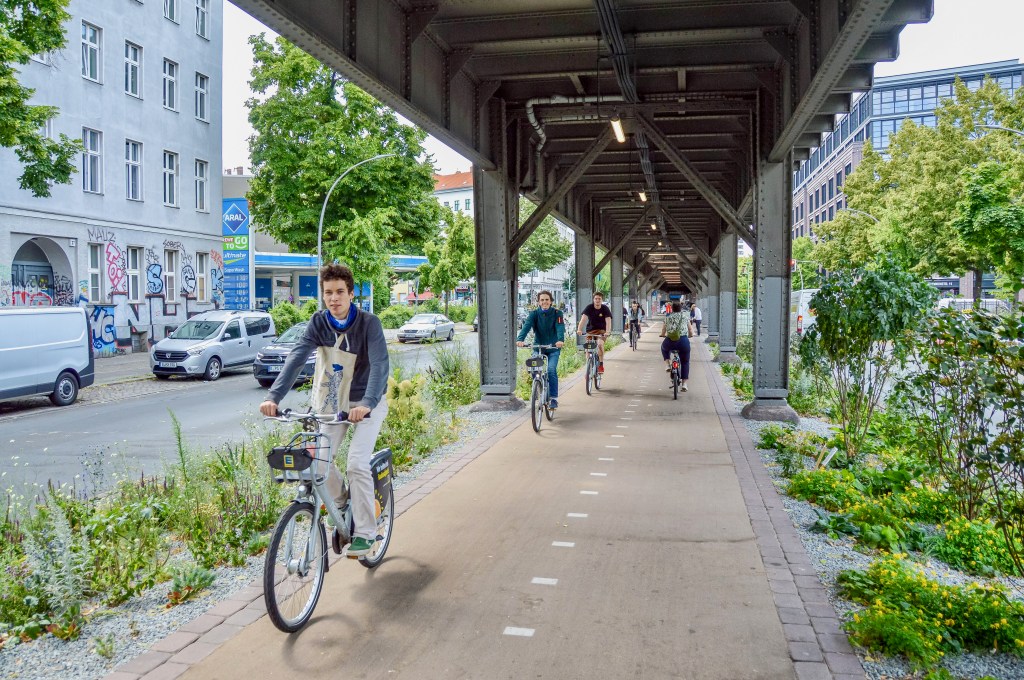
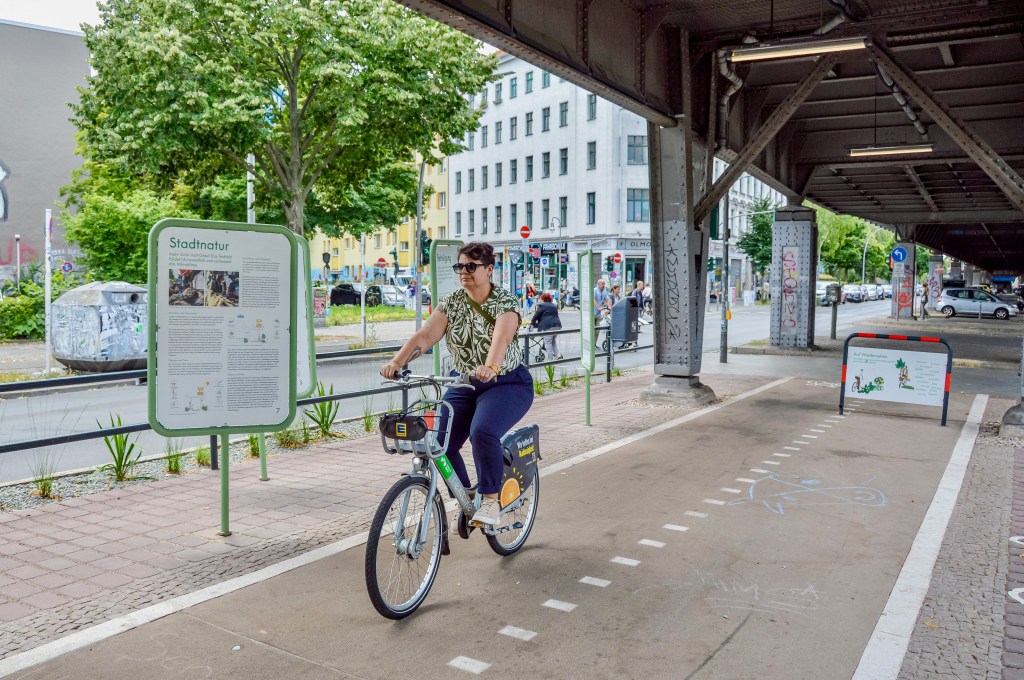
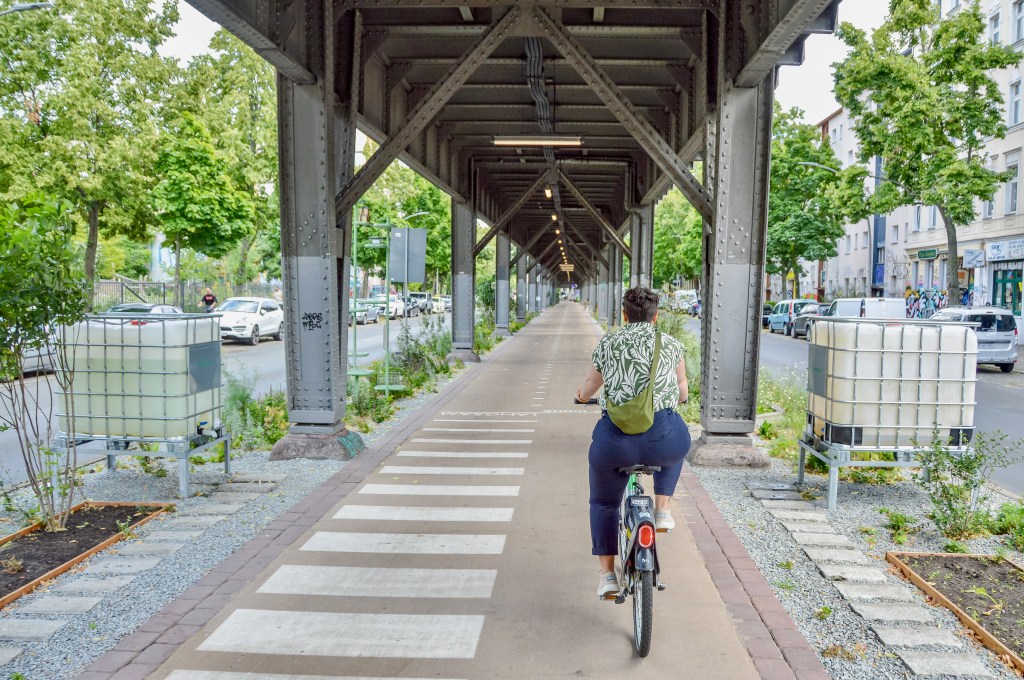
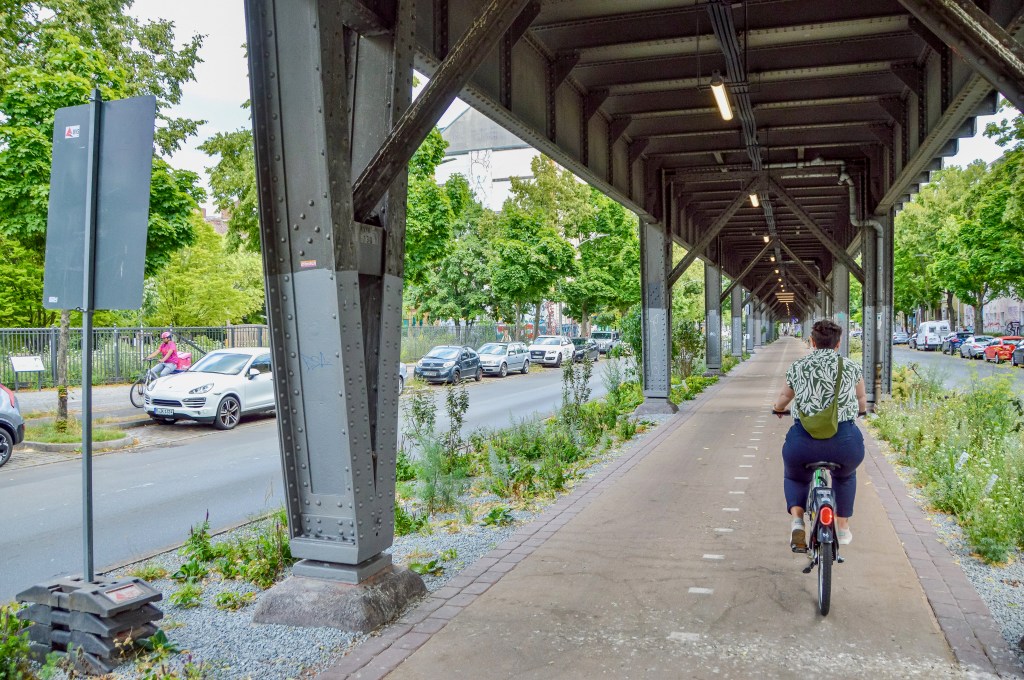
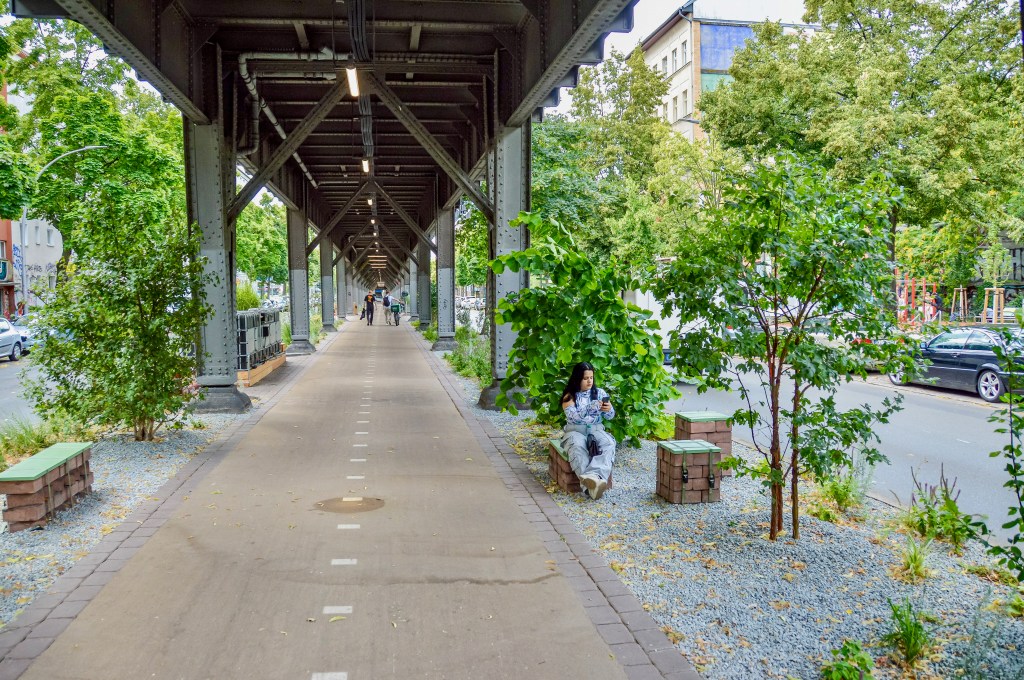
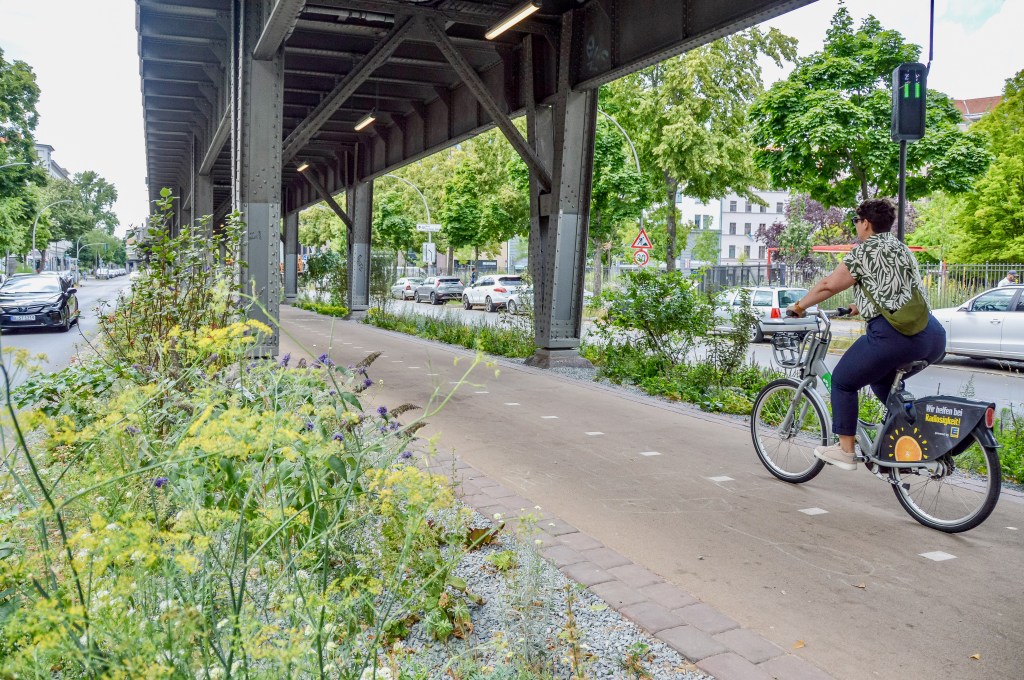
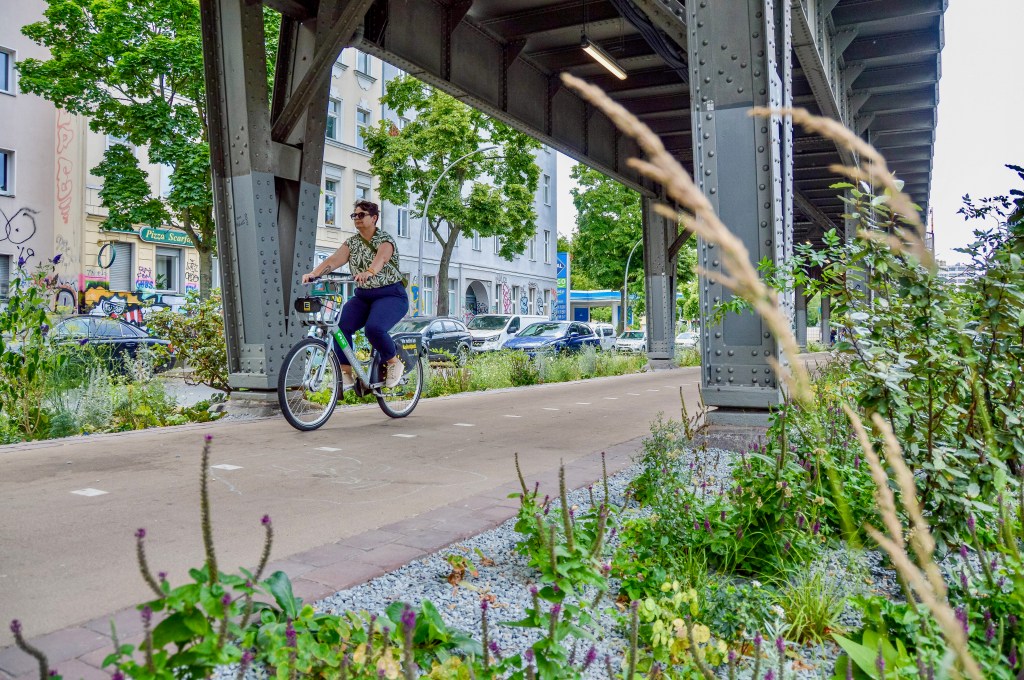
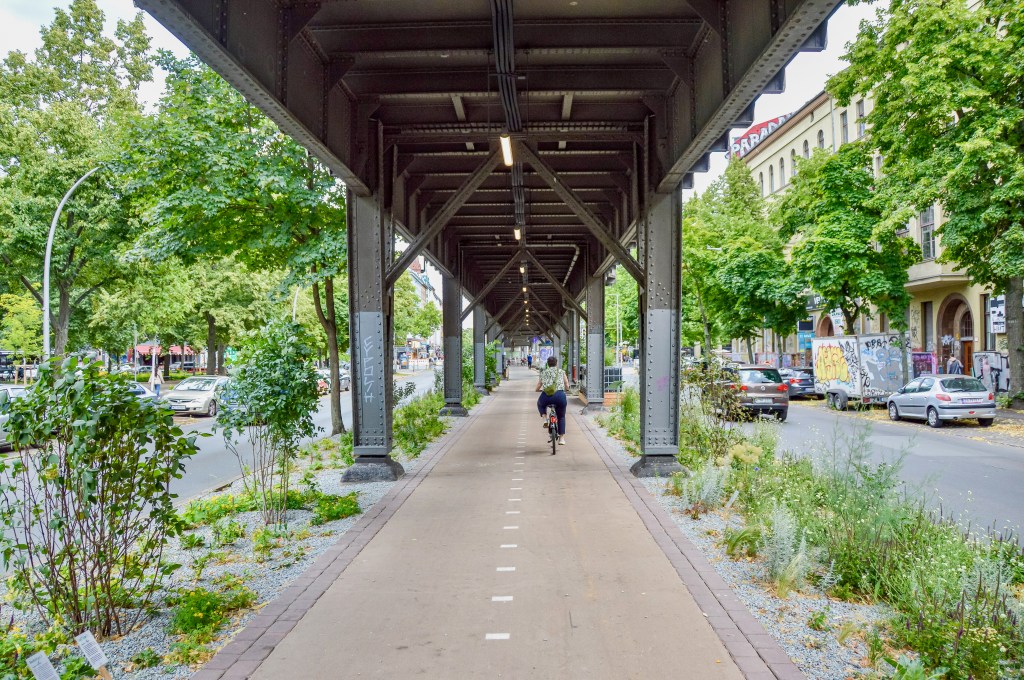
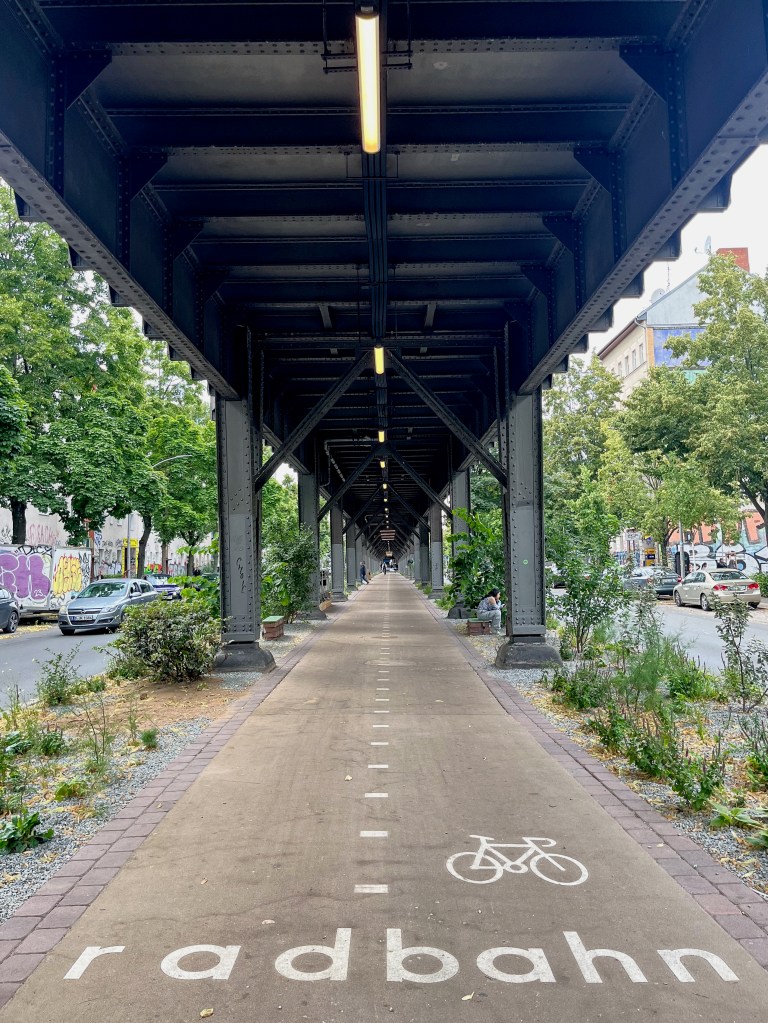
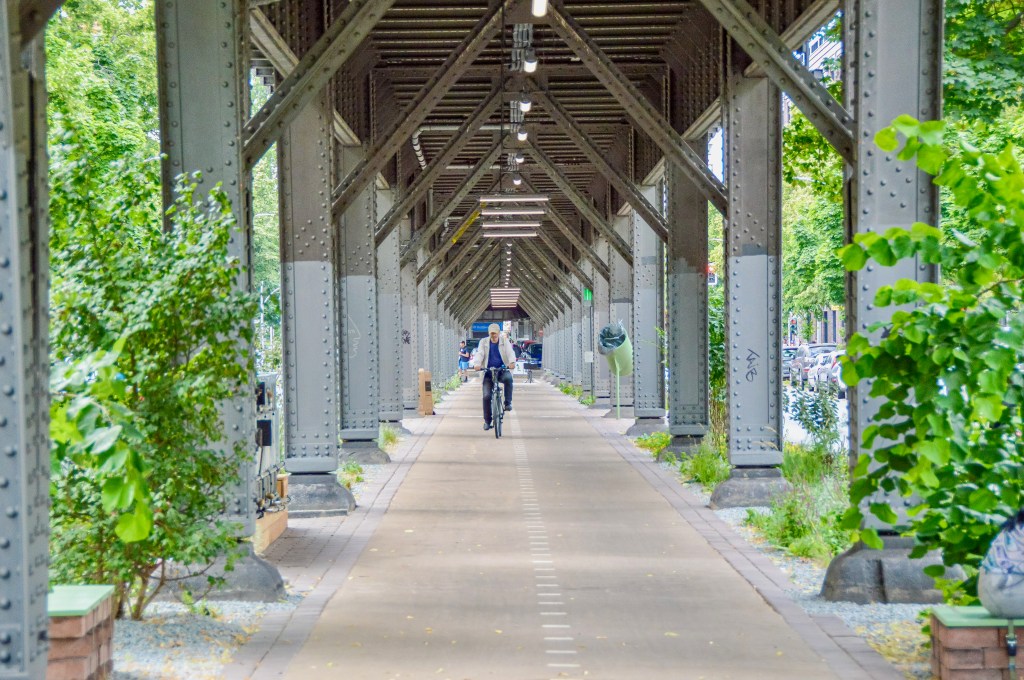
The Radbahn Berlin is a community-led initiative designed to breathe new life into the largely forgotten space underneath the U1 rail viaduct. Not just a bike path, it is intended as a place of encounter and movement—a park that allows for a variety of uses and social activities.
The corridor introduces a more conscious form of mobility that breaks the current status quo around speed and isolation in public space. It creates a sense of deceleration—encouraging users to perceive their surroundings and fellow humans while traveling through the hectic city.
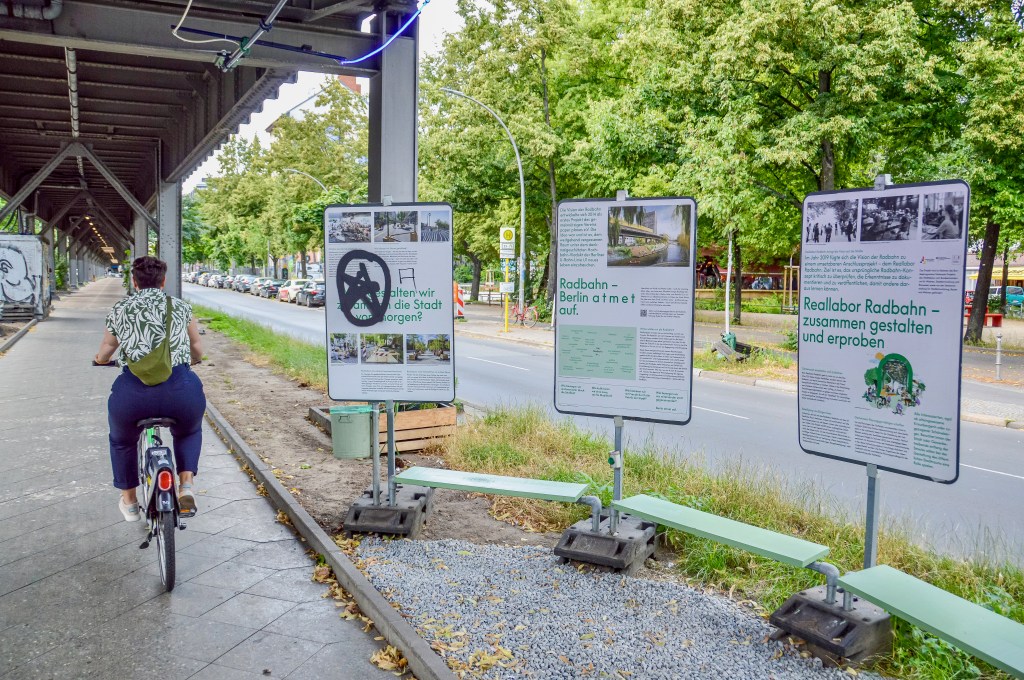
The Radbahn vision was first developed in 2014 by a group of architects and urban enthusiasts, and has remained on paper for nearly a decade. But in April 2024, a 200-metre test site was opened as a ‘real-world lab’; hoping to stir the enthusiasm of politicians and public alike.
Although as of writing, the Radbahn remains limited to the initial test site, the proposed 9-kilometre park has been intended to run under and along the viaduct from Bahnhof Zoo in the west to Oberbaumbrücke in the east. With hope, the project will reignite in the future, creating a space where Berliners young and old will be able to ride safely through three districts and explore their characteristics, while protected from wind, rain and cars. Until then, if your are visit Berlin be sure to check it out and see how forgotten spaces can be reimagined.
Potsdammer Platz Cycle Parking: From unwelcome to inviting
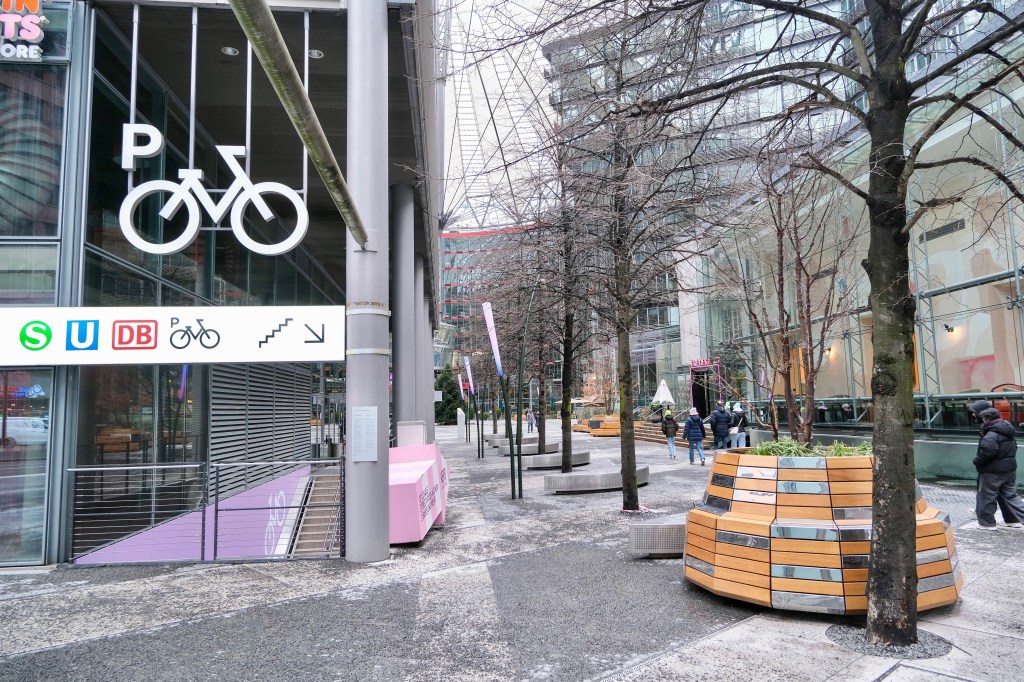
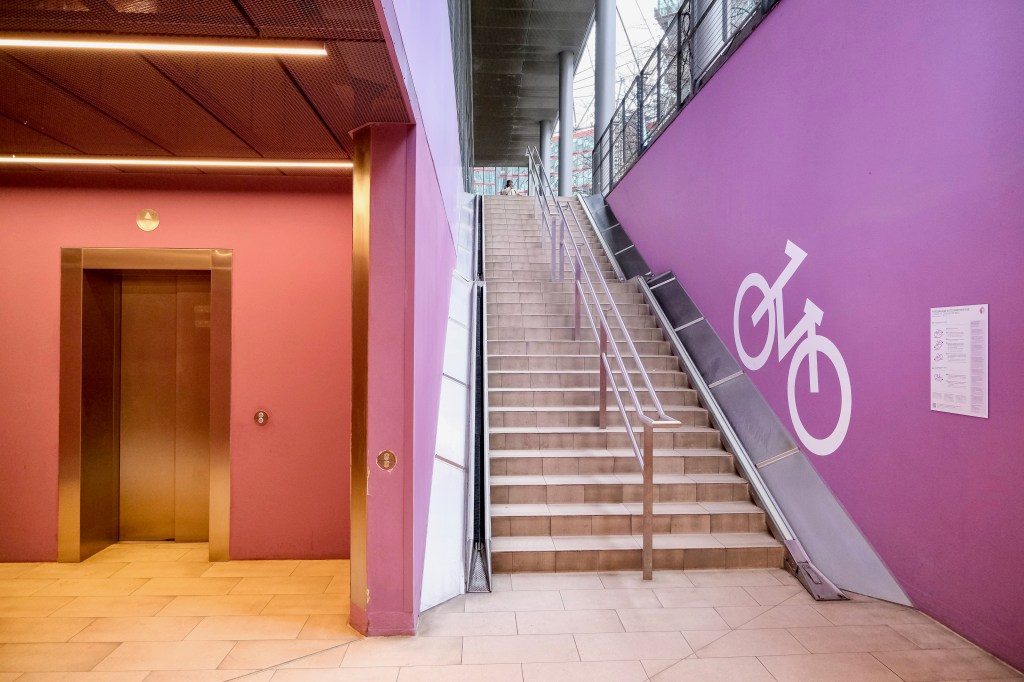
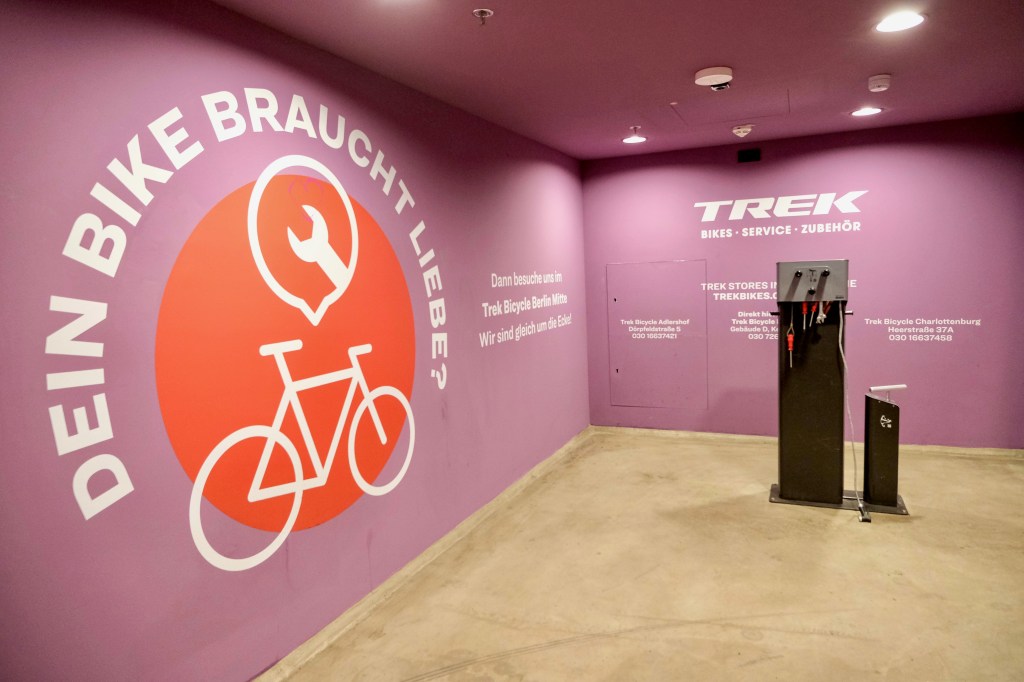
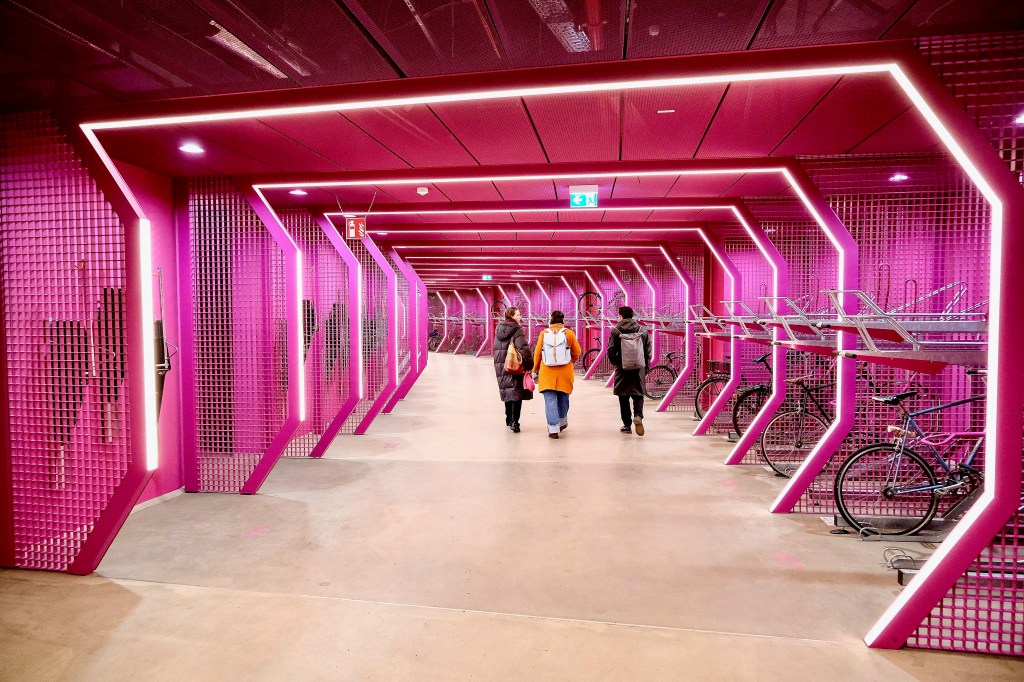
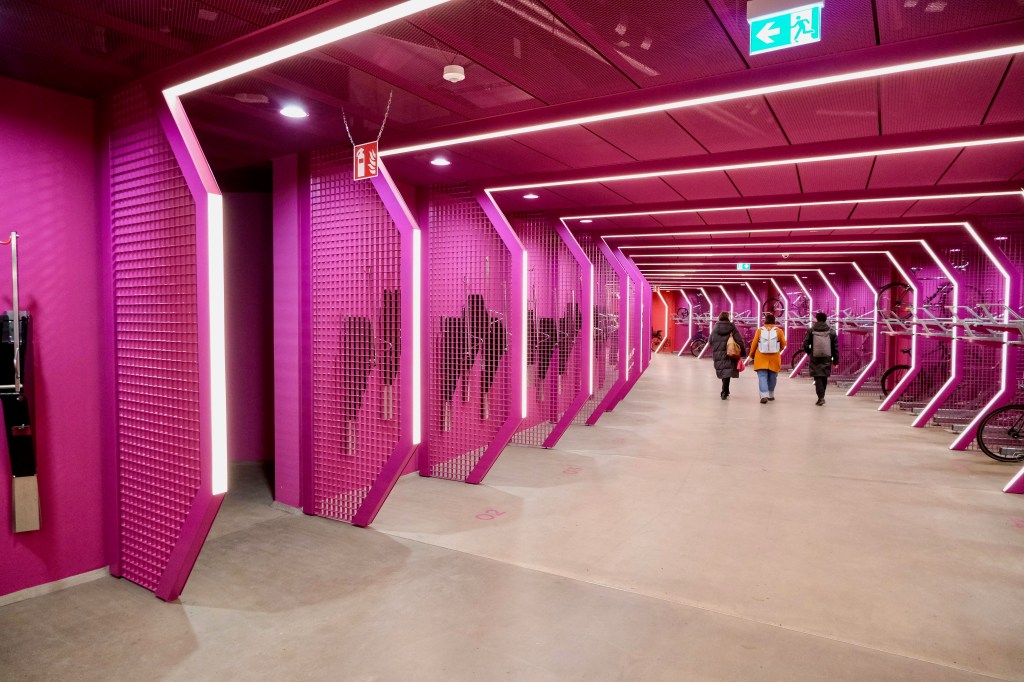
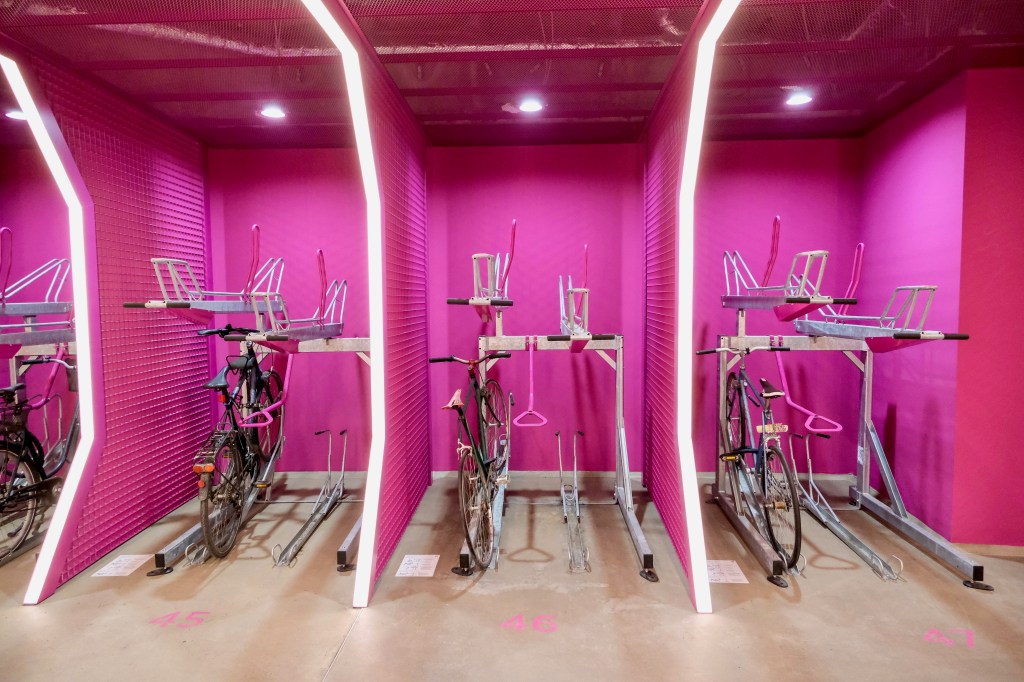
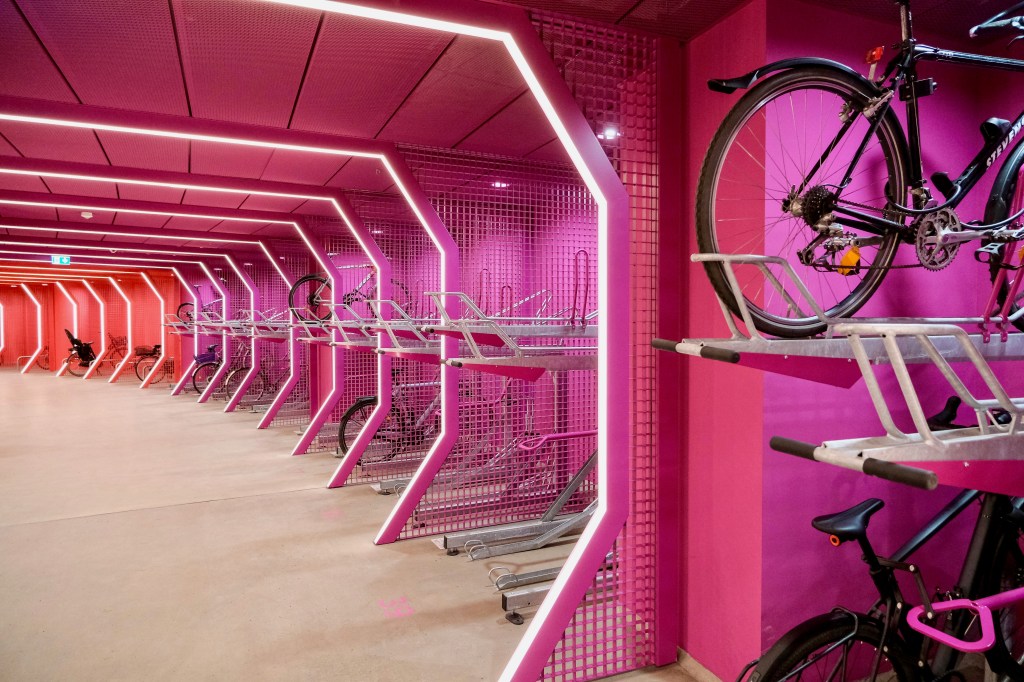
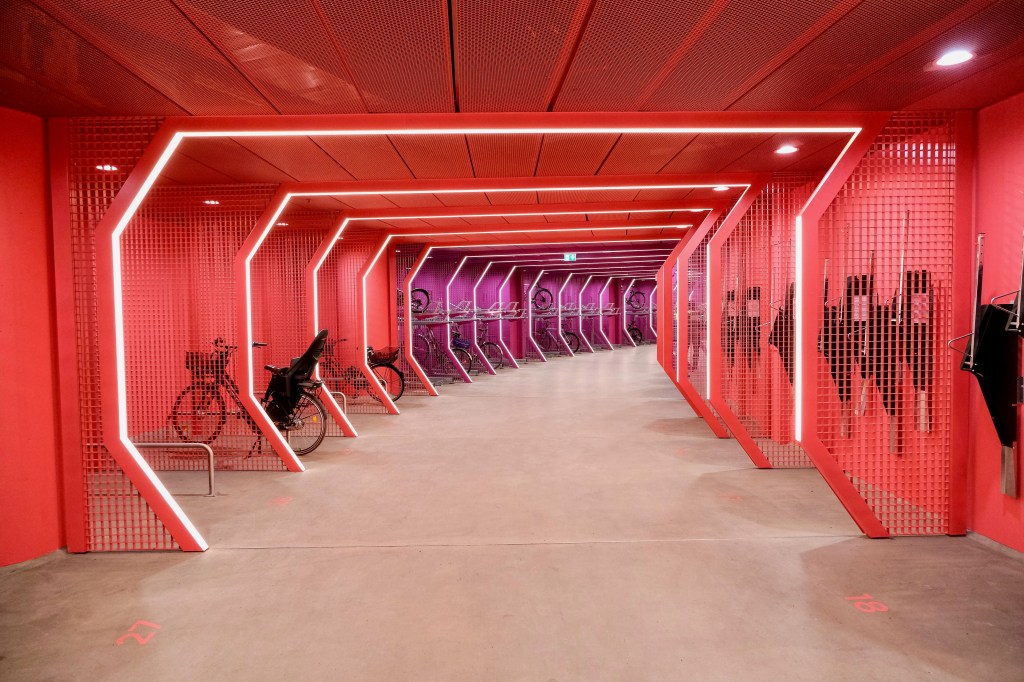
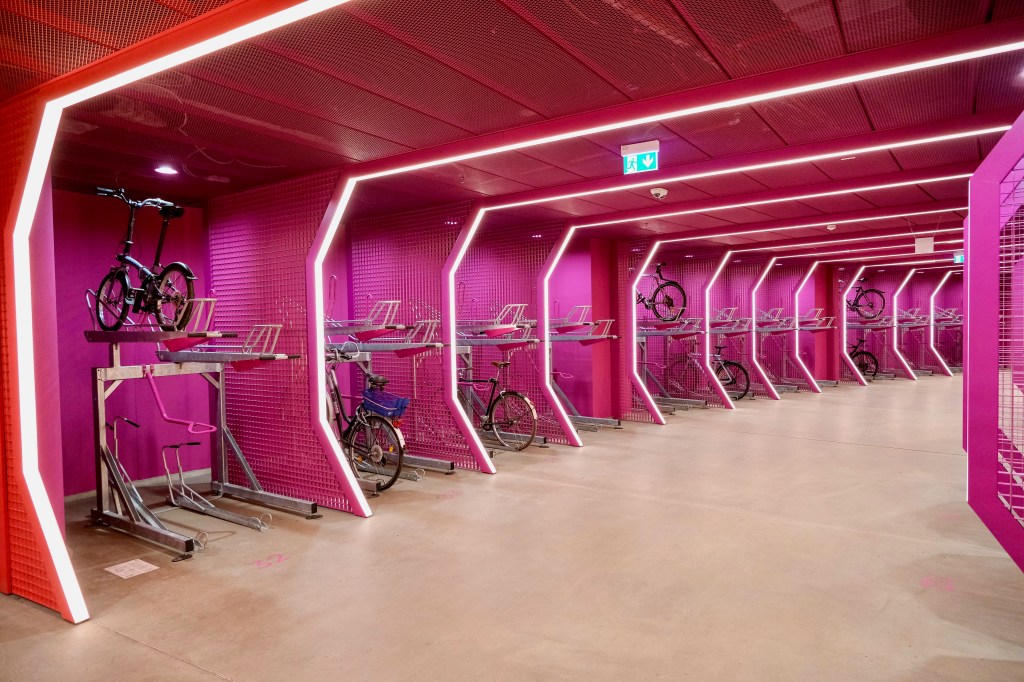
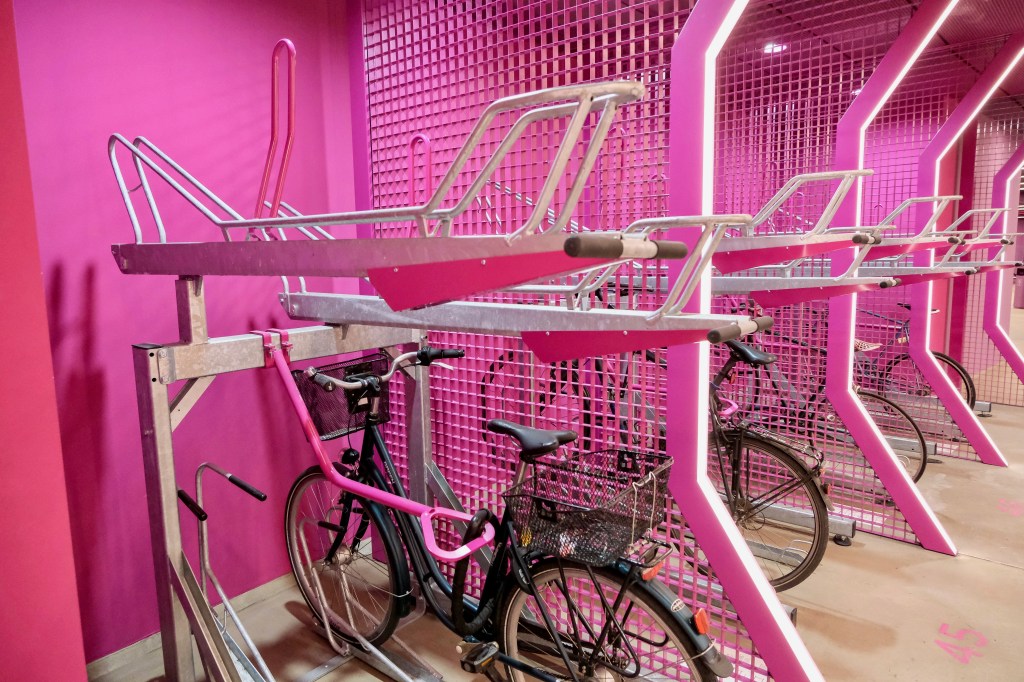
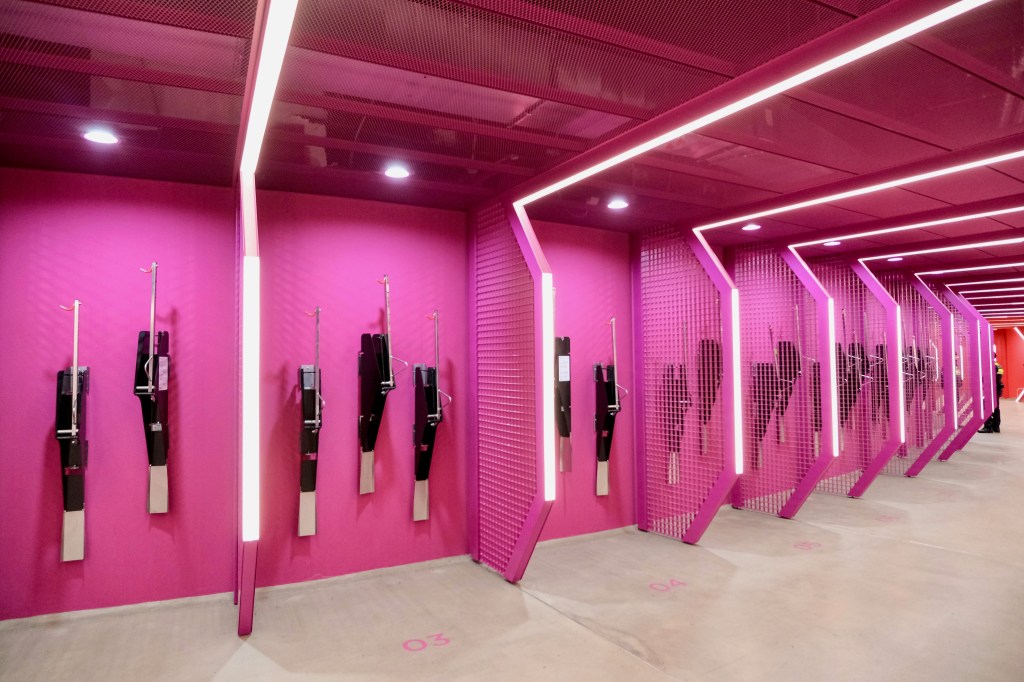
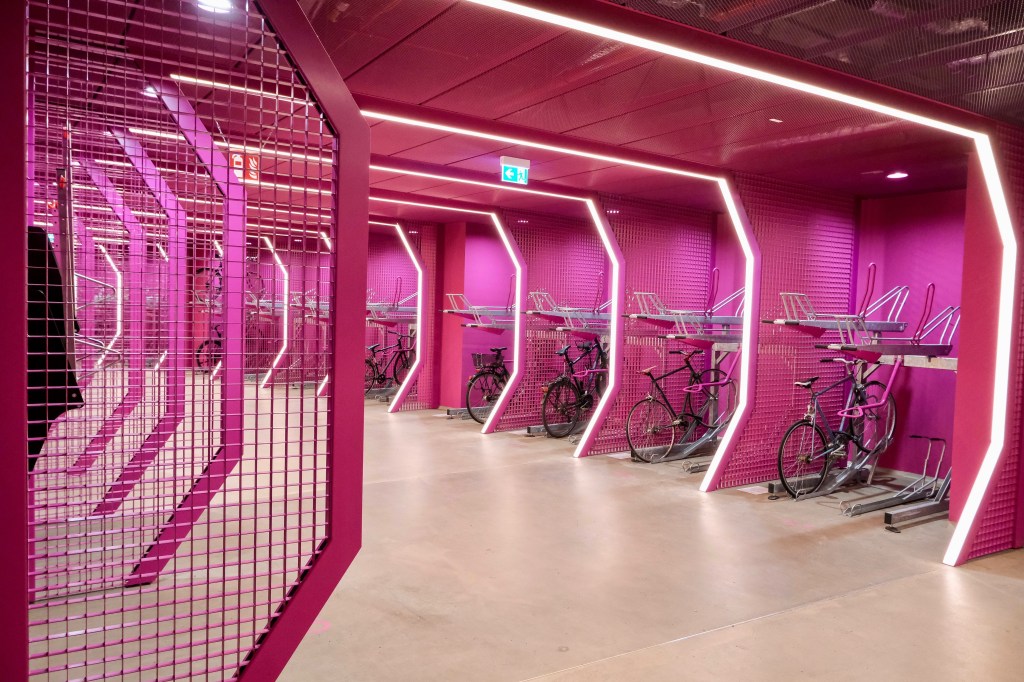
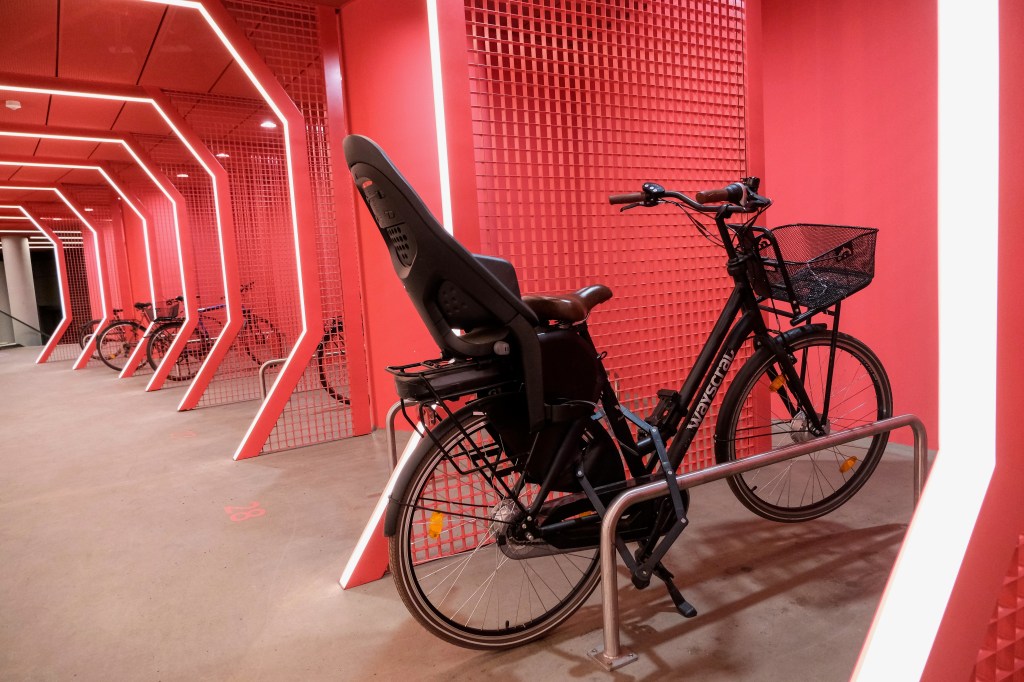
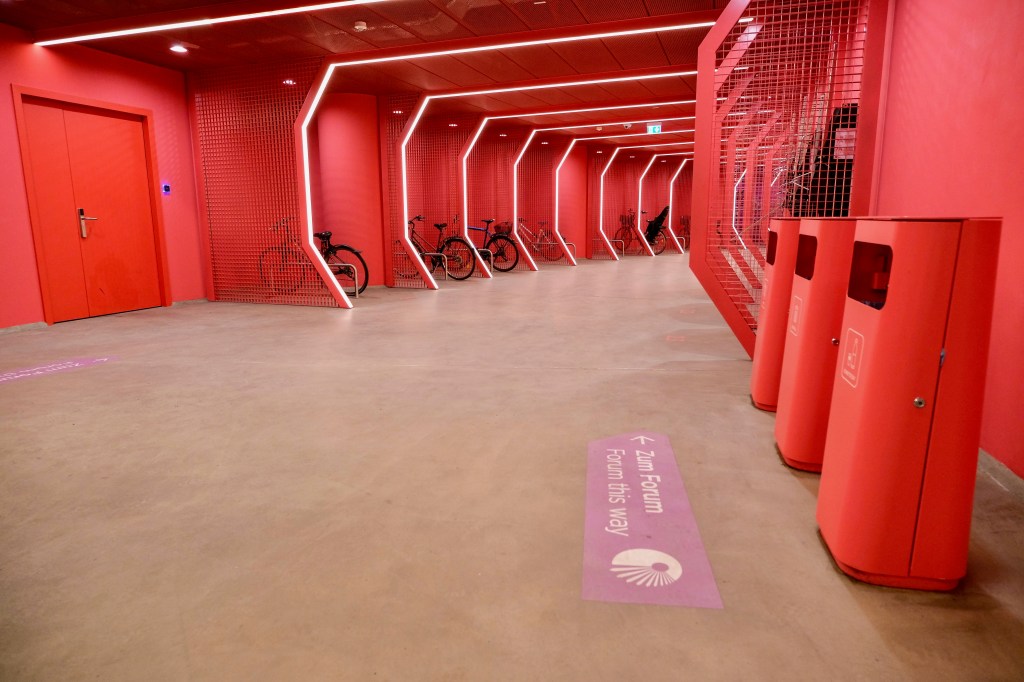
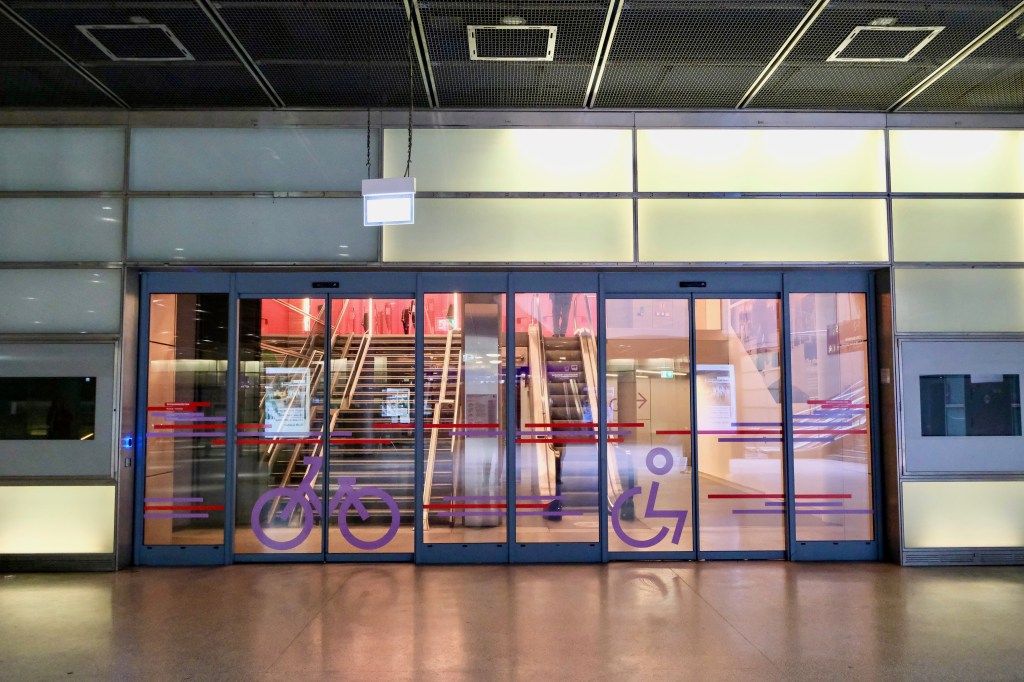
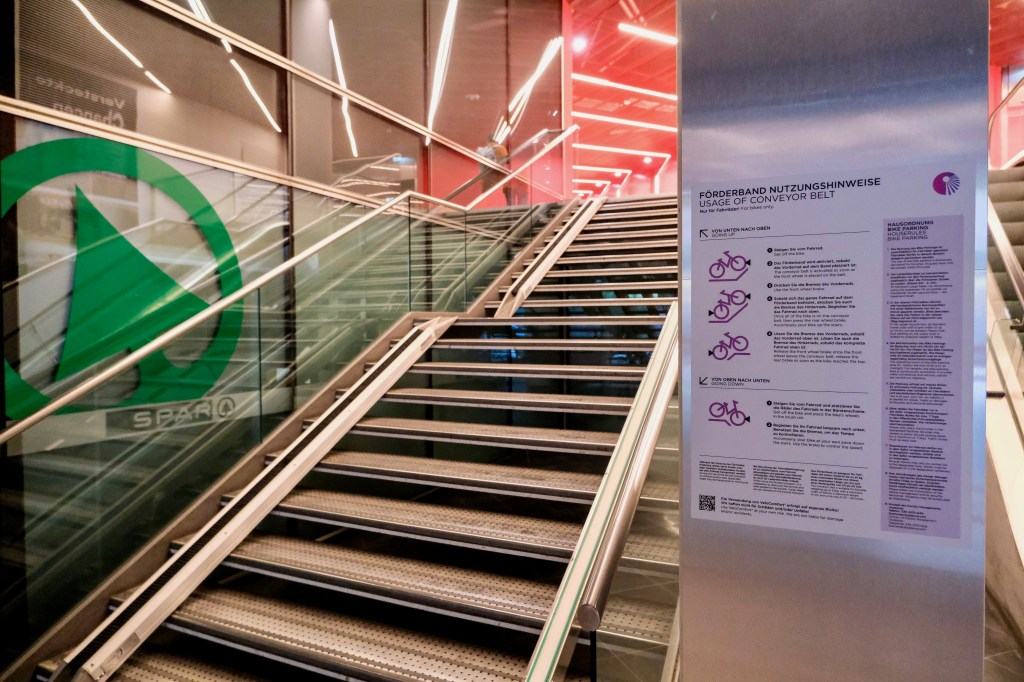
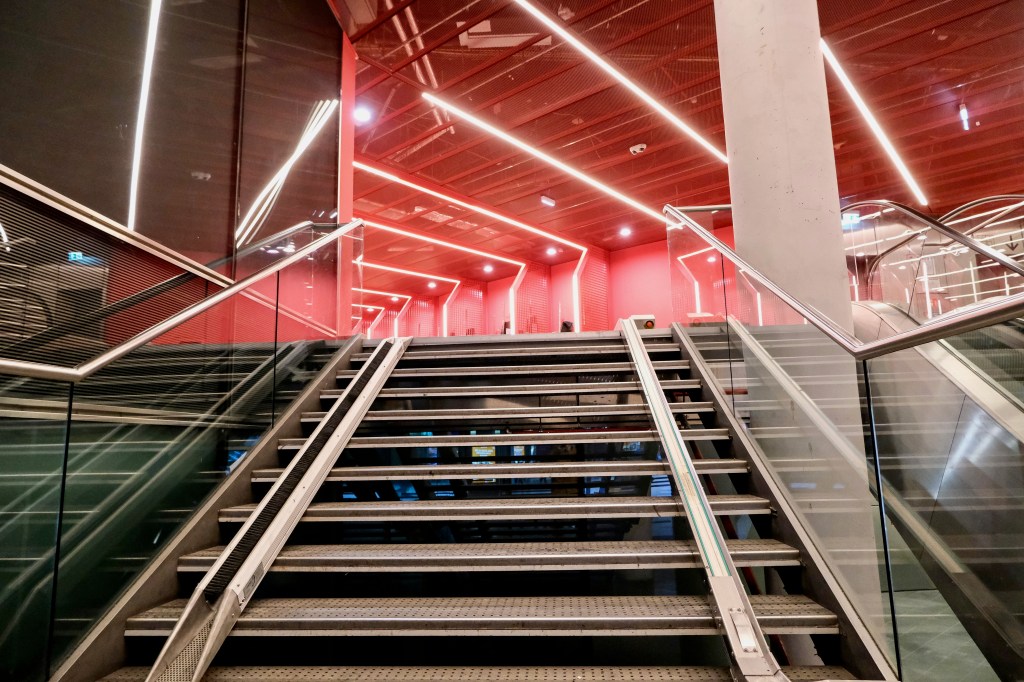
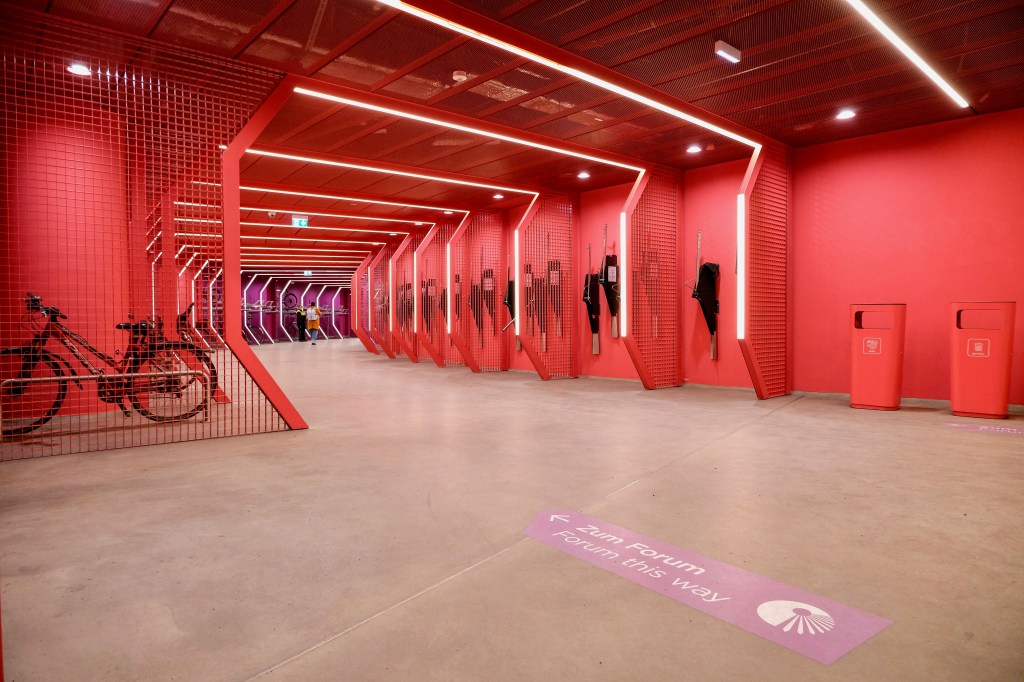
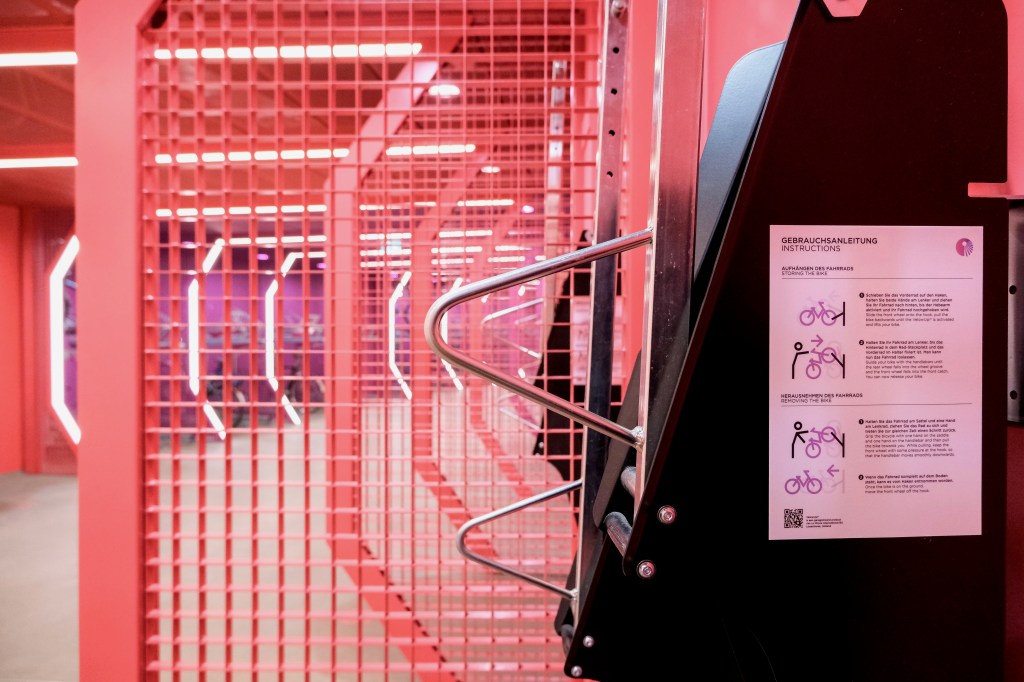
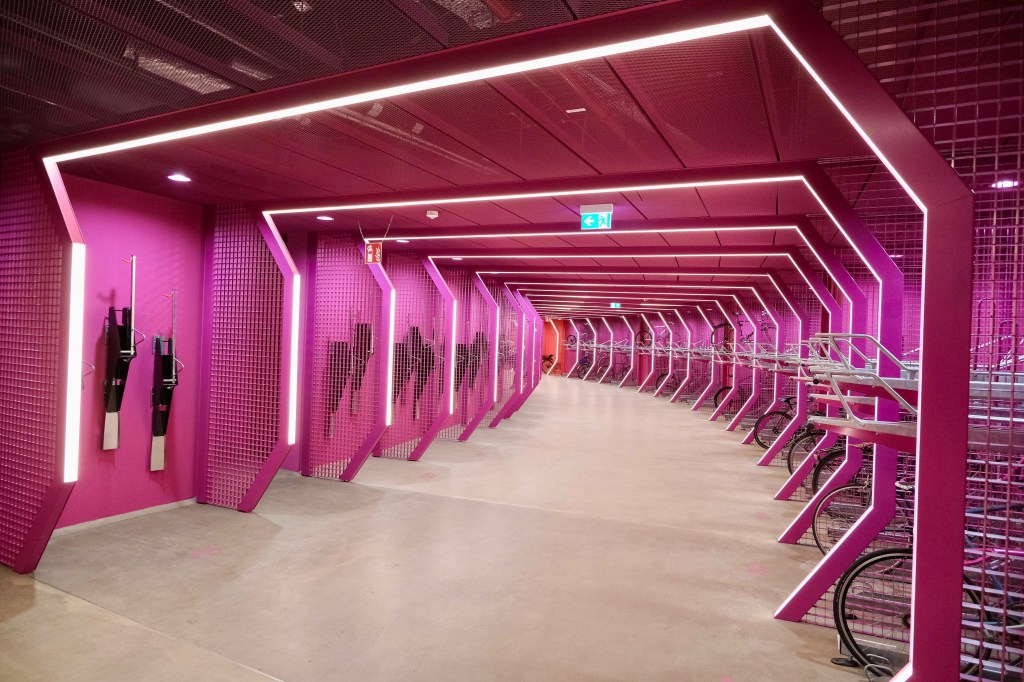
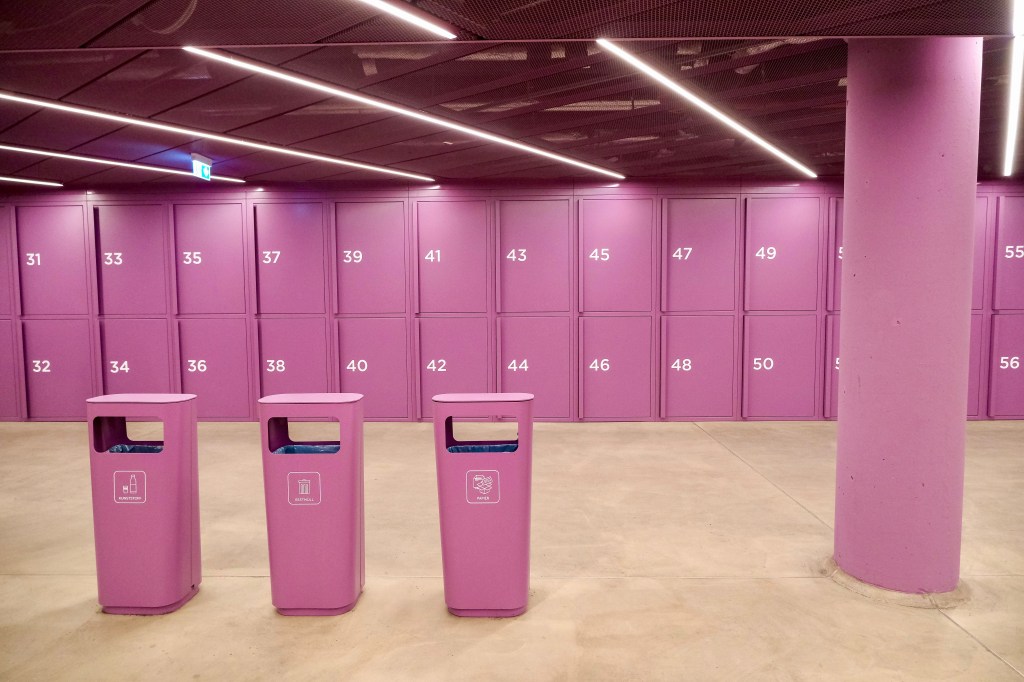
If you find yourself disembarking the S-Bahn at Potsdamer Platz, may I recommend a wander through the revitalised underground public passge and cycle parking facility that connects users seamlessly into the revitalised entertainment, commercial and office centre? It may not seem like the most obvious visit, but the futuristic and colourful space is worth a walk through for those tired of the usual grey, utilitarian cycle parking elsewhere in Europe.
A corridor intended for retail for commuters designed in the 1990’s that had sat empty and uncomfortable for sometime, rather than remain dormant, the property managers opted to open them up. The space now functions as both destination and shortcut. Cyclists enter directly from the surrounding streets, roll into secure parking, and continue onward through the building. What was a dead end has become a thoroughfare—reintegrating a private interior into Berlin’s walking and biking network.
The city has been expanding its cycling network in recent years. Althoughthe progress is low and dependent on which way the political winds are blowing, secure parking remains a critical puzzle piece. At the convergence of necessity and opportunity, this passage turns underperforming retail units into bike infrastructure, increasing its relevance while supporting the mobility transition.
Inspired by the cross-section of a bicycle tyre, Kinzo Architects’ design reflects the geometry of the space and invites users to immerse themselves in another world. With over 200 parking spaces, every bike has its place here, but its strength lies in its simplicity: clear sightlines and flow; a design that invites movement instead of consumption—treating users not as customers, but citizens.
Step by step, bike space by bike space, passage by passage, it brings a truly multimodal future for Berlin within reach.
Do you have a favourite demonstration project from Berlin? Share it in the comments and we’ll check it out on our next visit!
 Modacity Creative
Leave a comment