
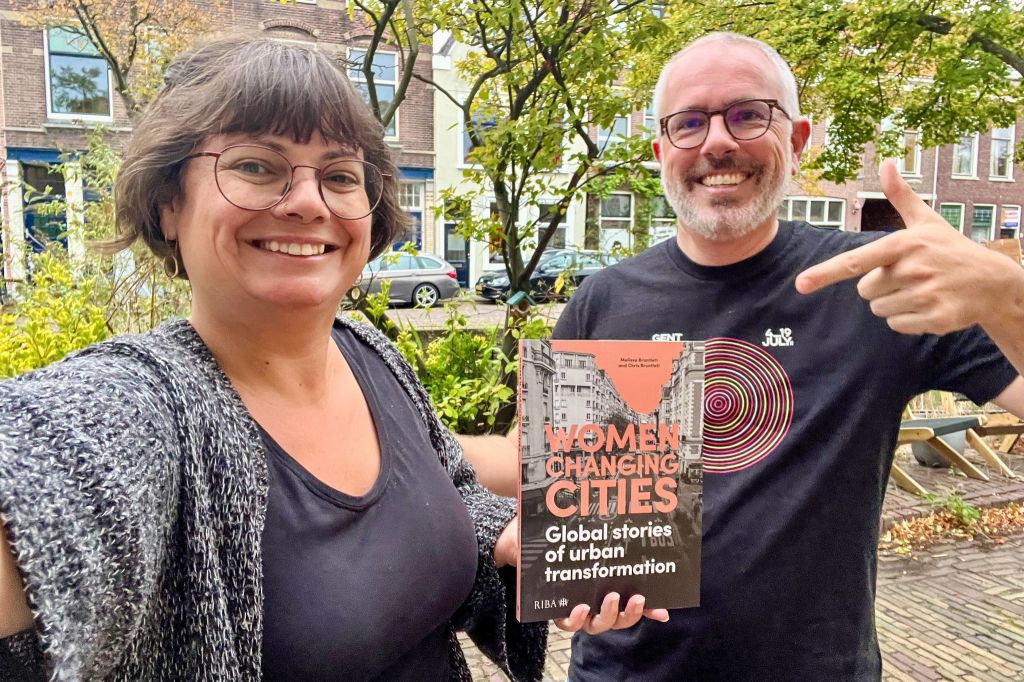
When Chris and I decided to jump into the process of writing Women Changing Cities: Global Stories of Urban Transformation, the goal was to answer a central question: Why at that moment in time were the cities and organizations with women leading getting shit done? From 2020 to 2024, cities like Paris, Montreal, Tirana, Bogota, Brussels, Manila and countless others were seeing fast and substantial impact to everything from mobility and public space to more just and inclusive approaches to policies. That the common link was women doing the work was something we wanted to unpack while showcasing these incredible projects around the world through imagery that in some cases would speak louder than words.
This was all happening, of course, at a time when we saw politics and culture become even more divided. We have always said that if you’re not experiencing any pushback to change, then it may not be pushing the envelope enough. But as rhetoric about women’s rights and feminism going too far increased, we felt compelled to write a book highlighting why we need to keep demanding more gender equity in leadership. That having more balanced representation just makes for better cities that will be resilient to whatever our collective future will bring.
So why write a book only about women?
This question is easy to answer. Despite well-meaning comments on our social media feed about how so many women are graduating from urban planning, architecture, and engineering programs, thereby claiming gender equity has been solved, women remain woefully underrepresented, particularly in poisitions of decision-making and leadership. The issue isn’t getting women into the sectors, it’s keeping them there. Just 25 of the 300 mayors of the worlds largest cities are women. That’s 8%, while at the same time women make up half of the global population. So, you can forgive me when I respond with, “That’s just not good enough.”
Writing a book about women in leadership has been about showing what is possible when cities and organisations are planned not for the status quo but for those of us with the least options to thrive. Women Changing Cities is a call back to an adage we’ve been saying since we got started in 2010: “If you can’t see it, you can’t be it.” In order to change our understanding of what good leadership is, we need to see ourselves reflected back at us. A leader is not just a man in a nice suit. They can also be a woman, with a family or not, sometimes wearing a Chanel dress, and other time rolling up her sleeves and meeting directly with the electorate. They can be women of any age advocating for something better in the face of fervent opposition. Most of all, they are us and we can be them.
Not just a book about women, for women, and by a woman (and a man, btw)
One key decision in writing this book we grappled with was the title. Women Changing Cities is pretty on the nose, but we worried it would turn some people away. Specifically men. Not because of sexism or misogyny (although for some that may be the case, but then it wouldn’t matter what we called it), but rather because even the biggest champions for equitable cities who are men may see the title and think, “This is not a book for me.”
This comes up a lot in discussions about planning events, sessions, webinars, etc., where women in transport and urban planning is the main theme. Mention women, gender, equity, or other similar words and many men have the false assumption that they are not welcome. Let me be very clear for those men who are in doubt of their place in discussions about women and gender in urbanism: This is as much your issue as it is ours! The only way we will transform our cities and organisations into places for everyone is doing it together, regardless of gender.
So, yes, this is a book about women, written by a women AND a man, lest you forget, but it is not a book just FOR women. It is a book containing inspirational stories about transformations that just happened to be led by women, but as each of them readily pointed out in each and every interview, it was a team effort, achieved by groups made up with people of a diversity of ages, genders, abilities and backgrounds. Truly, this is the only way we can create inclusive and welcoming spaces.
A call to action: #ShowUsYourBooks
With all that said, I have a challenge for the men in the urbanism world who are seeking stories of inspiration and change in the face of opposition, and wondering how we can collectively realise a future where we all can thrive. Read our book and share a picture and your thoughts online with the hashtag #ShowUsYourBooks. It doesn’t matter whether you buy a copy of your own or borrow a copy from the library or a friend, don’t let the title scare you away, because the stories and lessons learned are universal. You will also, with hope, introduce another man to the title, and your endorsement may encourage them to read it as well. Positive change is a group effort!
And then come to one of our events! In the weeks and months to come, we will be traveling to various cities to talk about the book, but also host discussions with leaders in those cities about the importance of better representation in leadership, regardless of gender. We will be posting upcoming events on Modacity’s website and social media channels so stay tuned.
In the meantime, I will leave you with a quote from the book, penned by Chris (the man who also wrote the book):
“Emphasising potential over problems, while encouraging everyone to roll up their sleeves and get involved in the city-building process, is the only way to reach a better future together.”

 Modacity Creative
Leave a comment